日元

Blog

Driving a Rental Car in Japan During Typhoon Season

Japan's typhoon season runs from June through October, with the most active period typically falling between August and September. During this time, powerful storms can bring heavy rainfall, strong winds, and widespread road closures. For visitors renting a car, understanding how to respond to typhoon conditions is essential for staying safe on Japanese roads.

Check Weather and Road Conditions Before You Drive

Before heading out during typhoon season, always check the latest weather forecast and road traffic information. The Japan Road Traffic Information Center, known as JARTIC, provides real-time road updates every five minutes at jartic.or.jp. For expressway information, the Drive Traffic portal at en-www.drivetraffic.jp offers English-language road closure maps covering major highways nationwide.

If a typhoon warning or heavy rain advisory has been issued for your area, seriously consider postponing your drive. Japanese expressway operators routinely close sections of highway when wind speeds exceed safe thresholds or when flooding is detected. Rental car companies generally allow schedule adjustments during natural disasters, so contact your provider early if you need to change your return time.

Three High-Risk Environments to Avoid

Not all roads carry the same risk during a typhoon. Three types of terrain are especially dangerous:

  • Coastal roads: High waves and storm surges can sweep over seawall barriers and onto coastal highways. Lateral gusts along open shorelines can push a vehicle sideways. If storm surge or wave warnings are in effect, avoid all coastal routes.
  • Riverside roads: Rivers rise quickly during heavy rainfall. Roads alongside riverbanks can become submerged with little warning. Check flood hazard maps through local municipal websites before planning your route.
  • Mountain roads: Steep slopes become vulnerable to landslides and debris flows during prolonged rain. Monitor the Japan Meteorological Agency's landslide danger alerts before driving through mountainous regions.

What to Do If You Encounter Flooded Roads

Flooded roads are one of the most serious hazards during a typhoon. Research by the Japan Automobile Federation (JAF) found that a sedan can typically pass through water up to 30 centimetres deep at low speed, but at 60 centimetres the engine is likely to stall. Crucially, murky floodwater makes it impossible to judge depth accurately from inside the car.

If you encounter a flooded section of road, do not attempt to drive through it. Turn around and find an alternative route. If your vehicle stalls in rising water, remain calm, unfasten your seatbelt, and open the window while the water level is still below the window frame. If the window cannot be opened, use an emergency escape hammer to break the glass. Never restart a flooded engine, as doing so can cause irreparable damage or fire.

Driving Safely in Heavy Rain and Strong Winds

If you must drive during severe weather, reduce your speed significantly below the posted limit and increase your following distance to at least double the normal interval. Wet roads extend braking distances considerably, so avoid sudden steering inputs or hard braking. Turn on your headlights even during daylight hours to improve visibility for other drivers.

Strong crosswinds are particularly hazardous on elevated sections of road, bridges, and open expressways. Hold the steering wheel firmly with both hands and be prepared for sudden gusts. If conditions feel unsafe, pull into the nearest service area and wait for the weather to improve.

Rental Car Insurance and Typhoon Damage

Standard Japanese automobile insurance does not cover damage caused by natural disasters such as typhoons or floods under the liability coverage provisions. Many rental car companies offer optional supplemental coverage that includes natural disaster protection. Before your trip, review your rental agreement carefully and ask the counter staff about typhoon-related coverage. Credit card rental insurance often excludes natural disasters, so verify the terms in advance.

Practical Tips for Typhoon-Season Travel

  • Download a Japanese weather app such as Yahoo! Weather or the Japan Meteorological Agency's official app for real-time alerts.
  • Keep the rental company's emergency contact number saved in your phone.
  • Park the vehicle in a covered car park or away from trees and power lines if a typhoon is forecast overnight.
  • Carry an emergency escape hammer in the glove compartment in case the vehicle becomes submerged.
  • Avoid driving during the most intense phase of a typhoon; most storms pass within 12 to 24 hours, and waiting is always safer than risking a flooded road.

Typhoons are a natural part of the Japanese climate. With proper preparation and awareness, it is entirely possible to travel safely during the season. The key is to stay informed, respect road closures, and never underestimate the power of floodwater or strong winds.
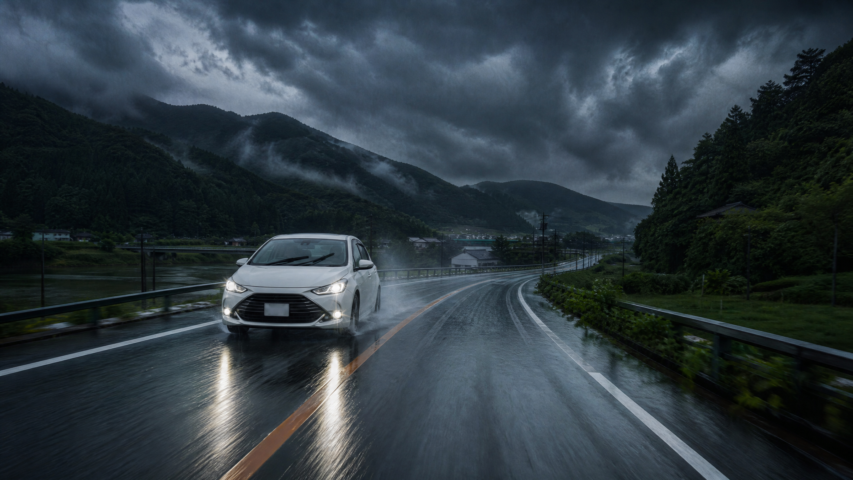
White car driving on a rain-soaked mountain highway under dark storm clouds, with misty green hills in the background.

Using Car Navigation Systems When Renting a Car in Japan

One of the most common challenges for overseas visitors driving in Japan is navigation. Unlike many countries where a smartphone app alone is sufficient, Japan's complex road networks, frequent tunnels, and mountainous terrain make the built-in car navigation system an essential tool for a safe and stress-free journey. Understanding how to use both the in-car GPS and your smartphone effectively will make a significant difference in your rental car experience.

Understanding the Built-In Car Navigation System

Almost all rental cars in Japan come equipped with a built-in car navigation system as standard. These systems are designed specifically for Japan's road network and offer several advantages over smartphone apps. The most important feature to understand is the MAPCODE system. Rather than entering a full Japanese address, you simply input a short numeric code — typically 6 to 10 digits — that pinpoints virtually any destination in Japan. Every major tourist attraction, hotel, restaurant, and scenic viewpoint has its own MAPCODE, which you can look up in advance on websites such as mapion.co.jp or through the destination's official website.

To set a destination using MAPCODE, press the MENU button on the navigation screen, select Destination, then choose MAPCODE from the input options. Enter the code and confirm. The system will immediately calculate the optimal route. Alternatively, most built-in systems also accept a destination's phone number as an input method — a practical option for hotels, restaurants, and shops that have listed contact numbers.

Switching the Navigation Language to English

Many modern rental car navigation systems in Japan support multiple languages, including English, Simplified Chinese, and Korean. To switch to English, access the system settings through the MENU button and look for a language or display settings option. The exact steps vary slightly by model, but most Toyota, Nissan, and Honda rental vehicles follow a similar procedure. If you are unsure, the rental counter staff can assist you with the initial setup before you drive away.

Using Google Maps and Smartphone Apps as a Supplement

While the built-in navigation system is your primary tool, Google Maps remains a valuable supplement for planning and research. Before your trip, download an offline map of the region you will be visiting through the Google Maps app. This allows you to browse maps and search for locations even without a mobile data connection. However, be aware that turn-by-turn navigation and real-time traffic updates require an active internet connection.

For drivers who prefer a smartphone-based solution, Yahoo! Car Navigation (Yahoo!カーナビ) is widely regarded as one of the best free navigation apps for driving in Japan. It provides accurate real-time routing, speed camera alerts, and detailed expressway guidance. The app is primarily in Japanese, but its interface is intuitive enough for non-Japanese speakers to use with basic familiarity.

Tips for Setting Expressway Routes

When planning a longer drive that includes expressways, make sure to configure your navigation system to include or exclude toll roads according to your preference. Built-in systems typically offer route options such as fastest route, no toll roads, or shortest distance. If you have rented an ETC card from the rental company, selecting the expressway route is recommended for both speed and convenience, as ETC lanes allow you to pass through toll gates without stopping.

Practical Advice Before You Drive

There are a few practical steps worth taking before you leave the rental lot. First, confirm that the navigation system's language is set to your preference. Second, look up the MAPCODEs for your key destinations — your hotel, major attractions, and the rental car return location — and note them down or save them on your phone. Third, if you plan to use Google Maps, download the offline map for your region while you still have Wi-Fi access at the airport or hotel. Finally, keep your smartphone charged using the car's USB port or a car charger, so it remains available as a backup navigation tool throughout your journey.

With a little preparation, navigating Japan's roads by rental car becomes a smooth and enjoyable experience. The combination of a reliable built-in GPS and a smartphone app gives you the flexibility to explore both well-known destinations and hidden local gems with confidence.

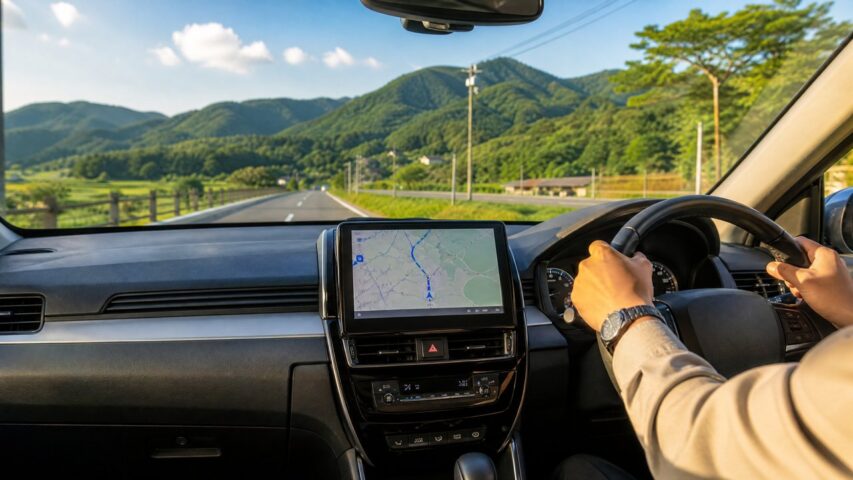
Driver’s hands on the steering wheel with a GPS map on the center screen, road ahead through green hills and mountains on a sunny day.

Understanding Gas Stations in Japan

When renting a car in Japan, knowing how to navigate local gas stations is essential for a smooth road trip. Gas stations in Japan are divided into two main categories: full-service (manned) and self-service stations. Full-service stations are highly convenient for foreign visitors who may not be familiar with the local language or equipment. As you pull in, staff members will direct you to the correct pump, ask for your preferred fuel type and amount, and handle the entire refueling process. On the other hand, self-service gas stations are becoming increasingly common across the country. These stations require you to operate the touch screen terminal, select your fuel, and pump the gas yourself. While the terminals are usually in Japanese, they follow a standard color-coded system that makes them easy to use once you know the basics.

Identifying the Correct Fuel Type

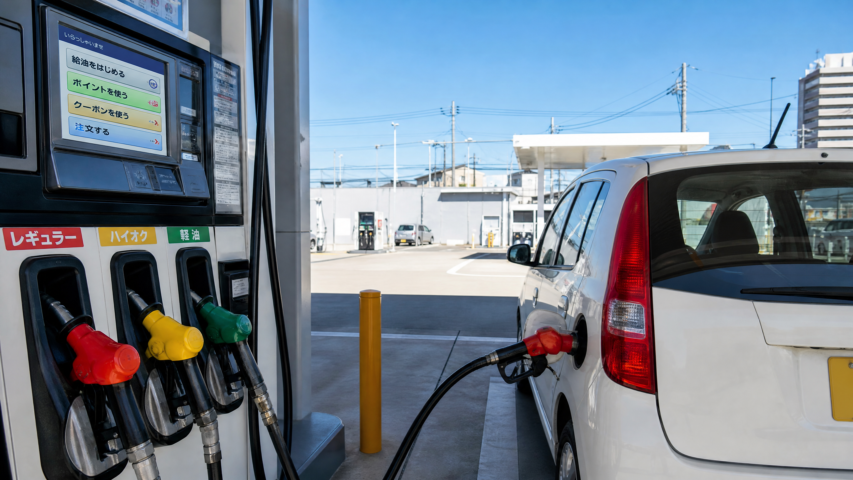
Using the correct fuel is critical to avoid damaging your rental car's engine. In Japan, there are three main types of fuel available at all gas stations, and they are universally color-coded for easy identification. The most common fuel type for standard rental cars is "Regular" unleaded gasoline, which is always indicated by a red nozzle. If you are renting a luxury or sports vehicle, it might require "High-Octane" gasoline, marked with a yellow nozzle. Finally, diesel fuel, typically used for larger vans or specific SUV models, is indicated by a green nozzle. Before leaving the rental office, always confirm the required fuel type with the staff. Additionally, you can usually find a sticker indicating the correct fuel type on the inside of the car's fuel door.

How to Use a Self-Service Gas Station

Refueling at a self-service station is a straightforward process. First, pull up to the pump ensuring that your car's fuel door is on the correct side, and turn off the engine. Approach the touch screen terminal and press the start button. You will be prompted to select your payment method; you can choose between cash or a credit card. If you choose cash, insert your bills into the machine before proceeding. Next, select the fuel type (Red for Regular) and the amount you want to pump. If you are preparing to return your rental car, look for the "Full Tank" (満タン) button. After confirming your selection, open your car's fuel cap, remove the color-coded nozzle, and insert it into the fuel port. Squeeze the handle to start pumping; it will automatically stop when the tank is full or the specified amount is reached. Return the nozzle to the pump, and don't forget to collect your receipt and any change.

Important Rules for Returning Your Rental Car

The standard policy for most rental car companies in Japan is the "full tank return" rule. This means you must return the vehicle with a completely full tank of gas. It is highly recommended to refuel at a gas station located as close to the rental return location as possible, ideally within a few kilometers. When you return the car, the rental staff will check the fuel gauge. In many cases, they will also ask to see the receipt from your final refueling to verify that the gas was purchased recently and near the shop. Therefore, it is crucial to keep the receipt after you fill up. If you fail to return the car with a full tank, the rental company will calculate the missing fuel based on the distance driven and charge you a premium rate that is often higher than standard gas station prices.

Tips for a Hassle-Free Refueling Experience

To ensure a hassle-free experience, plan your refueling stops in advance, especially if you are driving in rural areas or mountainous regions like Hokkaido or the Japanese Alps, where gas stations can be sparse and may close early in the evening. In urban areas, you will find 24-hour self-service stations easily. If you encounter any issues at a self-service station, look for an intercom button on the pump to call for assistance; there is usually a staff member inside the office even at self-service locations. By understanding the fuel types, knowing how to operate the self-service terminals, and remembering the full tank return policy, you can enjoy your Japanese road trip with complete peace of mind.

Gas pump with red, yellow, and green nozzles beside a white car at a bright gas station under a blue sky.

Why Japan's Expressways Are Worth Knowing Before You Drive

Renting a car in Japan opens up scenic routes and hidden destinations that public transport cannot reach. However, Japan's expressway network comes with rules and systems that differ from what drivers in other countries may expect. Understanding these before you hit the highway will save you time, money, and stress.

The ETC Card: Your Key to Smooth Toll Payments

Japan's expressways are toll roads, and the Electronic Toll Collection (ETC) system is the most efficient way to pay. When you rent a car, the vehicle will almost certainly have an ETC device installed in the dashboard. What you need to add is an ETC card, available as an optional rental item at most car rental counters. Request one when you book your vehicle.

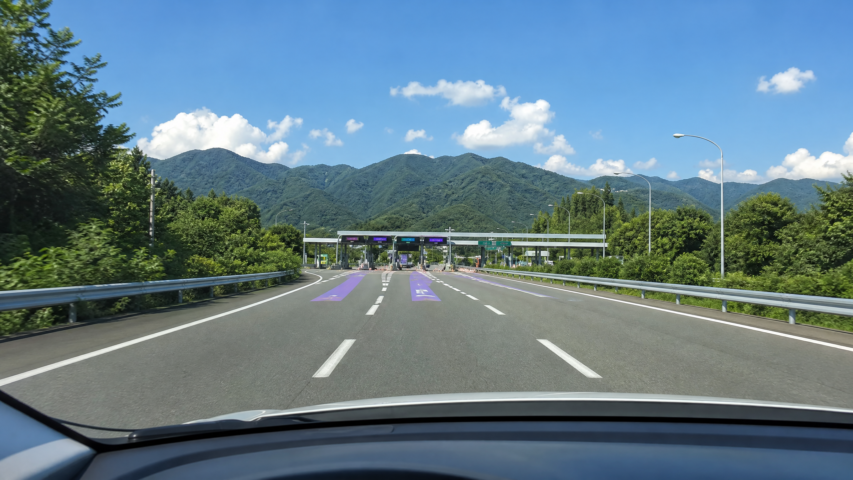
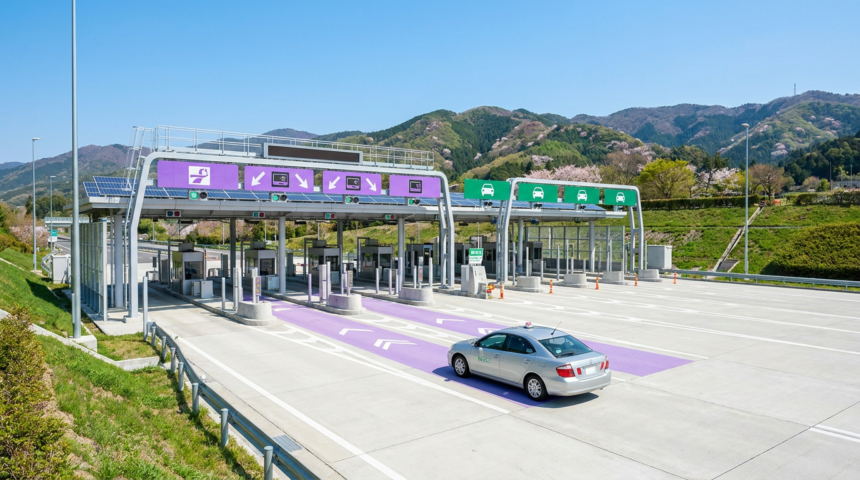
Using the ETC system is straightforward. Insert the card into the in-car reader before driving, and the device will give an audible confirmation. When approaching a toll gate, look for the purple-coloured ETC lane rather than the green general lane. Slow down to 20 km/h or below as you pass through — the barrier lifts automatically if your card is valid. All toll charges are settled when you return the rental car.

The ETC card also unlocks time-based discounts. Driving between midnight and 4 a.m. qualifies for roughly 30% off on many expressways. Weekend and public holiday discounts are also available. For longer road trips, some rental companies offer regional Expressway Passes — such as the Hokkaido Expressway Pass or the Kyushu Expressway Pass — allowing unlimited expressway use within a specific region for a flat fee.

Speed Limits on Japanese Expressways

The standard speed limit on Japan's national expressways is 100 km/h for ordinary passenger cars, with a minimum of 50 km/h on the main lanes. However, not all high-speed roads share the same limit. Urban motorways such as the Tokyo Metropolitan Expressway are legally classified differently, and the default speed limit on these roads is 60 km/h unless a digital sign indicates otherwise. Many foreign drivers receive fines on the Tokyo Metropolitan Expressway by assuming the limit is 100 km/h. Always check posted signs.

Keep to the left lane for regular driving. The rightmost lane is a passing lane only — staying in it after overtaking is a traffic violation. Driving on the road shoulder is strictly prohibited except in genuine emergencies.

Service Areas and Parking Areas

Japan's expressways are well supplied with rest facilities. Service Areas (SA) are larger stops offering restaurants, convenience stores, gift shops, petrol stations, and clean restrooms open 24 hours. Parking Areas (PA) are smaller and may offer only restrooms and vending machines.

  • Follow the green directional signs with a "P", coffee cup, or "i" symbol to find the next rest stop.
  • Park in the correct bay for your vehicle type — trucks, buses, and motorcycles have designated areas.
  • Refuel at SA petrol stations before long stretches with no service facilities. Running out of fuel on an expressway is a punishable offence in Japan.

What to Do If Your Car Breaks Down

If your car breaks down, move the vehicle to the road shoulder or an emergency bay if possible and turn on your hazard lights immediately. Place an emergency warning triangle at least 50 metres behind the vehicle — this is legally required on expressways. Do not remain inside the car. Exit through the left-side door and wait behind the guardrail, away from traffic. Emergency telephones are installed every kilometre along the expressway. You can also dial #9910 from your mobile phone.

Key Rules to Remember

  • No U-turns or reversing on expressways. If you miss your exit, proceed to the next interchange and ask toll staff — they can arrange a legal U-turn route at no charge.
  • Seatbelts are mandatory for all occupants at all times.
  • Mobile phone use while driving is illegal and carries heavy fines.
  • Vehicles with engine displacement of 125cc or below are not permitted on expressways.

Japan's expressways are among the safest in Asia. With the right preparation — particularly around the ETC card and speed rules — your highway driving experience will be smooth and genuinely enjoyable.

Driver’s-eye view on a multi-lane highway heading toward toll booths, with purple lane markings and green forested mountains under a blue sky in the distance

Why Summer Driving in Japan Demands Extra Caution

Japan's summer is one of the most demanding driving environments in Asia. From late June through early September, the combination of intense solar radiation and high humidity creates conditions that can be genuinely dangerous for drivers. Temperatures regularly exceed 35°C across the country, and inside a parked car, the situation becomes far more extreme. According to testing conducted by the Japan Automobile Federation (JAF), a black vehicle left in direct sunlight at an ambient temperature of 35°C can reach an interior peak of 57°C, with the dashboard surface climbing to 79°C. Even a white car under the same conditions can hit 52°C inside. These are not temperatures that humans, pets, or children can safely tolerate, even briefly.

Never Leave Anyone in a Parked Car

One of the most critical findings from JAF's summer research is how quickly conditions deteriorate once the air conditioning is switched off. In their tests, the heat stress index inside a parked car reached a dangerous level within just 15 minutes of the engine being turned off. For infants and elderly passengers, whose body temperature regulation is less efficient, this window is even shorter. Never leave children, elderly individuals, or pets inside a parked car during summer, even if you plan to return within a few minutes. Opening windows by 3 cm only reduces peak interior temperature from 57°C to 45°C, which remains life-threatening.

Preparing Your Rental Car Before You Drive

Before setting off on a summer road trip in Japan, there are several practical steps every rental car driver should take. First, use a sunshade on the windshield whenever the car is parked. While sunshades alone cannot prevent dangerous heat buildup, they reduce dashboard temperatures and make the initial cool-down faster once you start the air conditioning. Second, open all doors for 30 to 60 seconds before entering a car that has been sitting in the sun. This allows trapped hot air to escape and reduces the time your air conditioner needs to reach a comfortable temperature. Third, check that the rental car's air conditioning is functioning properly before leaving the lot. In summer heat, a malfunctioning AC is not merely uncomfortable — it is a safety issue.

Staying Hydrated and Alert on the Road

Driving in heat increases the physical and cognitive demands on the driver. Dehydration, even at mild levels, impairs concentration and reaction time. Keep a large bottle of water within easy reach at all times, and drink regularly rather than waiting until you feel thirsty. Avoid energy drinks and alcohol entirely while driving, as both accelerate dehydration. Plan your route to include rest stops every 60 to 90 minutes, especially during the hottest part of the day between 10:00 and 15:00. Japan's highway service areas (SA) and parking areas (PA) are well-equipped with vending machines, convenience stores, and shaded rest areas, making them ideal spots to cool down and rehydrate.

Managing the Air Conditioning Effectively

Running the air conditioning not only lowers temperature but also removes moisture from the cabin air, which makes a significant difference to driver comfort and alertness. Set the temperature to around 25°C to 27°C rather than the coldest setting, as extreme cold can cause drowsiness and make the transition to outdoor heat more physically stressful. Direct the vents toward the lower body rather than the face to maintain alertness. On long drives, switch the AC to fresh-air mode periodically to prevent carbon dioxide buildup inside the cabin.

What to Do If You Feel Unwell While Driving

If you begin to feel dizzy, nauseous, or unusually fatigued while driving, pull over safely at the nearest rest area or convenience store parking lot. Turn the air conditioning to its maximum setting, drink cold water, and apply a cold, wet towel to your neck and wrists. Japan's nationwide emergency number is 119 for ambulance services. If symptoms do not improve within 15 to 20 minutes, call for help immediately. Heat exhaustion and heat stroke can escalate rapidly, and it is always better to stop and seek assistance than to push on and risk an accident.

Summer Driving Checklist

  • Carry at least one liter of water per person per hour of planned driving.
  • Use a windshield sunshade whenever parked in direct sunlight.
  • Never leave passengers or pets in a parked car with the engine off.
  • Take a rest break every 60 to 90 minutes, especially between 10:00 and 15:00.
  • Check the rental car's AC before departing from the rental counter.
  • Know the emergency numbers: 119 for ambulance, 110 for police.

Japan's summer roads are beautiful and well-maintained. With the right preparation, a summer road trip can be a genuinely memorable experience. The key is to respect the heat, plan your stops, and keep yourself and your passengers hydrated and comfortable throughout the journey.

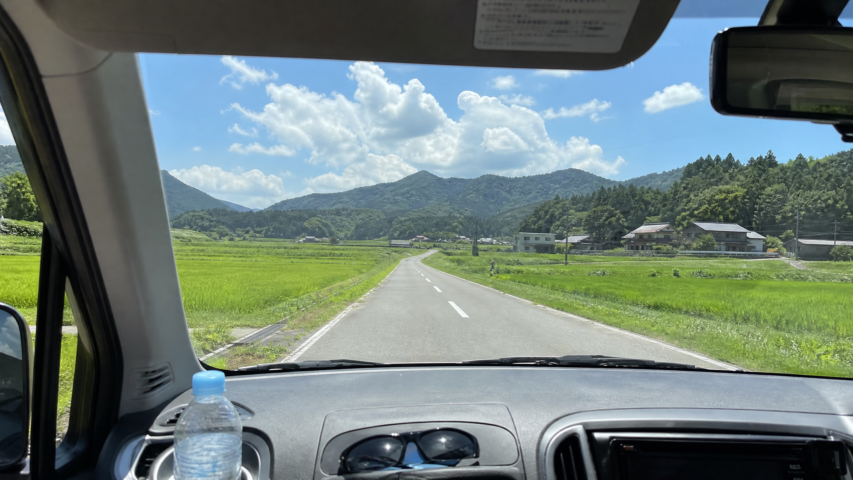
View from inside a car driving down a rural two-lane road, with green fields and distant hills under a blue sky with clouds.

Understanding Japanese Road Signs and Markings

Driving a rental car in Japan offers an incredible opportunity to explore scenic routes that are often inaccessible by public transportation. However, for foreign drivers, navigating Japanese roads requires a solid understanding of local road signs and markings. Since English translations are not always available on every sign, especially in rural areas, familiarizing yourself with these essential visual cues is crucial for a safe and stress-free journey.

Japan follows the left-hand traffic system, meaning the driver's seat is on the right side of the vehicle. While this might take some getting used to for drivers from countries with right-hand traffic, understanding the road signs is equally important. The Japanese traffic system is highly organized, and strictly adhering to these rules ensures your safety and the safety of pedestrians and other drivers.

The Iconic "Stop" Sign (Tomare)

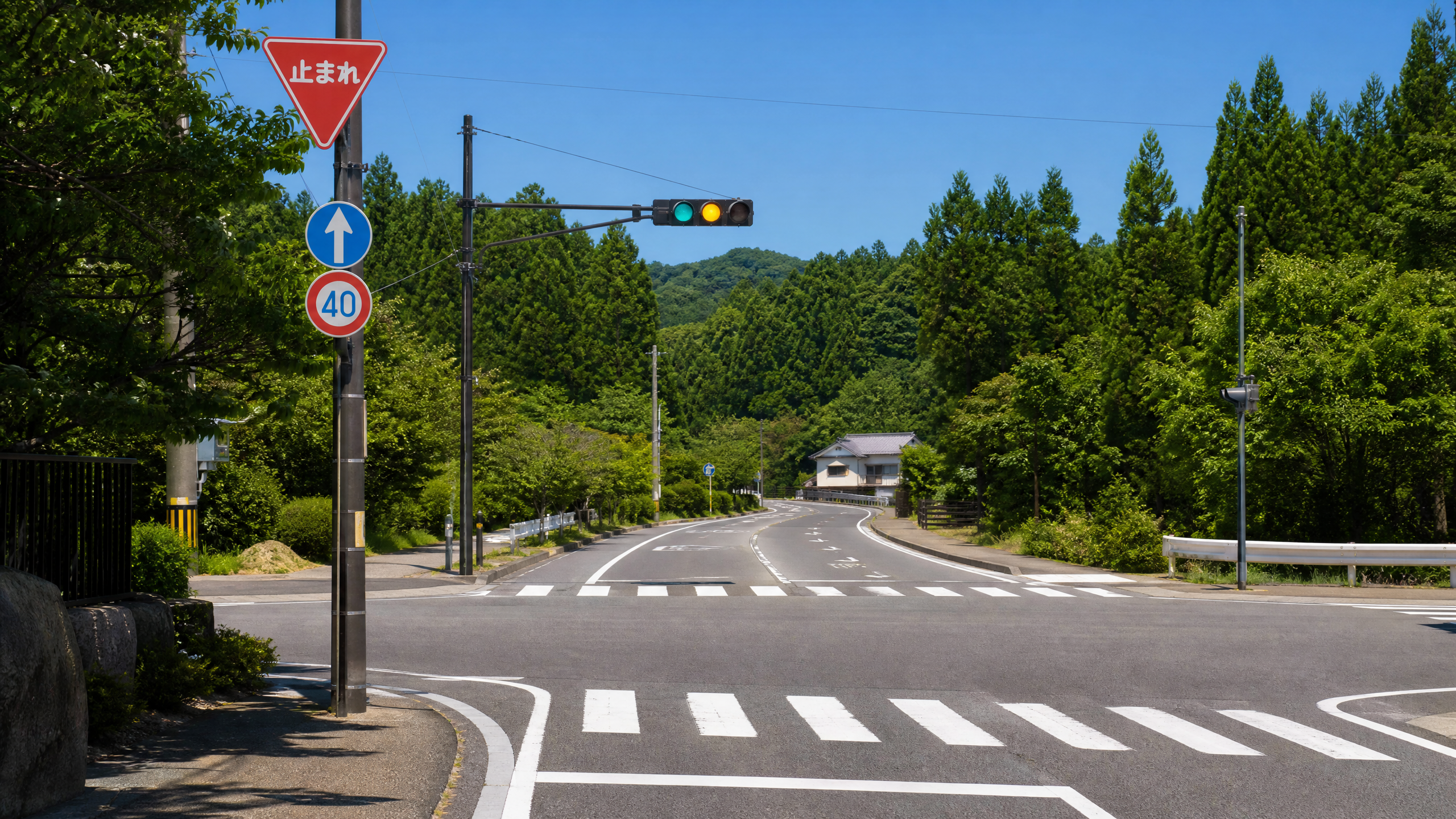
One of the most critical signs you must recognize is the Japanese "Stop" sign. Unlike the red octagonal signs common in many Western countries, the Japanese stop sign is an inverted red triangle with the white characters "止まれ" (Tomare) written on it. In recent years, English translations have been added to some of these signs in major cities, but you should not rely on this everywhere.

When you encounter this sign, you must bring your vehicle to a complete stop just before the solid white stop line painted on the road. Failing to stop completely is a serious traffic violation and a leading cause of accidents involving foreign drivers at intersections without traffic lights. After stopping, you must visually check both directions for oncoming traffic, bicycles, and pedestrians before proceeding.

Traffic Lights and Unique Arrow Signals

Traffic lights in Japan are generally horizontal and are placed on the opposite side of the intersection. The sequence is standard: green, yellow, and red. However, there are specific rules you must follow. In Japan, you cannot turn left on a red light unless there is a specific sign or a green arrow indicating it is safe to do so. A red light means all traffic must stop.

You will frequently see green arrow signals below the main traffic lights. If the main light is red but a green arrow is illuminated, you may proceed only in the direction indicated by the arrow. For example, a green right arrow allows you to turn right, but you must still yield to oncoming traffic and pedestrians. Always prioritize pedestrians, as they have the right of way at crosswalks.

Speed Limits and Regulatory Signs

Speed limits in Japan are generally lower than in many Western countries. On ordinary roads, the speed limit is typically 60 km/h, but in urban areas and residential zones, it is often reduced to 30 km/h or 40 km/h. On expressways, the limit is usually 100 km/h, though some sections may allow up to 120 km/h. Speed limit signs are round with a white background, a red border, and blue numbers.

Another important regulatory sign is the "No Entry" sign, which is a red circle with a white horizontal line. This indicates that vehicles cannot enter the road. Additionally, the "Slow Down" sign (徐行) is an inverted red triangle similar to the stop sign but with different characters. It requires you to reduce your speed to a level where you can stop immediately if necessary, usually around 10 km/h or less. Being mindful of these rules is the key to an enjoyable trip.

Intersection on a tree-lined street with a stop sign (止まれ), blue one-way sign, and 40 km/h sign near a crosswalk.

Why Night Driving in Japan Requires Extra Caution

Driving a rental car in Japan during the day is already a rewarding challenge, but venturing out after dark introduces a different set of risks. Reduced visibility, unfamiliar road markings, and the possibility of wildlife on the road all demand a higher level of attention. Whether you are heading to a late dinner, catching an early morning flight, or exploring a rural area after sunset, understanding the specific hazards of night driving will help you stay safe and enjoy the journey.

Headlight Rules and Best Practices

Japan's Road Traffic Act requires all vehicles to use headlights from sunset to sunrise and whenever visibility drops below 200 metres. The default setting is low beam, which illuminates the road ahead without blinding oncoming drivers. On dark rural roads or mountain passes without street lighting, switching to high beam significantly extends your field of vision and gives you more time to react to obstacles, pedestrians, or animals.

The key rule is to switch back to low beam as soon as you see an oncoming vehicle or are following another car closely. Leaving high beams on can temporarily blind other drivers and is considered both dangerous and discourteous. Many rental cars in Japan have automatic headlights, but do not rely on this feature entirely. In twilight conditions, the system may not activate quickly enough. Always confirm that your headlights are on before pulling onto a public road.

Before leaving the rental lot, take a few minutes to locate the headlight lever, practice switching between low beam and high beam, and check that the windscreen is clean inside and out. A greasy windscreen scatters oncoming headlight glare dramatically, reducing your effective vision even when your own lights are working correctly.

Wildlife on the Road: A Growing Hazard

One of the most underestimated dangers of night driving in Japan is wildlife. According to Hokkaido Prefectural Police, there were 5,460 vehicle collisions involving Yezo sika deer in Hokkaido alone in 2024, a figure that has risen more than fourfold since 2004. Deer, raccoon dogs, wild boars, and foxes are nocturnal animals most active between dusk and dawn.

If you are driving through Hokkaido, Tohoku, or any forested region at night, keep your speed moderate and scan the road edges with high beams where traffic allows. Animal eyes reflect headlight beams, giving you a brief warning, but the reaction window is short at highway speeds. The Japan Automobile Federation (JAF) advises against swerving sharply to avoid an animal, as this can cause you to lose control or cross into oncoming traffic. Instead, brake firmly in a straight line and sound your horn. If a collision occurs, pull over safely, activate hazard lights, and call the police on 110.

Managing Fatigue on Night Drives

Fatigue is a silent contributor to many night-time accidents. The human body is naturally inclined to sleep after dark, and driving in an unfamiliar environment amplifies mental effort. Warning signs include frequent blinking, difficulty maintaining lane position, and missing road signs.

The most effective countermeasure is to plan rest stops before you feel tired. On expressways, service areas and parking areas are open around the clock and provide a safe, well-lit place to stop. A 15-minute nap can restore alertness more effectively than caffeine alone. Avoid driving between midnight and 4 a.m. if possible, as this corresponds to the lowest point of the human circadian rhythm. If your itinerary requires it, take breaks at least every two hours.

Navigating Unfamiliar Roads After Dark

Set your navigation system before you start driving and use voice guidance to avoid looking at the screen while moving. If you need to change your route, pull into a convenience store car park first. Be especially careful at unmarked intersections and narrow local roads where pedestrians and cyclists without reflective gear may appear suddenly. In residential areas, reduce your speed and be prepared to stop at any moment.

Quick Safety Checklist for Night Driving

  • Confirm headlights are on and windscreen is clean before departure
  • Use high beams on unlit rural roads; switch to low beam for oncoming traffic
  • Reduce speed on mountain roads and in areas with known wildlife activity
  • Take a break at least every two hours; use expressway service areas
  • Set navigation before driving; do not operate it while moving
  • Keep emergency numbers handy: police 110, ambulance 119, JAF 0570-00-8139

Night driving in Japan can be genuinely enjoyable when approached with the right preparation. The roads are generally quiet after dark and traffic is lighter. By respecting the specific challenges of low-light driving and following the practical steps above, you can travel safely and arrive at your destination with confidence.

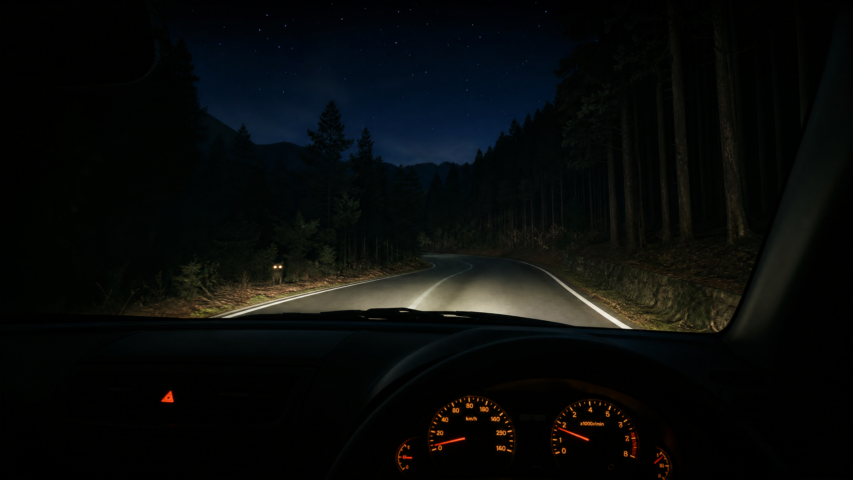
Nighttime view from the car, showing a winding road through a dense forest under a starry sky, with orange dashboard gauges lit in the foreground.

Understanding Parking Rules in Japan: A Guide for Rental Car Drivers

Parking in Japan can be one of the more challenging aspects of a self-drive trip, especially for first-time visitors. Japan's road traffic laws are strictly enforced, and even a brief stop in the wrong location can result in a substantial fine. Understanding where you can and cannot park — and how to use the various types of parking facilities — will help you travel with confidence.

Parking vs. Stopping: An Important Legal Distinction

Japanese traffic law draws a clear distinction between "parking" (駐車, chūsha) and "stopping" (停車, teisha). Parking refers to leaving a vehicle unattended or remaining stationary for an extended period, including any situation where the driver has left the vehicle and cannot move it immediately. Stopping covers brief halts such as picking up or dropping off passengers, or pausing for five minutes or less to load goods. This distinction matters because the prohibited zones and penalties differ for each category.

Where You Cannot Park or Stop

Under Article 44 of Japan's Road Traffic Act, both parking and stopping are prohibited in the following locations:

  • Intersections and within 5 metres of the edge of an intersection
  • Pedestrian crossings and within 5 metres of their edges
  • Railway level crossings and within 10 metres of their edges
  • Bus stops and tram stops, within 10 metres of the stop marker
  • Inside tunnels and near the top of steep hills

Article 45 additionally prohibits parking (though brief stopping may be permitted) near locations marked with a no-parking sign, within 3 metres of a garage entrance, within 5 metres of a fire hydrant, and within 1 metre of a fire alarm box. Parking on the same stretch of road for 12 hours or more during the day, or 8 hours or more overnight, also constitutes a violation.

Types of Coin Parking Lots

Japan has a well-developed network of paid parking facilities known as coin parking (コインパーキング). There are three main types you will encounter.

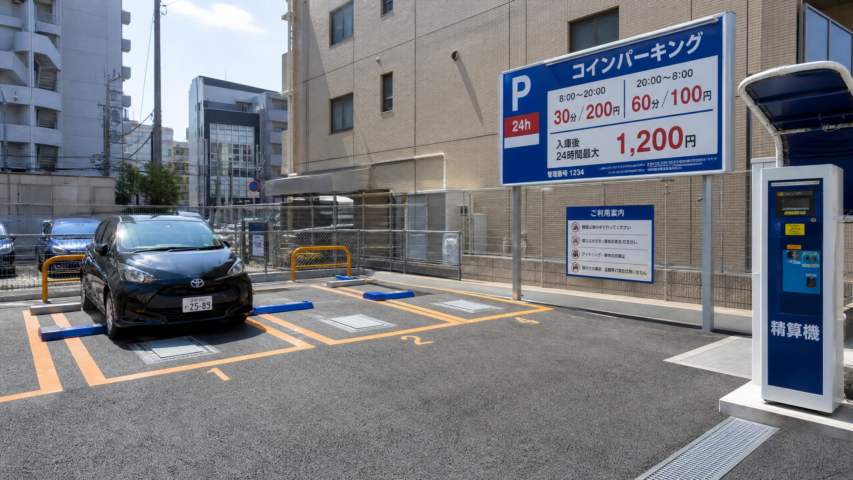
The most common in urban areas is the lock-plate type. After you drive into a numbered space, a metal plate rises beneath the vehicle to prevent it from leaving. To exit, go to the payment machine, enter your space number, press 精算 (seisan, meaning "settlement"), and pay the fee. Once payment is confirmed, the plate lowers. Always confirm the plate is fully down before moving, and depart promptly after paying.

The gate type is typically found at shopping centres and large facilities. You collect a ticket at the entrance gate and pay at the exit gate or a pre-payment machine inside. Many commercial facilities offer free or discounted parking when you make a purchase, so keep your ticket and ask at the service counter.

The prepaid or camera-based type is more common in suburban and tourist areas. In prepaid lots, you purchase a time ticket at the machine and place it on your dashboard. In camera-based lots, your licence plate is recorded on entry and you pay before leaving. These lots often offer lower rates and longer maximum stay periods.

Fees, Payment, and Practical Tips

Parking fees vary considerably by location. In central Tokyo, rates can exceed 500 yen per 10 minutes, while suburban lots may charge around 200 to 300 yen per hour. Most lots display both an hourly rate and a maximum daily fee (最大料金, saidai ryōkin). Be aware that the daily maximum often differs between daytime and overnight periods, so read the rate board carefully.

Payment machines generally accept 1,000-yen notes and coins. Many modern lots also accept credit cards and IC cards such as Suica or Pasmo. Five-thousand-yen and ten-thousand-yen notes are typically not accepted, so carry smaller bills. At the entrance, watch for the signs: 空 (kū) means vacant spaces are available, while 満 (man) means the lot is full.

Penalties for Violations

If your rental car is found illegally parked while you are absent, it is classified as an abandoned vehicle violation (放置駐車違反). Fines for a standard passenger car are 15,000 yen in a no-parking zone and 18,000 yen in a no-stopping zone. Rental companies typically pass these fines to the renter, often with an additional handling fee. Planning your route in advance and using a parking search app such as Times Parking or Park24 to locate a designated lot near your destination is the most reliable way to avoid these penalties.

Black Toyota parked in a 24h coin parking lot with orange-lined spaces and a large blue-and-white rate sign nearby to the right gym-like kiosk

Introduction to Japan's Expressway Toll System

Driving on Japan's expressways is undoubtedly one of the most efficient and enjoyable ways to explore the country, offering well-maintained roads and breathtaking scenery along the way. However, navigating the toll gates can be intimidating for first-time visitors, especially when faced with unfamiliar signs and procedures. NEXCO East operates toll expressways, so understanding how its gates work helps visitors travel safely. Understanding the difference between Electronic Toll Collection (ETC) lanes and General lanes is absolutely essential for a smooth, safe, and stress-free journey.

Understanding the ETC System

The Electronic Toll Collection (ETC) system is an advanced automated method that allows you to pay tolls without stopping your vehicle at the gate. It relies on seamless wireless communication between an overhead antenna at the toll gate and a dedicated onboard device installed in your car. To use this highly convenient system, your vehicle must be equipped with an ETC onboard device, and a valid, unexpired ETC card must be securely inserted into the slot before you begin driving. When you arrange a rental car, confirm whether your chosen vehicle has an ETC onboard device and how an ETC card is handled before departure.

Crucial Safety Rules for ETC Lanes

When approaching any toll gate, look carefully for signs indicating "ETC" lanes. Safety is the paramount concern when using these automated gates. You must strictly reduce your speed to 20 km/h or less before entering the lane. The automated system requires this low speed to properly verify your card and safely open the barrier in time. Always maintain a safe and generous distance from the vehicle in front of you, as sudden stops can frequently occur if a driver ahead has an expired card or an improperly inserted device. Drive slowly and deliberately through the lane, keeping a close eye on the roadside display monitor and the position of the toll gate bar at all times.

What to Do If the ETC Bar Does Not Open

Occasionally, the ETC bar may fail to open due to a communication error, a misplaced card, or an expired card. If this happens to you, the most important rule to remember is to never reverse your vehicle. Reversing at a toll gate is extremely dangerous and strictly prohibited. If you are stopped at an entrance gate, an attendant will communicate with you through the intercom system, and you will simply need to take a toll pass ticket from the green automatic machine. If you are stopped at an exit gate, turn on your hazard lights immediately, remain safely inside your vehicle, and wait for a staff member to come and assist you. You will need to hand over your ETC card to the attendant so they can manually calculate and process your toll payment.

Using General Lanes for Cash and Credit Cards

On NEXCO East roads, if you do not have an ETC card, use a "General" (一般) lane rather than an ETC-only lane. At the entrance toll gate, you will need to come to a complete stop and take a toll pass ticket from the automatic machine. Keep this ticket safe and accessible, as it accurately records your entry point and time. When you reach your destination exit, use the General lane once again, hand the ticket to the toll attendant, and pay your toll. You can pay using cash (Japanese Yen only) or a major credit card. Be prepared with your preferred payment method in advance to keep the traffic flowing smoothly and efficiently.

Conclusion

Whether you choose the unmatched convenience of the ETC system or prefer using the traditional General lanes, knowing the rules of Japan's expressway toll gates ensures a stress-free and highly enjoyable road trip. Always prioritize safety above all else by strictly adhering to the 20 km/h speed limit in ETC lanes and calmly following attendants' instructions if any issues arise during your journey. With Relax Rent-A-Car, you are well-equipped with the knowledge and resources to enjoy the beautiful, expansive highways of Japan with complete confidence and peace of mind.

Japanese expressway toll gate with ETC and general lanes

Driving in Japan: The Importance of Yielding to Emergency Vehicles

When you rent a car and drive in Japan, you may encounter emergency vehicles such as ambulances, fire trucks, or police cars with their sirens blaring and red lights flashing. Knowing exactly how to react is crucial not only for the safety of everyone on the road but also to comply with the Japanese Road Traffic Act. Many foreign drivers feel anxious when they hear a siren in an unfamiliar country. However, by understanding a few straightforward rules, you can confidently and safely yield the right of way, ensuring that emergency responders reach their destinations without delay.

What the Japanese Road Traffic Act Requires

In Japan, traffic flows on the left side of the road. This fundamental rule also dictates how drivers should behave when an emergency vehicle approaches. According to Article 40 of the Road Traffic Act, your required action depends entirely on your current location on the road, specifically whether you are near an intersection or driving on a straight stretch of road.

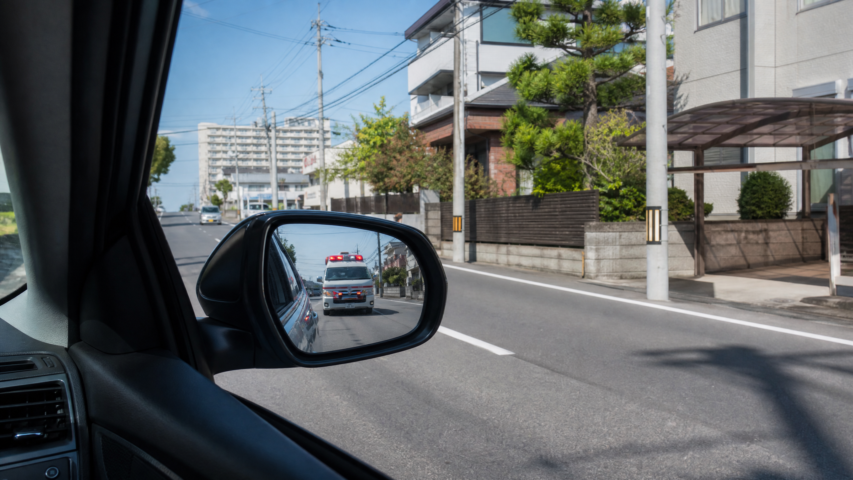
It is important to note that you do not need to slam on your brakes the moment you hear a siren. Instead, remain calm, check your mirrors to locate the approaching emergency vehicle, and follow the specific yielding procedures based on your surroundings.

How to Yield at or Near an Intersection

Intersections are the most critical areas when emergency vehicles are approaching, as they pose the highest risk of collisions. If you are driving at or near an intersection and notice an emergency vehicle approaching, you must follow these specific steps:

  • Do not enter the intersection: If you have not yet entered the intersection, stay out of it. If you are already inside the intersection, exit it safely and promptly.
  • Pull over to the left: Steer your vehicle as far to the left side of the road as safely possible.
  • Come to a complete stop: You must stop your vehicle temporarily to allow the emergency vehicle to pass through the intersection safely.

There is one exception to the "pull over to the left" rule at intersections. If you are driving on a one-way street and pulling over to the left would actually obstruct the emergency vehicle's path, you are required to pull over to the right side of the road instead. Always prioritize creating a clear path for the emergency responders.

How to Yield on Straight Roads and Other Areas

If you are driving on a regular road, away from any intersections, the rules are slightly different but equally important. When an emergency vehicle approaches from behind or from the opposite direction on a narrow road, you must take the following action:

  • Pull over to the left: Move your vehicle to the left side of the road to create space.
  • Yield the right of way: You must give way to the emergency vehicle. While a complete stop is not strictly mandated by law in every non-intersection scenario, slowing down significantly or stopping is often the safest and most practical way to ensure the emergency vehicle can pass safely, especially on narrow Japanese streets.

Just like at intersections, if you are on a one-way street where moving left would block the emergency vehicle, you should move to the right side to clear the path.

Practical Tips for a Safe Reaction

When you hear a siren, your first reaction should be to stay calm. Abrupt braking or sudden lane changes can cause accidents and hinder the emergency vehicle's progress. Use your rearview and side mirrors to identify where the siren is coming from. Once you have located the emergency vehicle, use your turn signals to indicate your intention to pull over, allowing other drivers to anticipate your movements.

In Japan, you will often hear emergency vehicle personnel using a loudspeaker to thank drivers for their cooperation or to provide specific instructions, such as "Please stop on the left." Following these polite instructions ensures a smooth flow of traffic and helps save lives. By familiarizing yourself with these yielding rules, your road trip in Japan will be both safe and enjoyable.

Side-view mirror shows a street scene with an ambulance directly behind the car on a sunny day.