

Night Driving Safety Guide for Rental Car Drivers in Japan
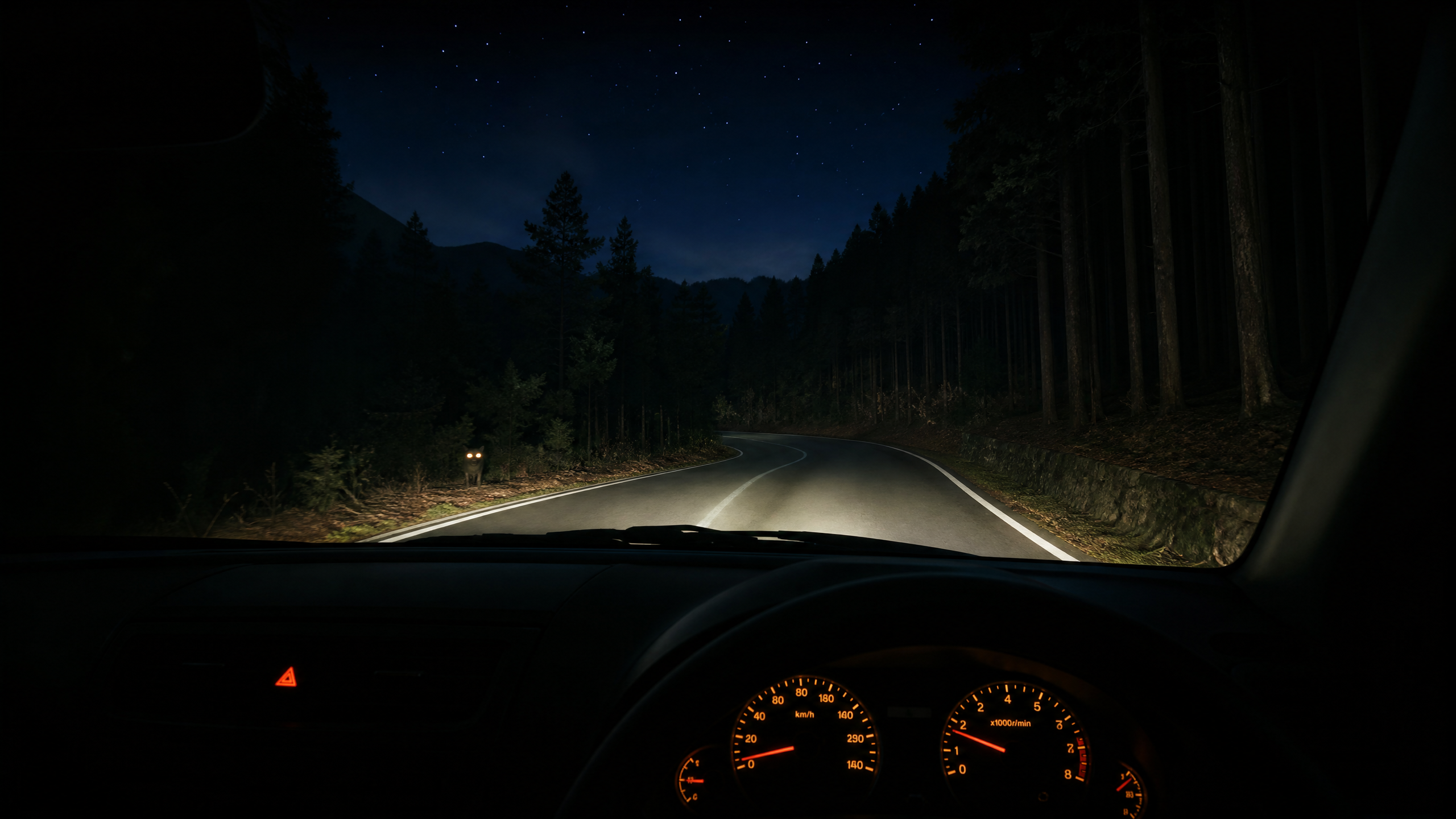
Why Night Driving in Japan Requires Extra Caution
Driving a rental car in Japan during the day is already a rewarding challenge, but venturing out after dark introduces a different set of risks. Reduced visibility, unfamiliar road markings, and the possibility of wildlife on the road all demand a higher level of attention. Whether you are heading to a late dinner, catching an early morning flight, or exploring a rural area after sunset, understanding the specific hazards of night driving will help you stay safe and enjoy the journey.
Headlight Rules and Best Practices
Japan's Road Traffic Act requires all vehicles to use headlights from sunset to sunrise and whenever visibility drops below 200 metres. The default setting is low beam, which illuminates the road ahead without blinding oncoming drivers. On dark rural roads or mountain passes without street lighting, switching to high beam significantly extends your field of vision and gives you more time to react to obstacles, pedestrians, or animals.
The key rule is to switch back to low beam as soon as you see an oncoming vehicle or are following another car closely. Leaving high beams on can temporarily blind other drivers and is considered both dangerous and discourteous. Many rental cars in Japan have automatic headlights, but do not rely on this feature entirely. In twilight conditions, the system may not activate quickly enough. Always confirm that your headlights are on before pulling onto a public road.
Before leaving the rental lot, take a few minutes to locate the headlight lever, practice switching between low beam and high beam, and check that the windscreen is clean inside and out. A greasy windscreen scatters oncoming headlight glare dramatically, reducing your effective vision even when your own lights are working correctly.
Wildlife on the Road: A Growing Hazard
One of the most underestimated dangers of night driving in Japan is wildlife. According to Hokkaido Prefectural Police, there were 5,460 vehicle collisions involving Yezo sika deer in Hokkaido alone in 2024, a figure that has risen more than fourfold since 2004. Deer, raccoon dogs, wild boars, and foxes are nocturnal animals most active between dusk and dawn.
If you are driving through Hokkaido, Tohoku, or any forested region at night, keep your speed moderate and scan the road edges with high beams where traffic allows. Animal eyes reflect headlight beams, giving you a brief warning, but the reaction window is short at highway speeds. The Japan Automobile Federation (JAF) advises against swerving sharply to avoid an animal, as this can cause you to lose control or cross into oncoming traffic. Instead, brake firmly in a straight line and sound your horn. If a collision occurs, pull over safely, activate hazard lights, and call the police on 110.
Managing Fatigue on Night Drives
Fatigue is a silent contributor to many night-time accidents. The human body is naturally inclined to sleep after dark, and driving in an unfamiliar environment amplifies mental effort. Warning signs include frequent blinking, difficulty maintaining lane position, and missing road signs.
The most effective countermeasure is to plan rest stops before you feel tired. On expressways, service areas and parking areas are open around the clock and provide a safe, well-lit place to stop. A 15-minute nap can restore alertness more effectively than caffeine alone. Avoid driving between midnight and 4 a.m. if possible, as this corresponds to the lowest point of the human circadian rhythm. If your itinerary requires it, take breaks at least every two hours.
Navigating Unfamiliar Roads After Dark
Set your navigation system before you start driving and use voice guidance to avoid looking at the screen while moving. If you need to change your route, pull into a convenience store car park first. Be especially careful at unmarked intersections and narrow local roads where pedestrians and cyclists without reflective gear may appear suddenly. In residential areas, reduce your speed and be prepared to stop at any moment.
Quick Safety Checklist for Night Driving
- Confirm headlights are on and windscreen is clean before departure
- Use high beams on unlit rural roads; switch to low beam for oncoming traffic
- Reduce speed on mountain roads and in areas with known wildlife activity
- Take a break at least every two hours; use expressway service areas
- Set navigation before driving; do not operate it while moving
- Keep emergency numbers handy: police 110, ambulance 119, JAF 0570-00-8139
Night driving in Japan can be genuinely enjoyable when approached with the right preparation. The roads are generally quiet after dark and traffic is lighter. By respecting the specific challenges of low-light driving and following the practical steps above, you can travel safely and arrive at your destination with confidence.