

Driving a Rental Car in Japan During Typhoon Season: Safety Guide
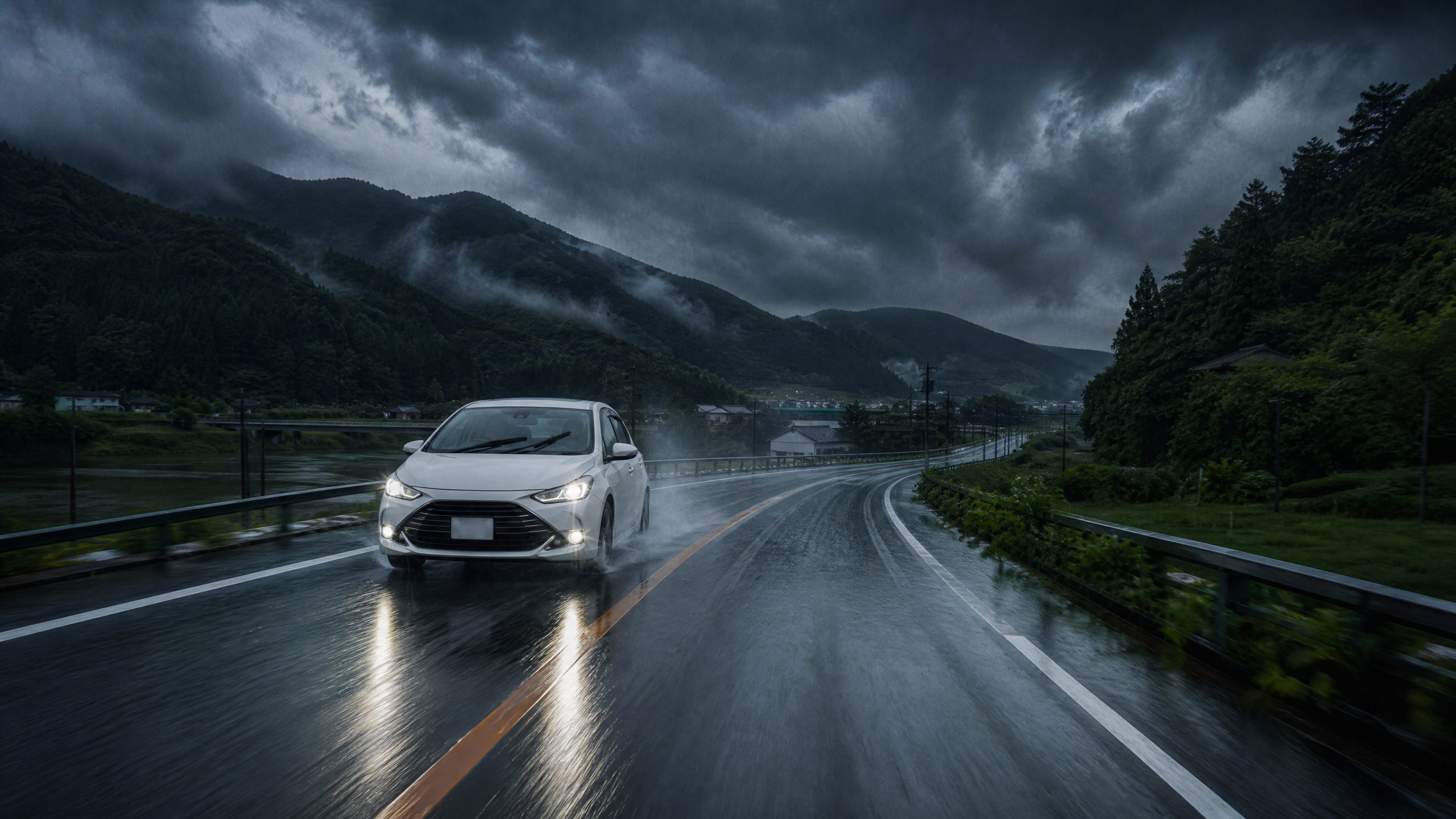
Driving a Rental Car in Japan During Typhoon Season
Japan's typhoon season runs from June through October, with the most active period typically falling between August and September. During this time, powerful storms can bring heavy rainfall, strong winds, and widespread road closures. For visitors renting a car, understanding how to respond to typhoon conditions is essential for staying safe on Japanese roads.
Check Weather and Road Conditions Before You Drive
Before heading out during typhoon season, always check the latest weather forecast and road traffic information. The Japan Road Traffic Information Center, known as JARTIC, provides real-time road updates every five minutes at jartic.or.jp. For expressway information, the Drive Traffic portal at en-www.drivetraffic.jp offers English-language road closure maps covering major highways nationwide.
If a typhoon warning or heavy rain advisory has been issued for your area, seriously consider postponing your drive. Japanese expressway operators routinely close sections of highway when wind speeds exceed safe thresholds or when flooding is detected. Rental car companies generally allow schedule adjustments during natural disasters, so contact your provider early if you need to change your return time.
Three High-Risk Environments to Avoid
Not all roads carry the same risk during a typhoon. Three types of terrain are especially dangerous:
- Coastal roads: High waves and storm surges can sweep over seawall barriers and onto coastal highways. Lateral gusts along open shorelines can push a vehicle sideways. If storm surge or wave warnings are in effect, avoid all coastal routes.
- Riverside roads: Rivers rise quickly during heavy rainfall. Roads alongside riverbanks can become submerged with little warning. Check flood hazard maps through local municipal websites before planning your route.
- Mountain roads: Steep slopes become vulnerable to landslides and debris flows during prolonged rain. Monitor the Japan Meteorological Agency's landslide danger alerts before driving through mountainous regions.
What to Do If You Encounter Flooded Roads
Flooded roads are one of the most serious hazards during a typhoon. Research by the Japan Automobile Federation (JAF) found that a sedan can typically pass through water up to 30 centimetres deep at low speed, but at 60 centimetres the engine is likely to stall. Crucially, murky floodwater makes it impossible to judge depth accurately from inside the car.
If you encounter a flooded section of road, do not attempt to drive through it. Turn around and find an alternative route. If your vehicle stalls in rising water, remain calm, unfasten your seatbelt, and open the window while the water level is still below the window frame. If the window cannot be opened, use an emergency escape hammer to break the glass. Never restart a flooded engine, as doing so can cause irreparable damage or fire.
Driving Safely in Heavy Rain and Strong Winds
If you must drive during severe weather, reduce your speed significantly below the posted limit and increase your following distance to at least double the normal interval. Wet roads extend braking distances considerably, so avoid sudden steering inputs or hard braking. Turn on your headlights even during daylight hours to improve visibility for other drivers.
Strong crosswinds are particularly hazardous on elevated sections of road, bridges, and open expressways. Hold the steering wheel firmly with both hands and be prepared for sudden gusts. If conditions feel unsafe, pull into the nearest service area and wait for the weather to improve.
Rental Car Insurance and Typhoon Damage
Standard Japanese automobile insurance does not cover damage caused by natural disasters such as typhoons or floods under the liability coverage provisions. Many rental car companies offer optional supplemental coverage that includes natural disaster protection. Before your trip, review your rental agreement carefully and ask the counter staff about typhoon-related coverage. Credit card rental insurance often excludes natural disasters, so verify the terms in advance.
Practical Tips for Typhoon-Season Travel
- Download a Japanese weather app such as Yahoo! Weather or the Japan Meteorological Agency's official app for real-time alerts.
- Keep the rental company's emergency contact number saved in your phone.
- Park the vehicle in a covered car park or away from trees and power lines if a typhoon is forecast overnight.
- Carry an emergency escape hammer in the glove compartment in case the vehicle becomes submerged.
- Avoid driving during the most intense phase of a typhoon; most storms pass within 12 to 24 hours, and waiting is always safer than risking a flooded road.
Typhoons are a natural part of the Japanese climate. With proper preparation and awareness, it is entirely possible to travel safely during the season. The key is to stay informed, respect road closures, and never underestimate the power of floodwater or strong winds.