日元

Blog

瀬戸内をつなぐ、ゆとりある秋のドライブ

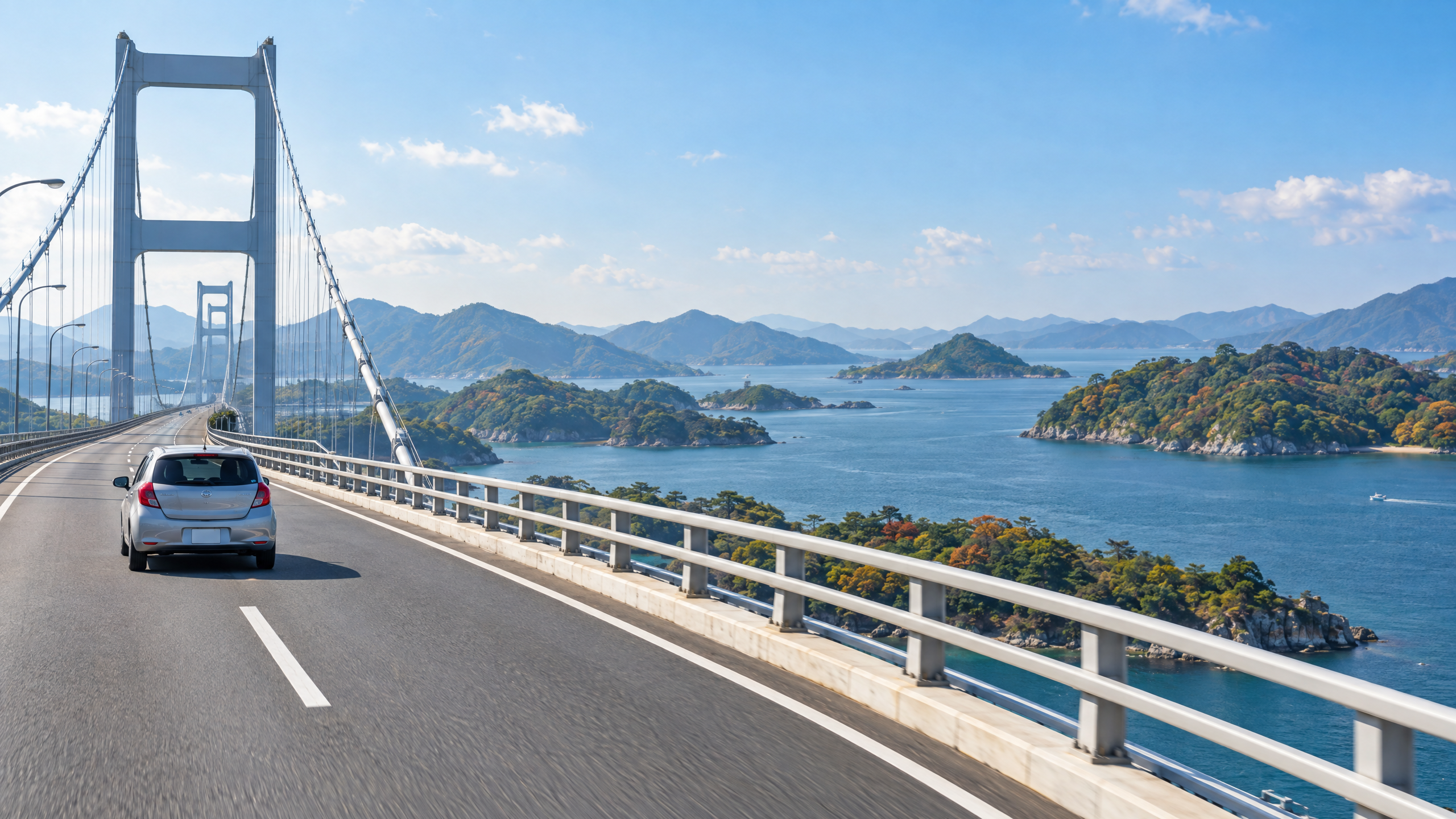
しまなみ海道は、広島県尾道市と愛媛県今治市を瀬戸内海の島々と橋で結ぶルートです。尾道側から島々と橋を経て今治へ向かいます。車なら港町や海辺にも寄れます。秋の海景を楽しむためにも、橋、風、予定の詰め込みを軽く見ないことが大切です。

目的地と貸渡条件を先に固める

尾道から今治、または逆方向を決め、返却場所を確認します。乗り捨ては料金や返却条件が違う場合があります。停車中に目的地と返却地をナビへ登録します。ETCも確認し、車用の案内と標識に従います。

  • 主目的地は一つに絞る。
  • 橋の前の休憩と駐車に余白を作る。
  • 天気と交通情報を出発日に確認する。

橋の上では運転だけに集中する

写真は公式の駐車場や展望場所で撮り、ランプ、橋上、路肩には停めません。風や雨で車が落ち着かないと感じたら、標識の速度内で減速し、車間距離を取ります。疲れる前に島内で短く休みましょう。

日本は左側通行、歩行者優先です。全員がシートベルトを着用し、六歳未満にはチャイルドシートが必要です。飲酒運転や走行中のスマートフォン・ナビ操作はしません。速度は標識を優先し、標識等がない場合の普通自動車は一般道で時速六十キロ、高速道路で時速百キロが上限です。高速道路は走行車線を基本とし、追越車線は追越時だけ使います。

休憩と非常時の備え

休憩は正規駐車場のある二、三か所に絞ります。視界、天候、疲労が変わったら立ち寄り先を減らし、返却前には給油条件と交通も確認します。

不具合時は安全に車を交通の外へ移し、夜間はハザードランプを使います。追突を避け、ガードレールの外側へ避難し車内に残りません。レンタカー会社の指示に従い、JAFは0570-00-8139または#8139です。けがは119、事故は110へ。高速道路の非常電話は一キロ間隔で、近くのキロポストが現在地の目安です。

A coastal drive that rewards a measured pace

The Shimanami Kaido links Onomichi in Hiroshima Prefecture with Imabari in Ehime Prefecture across the Seto Inland Sea. The corridor moves from Honshu toward Shikoku through a chain of islands and major bridges; JNTO’s route outline names Mukaishima, Innoshima, Ikuchijima, Omishima, Hakatajima and Oshima before Imabari. It is famous with cyclists, but a rental car offers a different kind of freedom: you can protect time for a harbor town, a short island walk, or an unhurried meal instead of treating every viewpoint as a race. In autumn, the clear light and coastal scenery are appealing, yet bridge crossings, changing winds and a busy itinerary deserve calm planning.

Set the route and the rental terms before pickup

Choose a simple direction: Onomichi to Imabari, or the reverse. Put both the intended overnight stop and final return location into the booking conversation. A one-way rental can have different availability, fees and return rules from a round trip, so it is better to confirm this before collecting the keys. Load destinations while parked, bring the rental agreement and emergency contact details, and ask whether the car has an ETC card or device if you expect to use toll roads. Do not assume that a cycling map, a ferry connection or a car-navigation shortcut is suitable for your car; follow the vehicle route and road signs.

  • Start with one primary destination, such as a waterfront stop on an island, rather than trying to visit every island.
  • Save the rental office, accommodation and return location in the navigation system before departure.
  • Check the day’s weather and traffic notices, then leave margin for slower bridge approaches, breaks and parking.

Make bridge driving the quiet part of the day

On a bridge, the best photo plan is to keep driving and use an official parking or viewing area later. Give the vehicle room, hold a steady line, watch the road rather than the sea, and do not stop on a ramp, bridge deck or shoulder for scenery. If wind or rain makes the car feel less settled, reduce speed smoothly while staying within the posted limit and keep a generous following distance. Plan a rest before you become tired: a short pause on an island is safer and more enjoyable than searching for a place to stop after concentration has already faded.

Japanese driving rules remain the foundation of a scenic itinerary. Drive on the left, yield to pedestrians, keep every occupant belted, and use a child seat for a child younger than six. Do not drink and drive, and do not operate a phone or navigation screen while the car is moving. Posted signs control the speed; where no sign or marking sets a limit, JAF states that regular automobiles are limited to 60 km/h on ordinary roads and 100 km/h on expressways. On expressways, stay in the driving lane and use the passing lane only to overtake.

Build stops into the journey, not onto the shoulder

The route is not a checklist. Pick two or three planned pauses: perhaps an island café, a seafront walk, or a facility with legal parking. Arriving with time to spare gives the driver a chance to reset before the next bridge. Leave the car only in marked spaces, lock it, and return to the road without rushing. If visibility, wind or fatigue changes the day, skip a stop rather than trying to recover time. The destination will still be there; a relaxed driver is the priority.

Know the safe response if the plan changes

If the car has a problem, first move it out of traffic when it is safe. At night, use the hazard lights if the disabled vehicle must remain on the road. JAF advises people to evacuate to a safe place, such as beyond a guardrail, rather than remain in the car where a rear impact is possible. Use the emergency contact supplied by the rental company and follow its instructions; JAF road service can be reached at 0570-00-8139 or #8139. For an injury call 119, and report an accident to police on 110. On expressways, NEXCO says roadside emergency phones are installed at one-kilometre intervals; the nearby kilopost helps identify your location.

Before the return drive, check the fuel policy, the final traffic conditions and the time needed for inspection. With those basics settled, the Shimanami Kaido becomes what it should be: a thoughtful autumn drive between Onomichi and Imabari, not a dash across bridges.

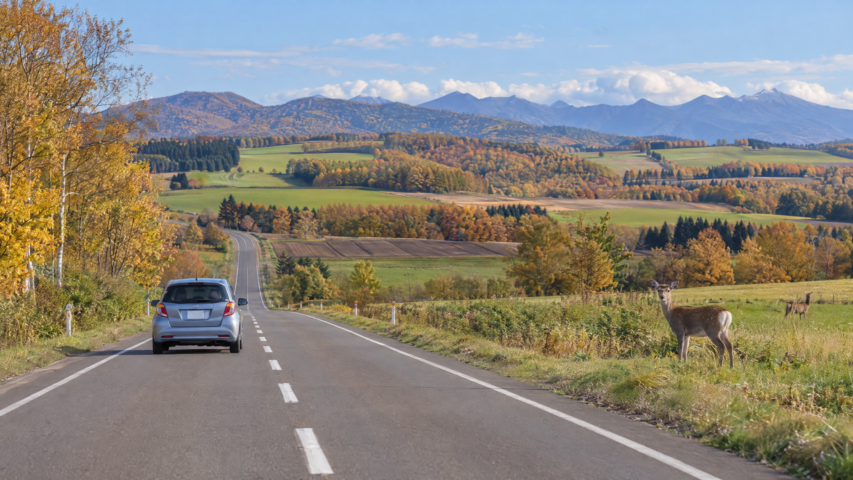
十月的北海道空氣清澈、景色開闊,很適合租車欣賞秋色;同時也要為傍晚的蝦夷鹿風險預留空間。出發前,先把行程改成以白天行車為核心的安全計畫。

秋季行程要從時間開始安排

北海道政府資料指出,蝦夷鹿相關通報事故約41%發生在10月至11月,超過70%集中於16時至午夜。蝦夷鹿在日出、日落前後較活躍;看見車燈或聽見引擎聲時,也可能停在原地,而非立刻離開道路。

把最長的郊區路段排在前半天,並設定真正的日落前終點,例如飯店、市區或預定休息點。導航抵達時間不一定包含雨天、拍照停留、動物警示標誌或陌生道路需要放慢的時間。若行程延誤,應優先刪減繞路景點,不要在天黑後趕路。

規劃能安全收尾的路線

  • 出發當日以官方道路資訊確認天氣、管制與通行狀況。
  • 標記最後一個加油點,以及進入偏遠路段前可休息的位置。
  • 把租車公司聯絡方式、充飽電的手機與充電線放在容易取得處。

日本採左側通行,駕駛人必須優先禮讓行人,並遵守所有速限標誌。JAF說明,若一般道路沒有標示速限,一般汽車上限為60km/h;但上限不是建議速度。夜間、彎道、濕滑路面或林緣視線不佳時,應平順減速到能在看得見距離內停下的速度。

看見一隻後,仍要繼續觀察

道路靠近樹林或草地時,要提早掃視兩側路肩。夜間車燈映出的一點反光,可能就是鹿的眼睛。看見蝦夷鹿時,先鬆開油門;在安全情況下平順煞車,維持車道,不要突然變換方向。蝦夷鹿會群體活動,第一隻通過後,第二隻或第三隻仍可能跟著出現。

鹿在路上或路邊時,不要假設車靠近牠就會離開;請留出可完全停車的距離。不要為了拍照停在危險位置,只有確實需要提醒後方車流時才適當使用警示燈。若發生碰撞或其他事故,先確保人員安全,依情況聯絡119或110,並遵循租車公司的事故處理指示。

留白,才是秋季自駕的從容

別把最後一小時變成追趕天色的競賽。把日落前抵達、留意標誌與從容車速寫進行程,面對蝦夷鹿時就能冷靜應對,讓租車旅程更安全也更自在。

北海道の10月は紅葉を楽しめる季節です。日が傾く郊外道路ではエゾシカへ備え、明るいうちに着く計画にしましょう。

秋は時刻表から安全を考える

北海道の公式情報では、エゾシカが関係する届出事故のおよそ41%は10~11月に発生し、70%以上は16時から24時に集中します。エゾシカは日の出・日没前後に活動が増え、ライトや走行音に反応して立ち止まることがあります。

長い郊外区間は前半に置き、日没前には宿、街なか、または決めた休憩場所へ着く計画にします。ナビの到着予想に雨や慎重走行の時間は十分に含まれません。遅れたら寄り道を減らします。

安全に終われるルートを作る

  • 出発前に道路情報、通行止め、天候を公式情報で確認する。
  • 最後の給油地点と、暗くなる前の休憩場所を地図で確認する。
  • 緊急連絡先と充電済みの携帯を用意する。

日本では左側通行で、歩行者を優先します。標識の速度規制を守り、表示がない一般道路でも上限は60km/hです。夜間、濡れた路面、林のそばで見通しが悪い時は、見える範囲で止まれる速さまで滑らかに減速してください。

1頭を見た後こそ注意する

林や草地に接する道路では、左右の路肩を早めに見ます。夜間はライトに反射する目が手掛かりになることがあります。1頭を見つけたら、アクセルを戻し、安全なら穏やかに減速し、急な進路変更を避けます。エゾシカは群れで行動するため、後から続く可能性があります。

シカが道路上または近くにいる時は、近づけば逃げるとは考えず、停止できる余裕を取ります。写真のために危険な場所へ停車せず、衝突や事故では人の安全を最優先にしてください。必要に応じて119番または110番へ連絡し、レンタカー会社の案内に従います。

余白が秋の旅を守る

最後の1時間を急がないことが、北海道らしい景色を楽しむ近道です。日没前の到着、標識への注意、余裕ある速度を旅程に入れ、落ち着いたドライブを楽しみましょう。

October in Hokkaido rewards rental-car travellers with clear air, open landscapes and autumn colour. It also asks for a different kind of route planning. Ezo deer can enter the road without warning, particularly as daylight fades. This is not a reason to avoid a self-drive trip; it is a reason to build a calm, daylight-first plan before leaving the airport or your accommodation.

Why the autumn timetable matters

Hokkaido Government information on Ezo deer traffic accidents reports that about 41% of reported deer-related accidents occur in October and November. More than 70% occur between 16:00 and midnight. The same guidance notes that deer are most active around sunrise and sunset, and that a deer may stop rather than run when it sees headlights or hears a vehicle.

Use those facts to shape the day, not to create anxiety. Keep the longest rural section early in your itinerary. Put a real destination—your hotel, a town centre or a planned rest stop—before dusk, rather than treating sunset as the time to start the final mountain or forest section. Navigation arrival times do not include a slower pace for wildlife signs, photo stops, rain or an unfamiliar road.

Build a route with a safe finish

Before departure, look at the whole route rather than only the next turn. Identify the last fuel stop and a sensible place to pause before the more isolated section. Check official road information for closures or weather changes on the driving day, and keep the rental company’s contact details where a passenger can find them. If your plan becomes late, shorten it; a scenic detour is optional, while arriving safely is not.

  • Choose an overnight stop that does not require a long, unlit rural drive after dinner.
  • Tell every driver when the daylight driving window ends, and agree that the plan may change.
  • Keep a charged phone, navigation power cable, water and warm layers in the car for an unplanned stop.

Drive for the road you can see

In Japan, drive on the left and give priority to pedestrians. Obey every signed speed limit. JAF explains that, where no limit is signed, regular automobiles are limited to 60 km/h on ordinary roads and 100 km/h on expressways; these are legal ceilings, not a promise that a particular dark or wet road is suitable for that speed. Reduce speed smoothly when visibility, curves, surface conditions or roadside vegetation limit what you can see.

Watch both verges, especially where the road meets woodland or open fields. At night, reflected eyes may be the first sign of a deer. If you see one animal, ease off the accelerator, brake progressively if it is safe, keep your attention in your lane and look for a second or third animal. Ezo deer often move in groups. Avoid a sudden manoeuvre that could put the vehicle into an oncoming lane, a ditch or another road user.

If a deer is on or near the road

Take your foot off the accelerator, create space and be prepared to stop. Do not assume the animal will leave the road just because the car is approaching. Use hazard lights only when they are appropriate for warning following traffic, and do not stop in a dangerous position for a photograph or a closer look. Once the road is clear, continue at a pace that lets you react to another animal beyond the first.

If a collision or other incident occurs, protect people first. Move only if it is safe to do so, follow the rental company’s accident procedure, and contact emergency services or police when required. Japan’s emergency numbers are 119 for ambulance or fire and 110 for police. Keep the location from your navigation screen and do not drive away from an accident scene.

A better Hokkaido memory

A good autumn self-drive day leaves time for the landscape without turning the last hour into a race against darkness. Plan the route, follow signs, treat wildlife-warning areas seriously and give yourself permission to skip one more stop. That margin is what makes a Hokkaido rental-car journey feel relaxed, safe and genuinely enjoyable.

Practical references: Hokkaido Government’s Ezo deer traffic-accident guidance, JAF’s driving rules for Japan, and the National Police Agency’s traffic guidance for foreign drivers.

秋天在日本自駕,早餐時可能晴朗,開出幾公里卻出現一層霧。清晨離開飯店、前往山區或地方景點時,不要只盯著抵達時間;當下能掌握的能見度纔是判斷重點。

出發前先確認視線與行程

查看實際行駛地區的天氣、道路與高速公路資訊,並把第一個行程排得寬鬆。若從停車場就看得出視線不佳,觀景繞路可延後。車子未移動前,擦淨玻璃內外,確認除霧、雨刷、頭燈與雙黃警示燈,並先輸入目的地。JAF 說明,駕駛時不可使用手機,也不可因車載導航而分心。

依真正看得見的距離行駛

進入霧區後,平順減速,與前車保留更大距離。速限是允許的最高值,並非每種天候都必須達到的目標。請選擇能在看得見的道路範圍內安全停下的速度,避免突然煞車。日本採左側通行;在穿越道、支路與停放車輛附近,應及早留意行人和自行車,不要為追回幾分鐘而超車。

  • 出發前收好手機,雙手專心控制方向盤。
  • 提早拉大車距,不做突然操作。
  • 遵從標誌、標線與道路管理單位指示。

不勉強前進,選對地方暫停

若霧濃到讓人不安心,不要只為看地圖就停在路旁。請選能安全到達的指定停車場、道之驛、服務區或合法出口。高速公路路肩不是一般休息空間。停下後再看天氣、整理玻璃,判斷等待是否比繼續前進更好。

重新上路時,先確認後視鏡與停放車輛間的行人,在視線清楚時慢慢併入車流。全車繫好安全帶,保持左側通行、遵守標示速限,必要時願意等待;這就是晨霧中安心的日本租車自駕計畫。把安全抵達放在原定行程之前,便能從容面對霧中的每一段路。

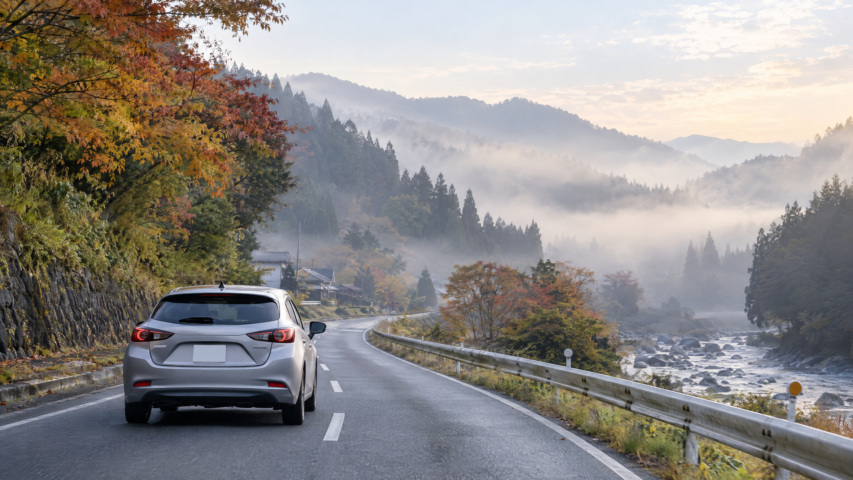
秋の日本では、朝は晴れていても、出発後に道が白くかすむことがあります。早朝のホテル出発や山・地方へのドライブでは、到着時刻より実際の視界を優先しましょう。

出発前に視界と予定を確かめる

走る地域の天気、道路・高速道路の情報を確認し、最初の予定には余白をつくります。駐車場から見ても視界が悪ければ、景色を見に行く寄り道は後に回すのが安全です。車を動かす前に、ガラスの内外、デフロスター、ワイパー、ライトとハザードランプを確認します。行き先も停車中に設定してください。JAFは運転中の携帯電話使用や、カーナビによる注意散漫を禁じています。

見える距離で運転する

霧に入ったら、ゆるやかに速度を落とし、前の車との間隔を広げます。標識の速度は許される上限であり、どんな天候でも目標にする数字ではありません。急ブレーキを避け、見えている道路の範囲で止まれる速度を選びます。日本は左側通行です。横断歩道、脇道、駐車車両の周辺では、歩行者や自転車を早めに探し、追い越して予定を取り戻そうとしないでください。

  • 出発前にスマートフォンをしまう。
  • 急な操作をせず、早めに車間距離を取る。
  • 標識、路面表示、道路管理者の案内に従う。

無理をせず適切な場所へ

霧が不安なほど濃くなったら、地図を見るためだけに路肩へ止めません。安全に到達できる指定駐車場、道の駅、サービスエリア、または適法な出口を選びます。高速道路の路肩は通常の休憩場所ではありません。止まれたら天気を見直し、ガラスを整え、待つ方がよいかを決めましょう。

再出発時はミラーと車の間を歩く人を確認してから、見通しが取れる時に合流します。全員がシートベルトを着け、左側通行と標識の速度を守り、必要なら待つ。それが霧の朝の安全なレンタカードライブです。

Autumn road trips in Japan can begin with clear air at breakfast and a pale veil of fog a few kilometres later. This is especially easy to underestimate when a rental-car itinerary has an early hotel departure, a mountain viewpoint, or a rural station on the map. Fog is not a reason to panic or to chase the schedule. It is a reason to make visibility—not the planned arrival time—the decision point.

Build extra time into a fog-prone morning

Before collecting the keys, look at the local forecast and the route you actually intend to drive. On the morning itself, check current weather and any road or expressway notices before leaving. A route that is comfortable in dry daylight may demand more attention when the horizon disappears. Give yourself a flexible first appointment, and keep one simpler alternative in mind. If the view from the car park is already poor, delaying a scenic detour is often the most sensible choice.

Do the small setup jobs while stationary. Clear the windscreen inside and out, confirm that the demister and wipers work, and locate the headlight and hazard-light controls in the rental car. Enter the next destination before moving. Japan Automobile Federation (JAF) states that drivers must not use a mobile phone or be distracted by the car-navigation system while driving. A passenger can manage directions; a solo driver should pull into a safe, legal place before changing a route.

Drive for the distance you can actually see

Once fog appears, reduce speed smoothly and leave much more room ahead. Posted speed limits remain the maximum permitted; they are not a target for every condition. Choose a speed that lets you stop within the clear road you can see, without abrupt braking. Keep your attention far ahead for lane edges, stop lines, pedestrians, bicycles and vehicles that may emerge late from the grey. Avoid overtaking simply to recover a few minutes.

Japan drives on the left, and JAF also reminds drivers to yield to pedestrians. In low visibility, that means treating crossings, side roads and parked vehicles as places where another road user may be harder to notice. Use the vehicle lights correctly for the conditions, but do not assume that brighter light makes a foggy road clear. Follow road signs, lane markings and any instructions from road authorities rather than another driver’s pace.

  • Keep both hands available for steering; put the phone away before departure.
  • Increase following distance gradually rather than making sudden inputs.
  • Watch the road surface as well as the vehicle ahead; wet leaves and damp paint can reduce grip.
  • Let a tailgating vehicle pass only when there is a safe, legal opportunity.

Choose a proper pause, then restart calmly

If the fog thickens beyond your comfort level, do not make an unplanned roadside stop just to consult a map. Select a designated parking area, roadside station, service area or a lawful exit when it is safe to reach one. On an expressway, JAF says drivers must not use the shoulder; it is not a routine rest space. At a proper stop, check the weather again, warm up, clean the glass and decide whether waiting is better than continuing.

When you set off again, take a moment to reacclimatise. Recheck mirrors, look for people walking between parked cars, and merge slowly with a clear view. JNTO notes that roadside stations can provide a place to rest and local travel information, but facilities vary, so do not assume every stop has the same services or opening hours. A calm pause can also prevent a rushed decision later in the day.

Make the safe plan the successful plan

The useful goal on a foggy autumn morning is not to prove that you can keep the original timetable. It is to arrive without forcing the car, the navigation or your concentration. Wear seatbelts in every seat, keep left, respect signed limits and remain ready to yield. Those fundamentals, combined with time margin and a willingness to pause, turn an uncertain start into a more comfortable rental-car day.

Official references: Review JAF’s Traffic Rules in Japan and JNTO’s rental-car guidance before your trip.

把車留在入口,放慢腳步參訪

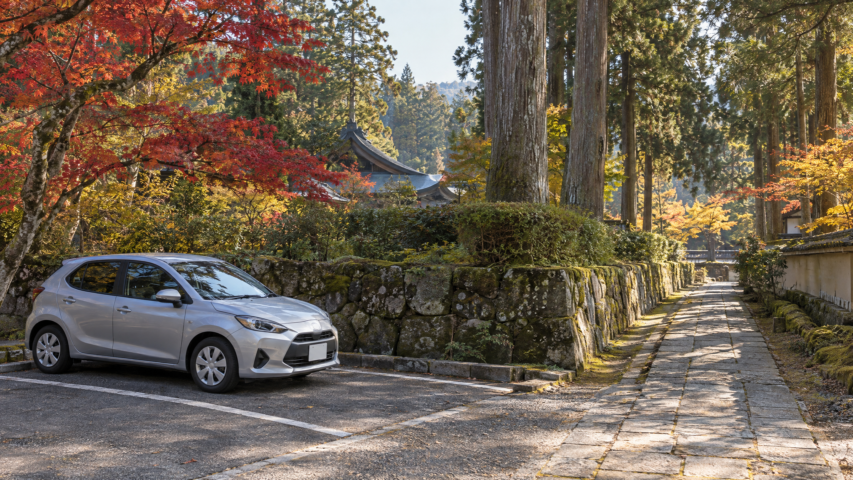
前往和歌山高野山租車自駕時,最安心的做法是把車當成抵達山內的工具,而不是每個景點之間的移動方式。先在允許的地點停好車,再以步行參訪。若為了很短的距離反覆移車,容易把時間花在尋找車位與匆忙判斷,也減少了安靜參拜的餘裕。

出發前先開啟高野山官方區域地圖,只選一至兩個真正想去的區域。官方交通資訊列有金剛峯寺、壇上伽藍、靈寶館、大師教會及中之橋停車場等停車資訊;但這只是規劃參考,並不代表當天一定有空位。人潮、現場指示與天候都可能改變安排,應預先準備合法的替代選項。

停車後的實用檢查

  • 帶好租車文件、充滿電的手機與必要藥品。
  • 將貴重物品收妥,確認車門上鎖。
  • 下一個目的地應在安全停車後再設定。

JAF提醒駕駛不得在行車中使用手機,也不可因車載導航分心。出發前設定路線;若途中需要修改,先駛入合法、安全的停車位置。把步行、休息與回到車旁的時間先排入行程,可減少趕時間時的不必要風險。

尊重道路與聖域的界線

金剛峯寺官方參拜指引明確指出,指定聖域及寺院境內禁止車輛與自行車進入。看到標誌、柵欄或工作人員指示時,應在外側停車並徒步前往。安靜的小路不等於可以開得更深入;如確有車輛進入需要,應事先向目的地詢問。

也請留意禁止攝影區域,並以合宜服裝與安靜舉止參拜。官方網站目前公告,金剛峯寺秋季特別參觀為2026年10月24日至11月10日,參觀時間9:00至16:30,最終入場16:00。活動與入場安排可能變動,出發前務必再次查看官方資訊。

離開前的五分鐘

重新上路前,確認每位乘客都繫好安全帶、車門關妥、行李無遺漏且路線已設定。JAF說明全車乘員都應繫安全帶。遵守左側通行與現場標誌,選定一個停車點後從容步行,便能以安全而尊重的方式享受高野山秋日。

官方資料:高野山交通與區域資訊、金剛峯寺參拜指引、JAF交通規則。

車は入口まで、境内は歩いて巡る

和歌山県の高野山をレンタカーで訪ねるなら、車を観光の中心にしない計画が安心です。車は山内へ着くための手段と考え、認められた場所に停めた後は徒歩で巡りましょう。

出発前に高野山公式のエリアマップを開き、最初に訪れる場所を一つか二つに絞ります。公式アクセス案内には金剛峯寺、壇上伽藍、霊宝館、大師教会、中之橋駐車場などの駐車情報があります。ただし、これは当日の空車を保証するものではありません。

駐車後に確認したいこと

  • レンタカー契約書、充電済みの電話、必要な薬を持つ。
  • 貴重品を見えない所に置き、施錠を確かめる。
  • 次の目的地は安全に駐車してから設定する。

JAFは運転中の携帯電話使用やカーナビによる注意散漫を禁じています。運転者は走行前に目的地を決め、分からなくなった時も安全な場所に停車してから確認しましょう。

聖域と寺院境内の境目を守る

金剛峯寺の参拝案内では、指定された聖域や寺院境内への車両・自転車の乗り入れは禁止されています。標識、柵、係員の案内があれば、外側に駐車して徒歩で進んでください。静かな道でも、近道として奥へ入ってよいとは限りません。やむを得ず車両での立入りが必要な場合は、目的地へ事前に問い合わせます。

写真禁止の場所を確認し、服装や振る舞いにも配慮しましょう。秋の特別拝観は、公式サイトで2026年10月24日から11月10日、9時から16時30分、最終入場16時と案内されています。出発前に公式情報を再確認してください。

帰路前の五分チェック

出発前に全員のシートベルト、ドア、荷物、設定済みの経路を確認します。JAFは全乗員のシートベルト着用を案内しています。左側通行と標識を守り、駐車場所を一つ決めてゆっくり歩く計画にすれば、高野山の秋を安全に、敬意をもって楽しめます。

公式情報:高野山アクセス案内、金剛峯寺参拝案内、JAF交通ルール。