

Hokkaido Autumn Self-Drive: A Rental-Car Plan for Ezo Deer Safety
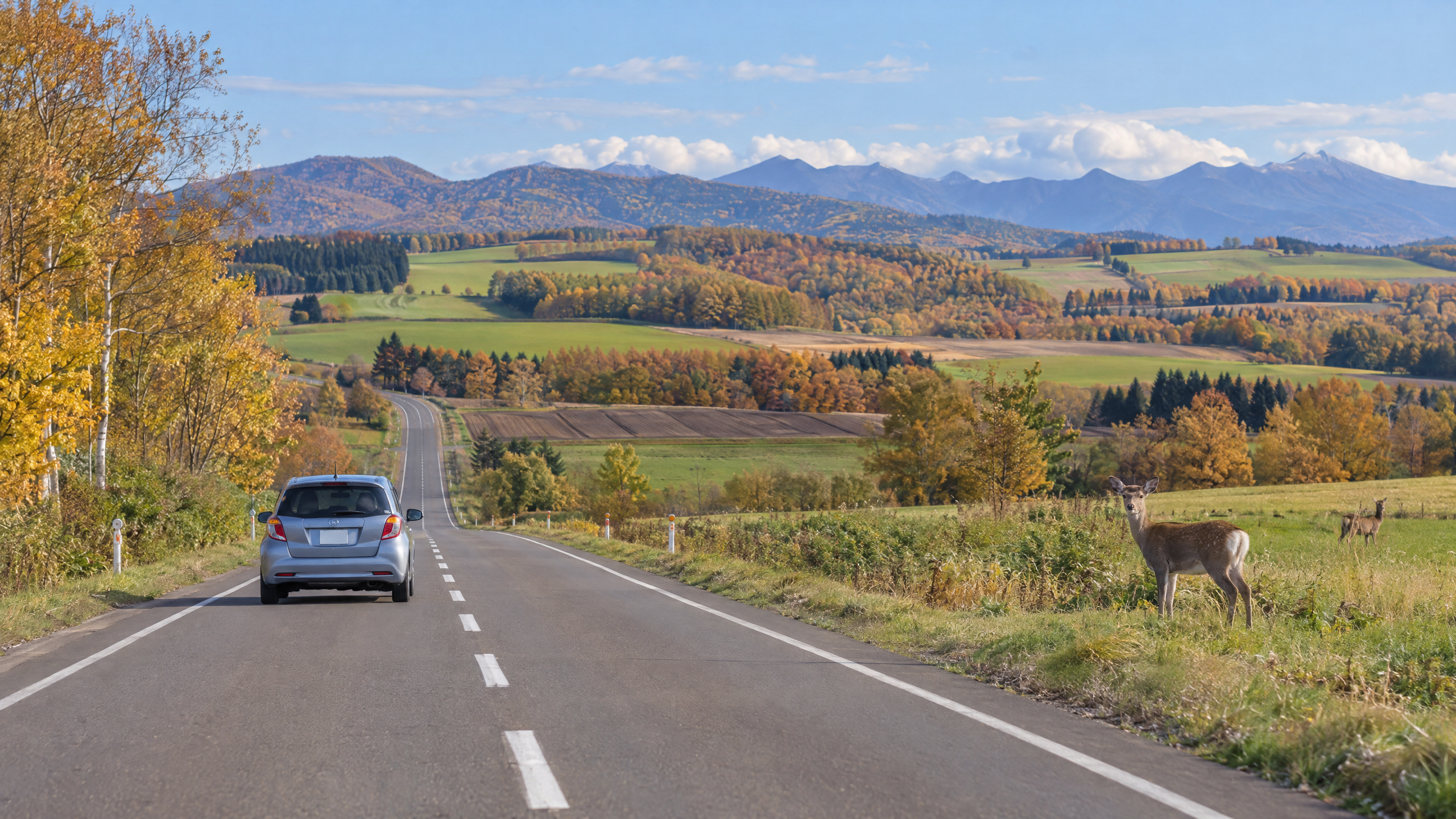
October in Hokkaido rewards rental-car travellers with clear air, open landscapes and autumn colour. It also asks for a different kind of route planning. Ezo deer can enter the road without warning, particularly as daylight fades. This is not a reason to avoid a self-drive trip; it is a reason to build a calm, daylight-first plan before leaving the airport or your accommodation.
Why the autumn timetable matters
Hokkaido Government information on Ezo deer traffic accidents reports that about 41% of reported deer-related accidents occur in October and November. More than 70% occur between 16:00 and midnight. The same guidance notes that deer are most active around sunrise and sunset, and that a deer may stop rather than run when it sees headlights or hears a vehicle.
Use those facts to shape the day, not to create anxiety. Keep the longest rural section early in your itinerary. Put a real destination—your hotel, a town centre or a planned rest stop—before dusk, rather than treating sunset as the time to start the final mountain or forest section. Navigation arrival times do not include a slower pace for wildlife signs, photo stops, rain or an unfamiliar road.
Build a route with a safe finish
Before departure, look at the whole route rather than only the next turn. Identify the last fuel stop and a sensible place to pause before the more isolated section. Check official road information for closures or weather changes on the driving day, and keep the rental company’s contact details where a passenger can find them. If your plan becomes late, shorten it; a scenic detour is optional, while arriving safely is not.
- Choose an overnight stop that does not require a long, unlit rural drive after dinner.
- Tell every driver when the daylight driving window ends, and agree that the plan may change.
- Keep a charged phone, navigation power cable, water and warm layers in the car for an unplanned stop.
Drive for the road you can see
In Japan, drive on the left and give priority to pedestrians. Obey every signed speed limit. JAF explains that, where no limit is signed, regular automobiles are limited to 60 km/h on ordinary roads and 100 km/h on expressways; these are legal ceilings, not a promise that a particular dark or wet road is suitable for that speed. Reduce speed smoothly when visibility, curves, surface conditions or roadside vegetation limit what you can see.
Watch both verges, especially where the road meets woodland or open fields. At night, reflected eyes may be the first sign of a deer. If you see one animal, ease off the accelerator, brake progressively if it is safe, keep your attention in your lane and look for a second or third animal. Ezo deer often move in groups. Avoid a sudden manoeuvre that could put the vehicle into an oncoming lane, a ditch or another road user.
If a deer is on or near the road
Take your foot off the accelerator, create space and be prepared to stop. Do not assume the animal will leave the road just because the car is approaching. Use hazard lights only when they are appropriate for warning following traffic, and do not stop in a dangerous position for a photograph or a closer look. Once the road is clear, continue at a pace that lets you react to another animal beyond the first.
If a collision or other incident occurs, protect people first. Move only if it is safe to do so, follow the rental company’s accident procedure, and contact emergency services or police when required. Japan’s emergency numbers are 119 for ambulance or fire and 110 for police. Keep the location from your navigation screen and do not drive away from an accident scene.
A better Hokkaido memory
A good autumn self-drive day leaves time for the landscape without turning the last hour into a race against darkness. Plan the route, follow signs, treat wildlife-warning areas seriously and give yourself permission to skip one more stop. That margin is what makes a Hokkaido rental-car journey feel relaxed, safe and genuinely enjoyable.
Practical references: Hokkaido Government’s Ezo deer traffic-accident guidance, JAF’s driving rules for Japan, and the National Police Agency’s traffic guidance for foreign drivers.