

Shimanami Kaido by Rental Car: An Autumn Drive from Onomichi to Imabari
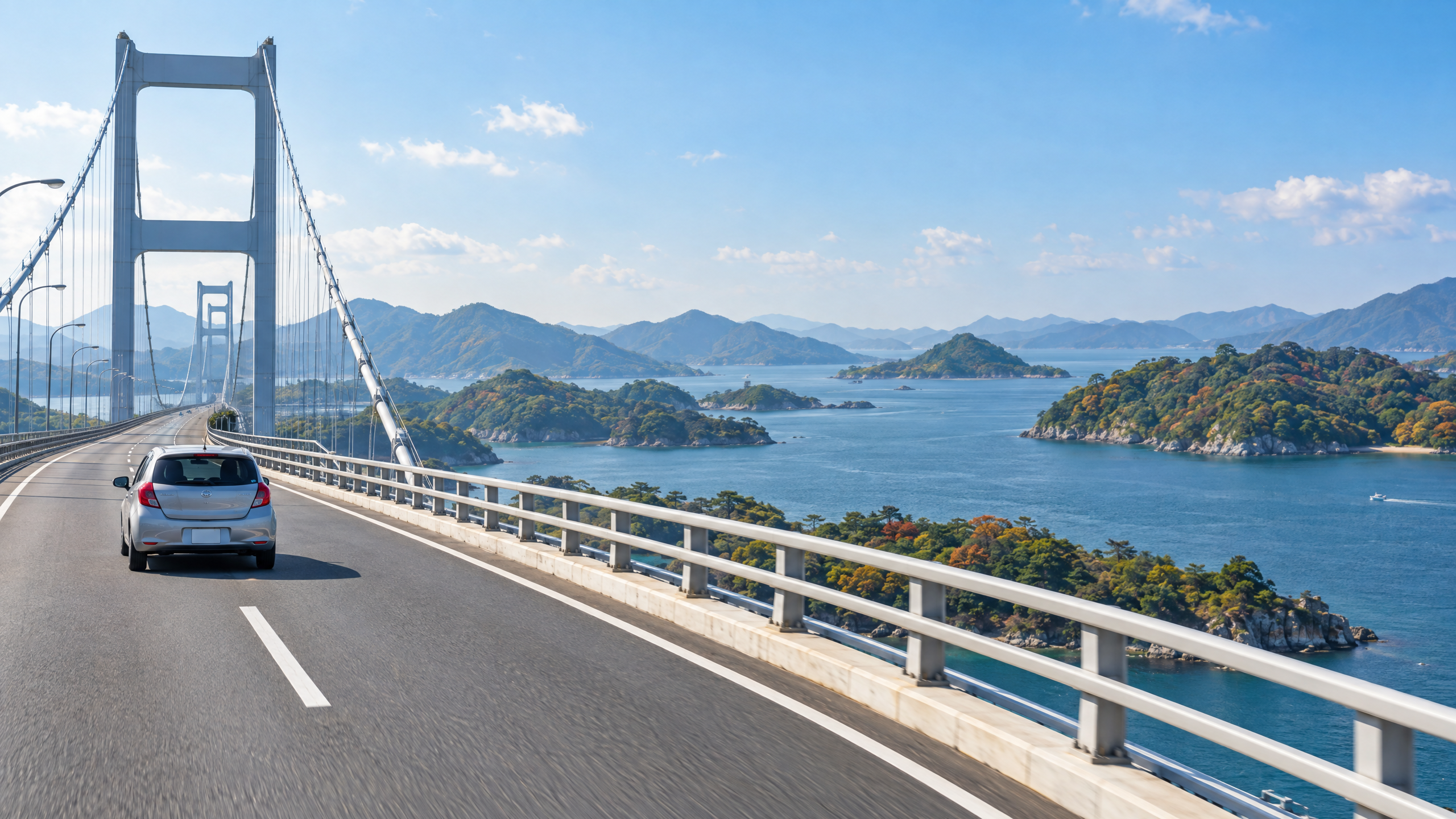
A coastal drive that rewards a measured pace
The Shimanami Kaido links Onomichi in Hiroshima Prefecture with Imabari in Ehime Prefecture across the Seto Inland Sea. The corridor moves from Honshu toward Shikoku through a chain of islands and major bridges; JNTO’s route outline names Mukaishima, Innoshima, Ikuchijima, Omishima, Hakatajima and Oshima before Imabari. It is famous with cyclists, but a rental car offers a different kind of freedom: you can protect time for a harbor town, a short island walk, or an unhurried meal instead of treating every viewpoint as a race. In autumn, the clear light and coastal scenery are appealing, yet bridge crossings, changing winds and a busy itinerary deserve calm planning.
Set the route and the rental terms before pickup
Choose a simple direction: Onomichi to Imabari, or the reverse. Put both the intended overnight stop and final return location into the booking conversation. A one-way rental can have different availability, fees and return rules from a round trip, so it is better to confirm this before collecting the keys. Load destinations while parked, bring the rental agreement and emergency contact details, and ask whether the car has an ETC card or device if you expect to use toll roads. Do not assume that a cycling map, a ferry connection or a car-navigation shortcut is suitable for your car; follow the vehicle route and road signs.
- Start with one primary destination, such as a waterfront stop on an island, rather than trying to visit every island.
- Save the rental office, accommodation and return location in the navigation system before departure.
- Check the day’s weather and traffic notices, then leave margin for slower bridge approaches, breaks and parking.
Make bridge driving the quiet part of the day
On a bridge, the best photo plan is to keep driving and use an official parking or viewing area later. Give the vehicle room, hold a steady line, watch the road rather than the sea, and do not stop on a ramp, bridge deck or shoulder for scenery. If wind or rain makes the car feel less settled, reduce speed smoothly while staying within the posted limit and keep a generous following distance. Plan a rest before you become tired: a short pause on an island is safer and more enjoyable than searching for a place to stop after concentration has already faded.
Japanese driving rules remain the foundation of a scenic itinerary. Drive on the left, yield to pedestrians, keep every occupant belted, and use a child seat for a child younger than six. Do not drink and drive, and do not operate a phone or navigation screen while the car is moving. Posted signs control the speed; where no sign or marking sets a limit, JAF states that regular automobiles are limited to 60 km/h on ordinary roads and 100 km/h on expressways. On expressways, stay in the driving lane and use the passing lane only to overtake.
Build stops into the journey, not onto the shoulder
The route is not a checklist. Pick two or three planned pauses: perhaps an island café, a seafront walk, or a facility with legal parking. Arriving with time to spare gives the driver a chance to reset before the next bridge. Leave the car only in marked spaces, lock it, and return to the road without rushing. If visibility, wind or fatigue changes the day, skip a stop rather than trying to recover time. The destination will still be there; a relaxed driver is the priority.
Know the safe response if the plan changes
If the car has a problem, first move it out of traffic when it is safe. At night, use the hazard lights if the disabled vehicle must remain on the road. JAF advises people to evacuate to a safe place, such as beyond a guardrail, rather than remain in the car where a rear impact is possible. Use the emergency contact supplied by the rental company and follow its instructions; JAF road service can be reached at 0570-00-8139 or #8139. For an injury call 119, and report an accident to police on 110. On expressways, NEXCO says roadside emergency phones are installed at one-kilometre intervals; the nearby kilopost helps identify your location.
Before the return drive, check the fuel policy, the final traffic conditions and the time needed for inspection. With those basics settled, the Shimanami Kaido becomes what it should be: a thoughtful autumn drive between Onomichi and Imabari, not a dash across bridges.