

Autumn Morning Fog in Japan: A Rental-Car Visibility Plan
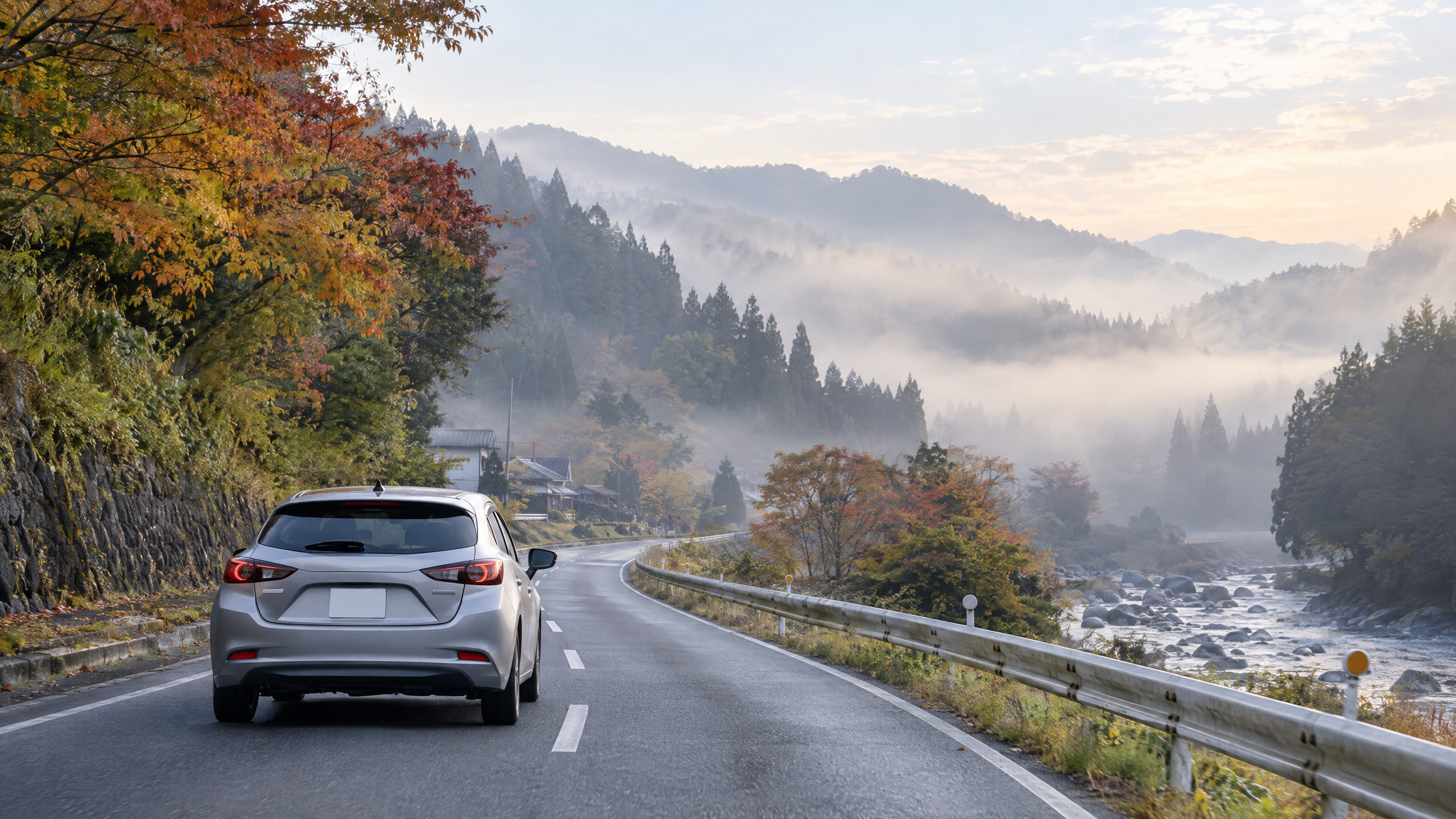
Autumn road trips in Japan can begin with clear air at breakfast and a pale veil of fog a few kilometres later. This is especially easy to underestimate when a rental-car itinerary has an early hotel departure, a mountain viewpoint, or a rural station on the map. Fog is not a reason to panic or to chase the schedule. It is a reason to make visibility—not the planned arrival time—the decision point.
Build extra time into a fog-prone morning
Before collecting the keys, look at the local forecast and the route you actually intend to drive. On the morning itself, check current weather and any road or expressway notices before leaving. A route that is comfortable in dry daylight may demand more attention when the horizon disappears. Give yourself a flexible first appointment, and keep one simpler alternative in mind. If the view from the car park is already poor, delaying a scenic detour is often the most sensible choice.
Do the small setup jobs while stationary. Clear the windscreen inside and out, confirm that the demister and wipers work, and locate the headlight and hazard-light controls in the rental car. Enter the next destination before moving. Japan Automobile Federation (JAF) states that drivers must not use a mobile phone or be distracted by the car-navigation system while driving. A passenger can manage directions; a solo driver should pull into a safe, legal place before changing a route.
Drive for the distance you can actually see
Once fog appears, reduce speed smoothly and leave much more room ahead. Posted speed limits remain the maximum permitted; they are not a target for every condition. Choose a speed that lets you stop within the clear road you can see, without abrupt braking. Keep your attention far ahead for lane edges, stop lines, pedestrians, bicycles and vehicles that may emerge late from the grey. Avoid overtaking simply to recover a few minutes.
Japan drives on the left, and JAF also reminds drivers to yield to pedestrians. In low visibility, that means treating crossings, side roads and parked vehicles as places where another road user may be harder to notice. Use the vehicle lights correctly for the conditions, but do not assume that brighter light makes a foggy road clear. Follow road signs, lane markings and any instructions from road authorities rather than another driver’s pace.
- Keep both hands available for steering; put the phone away before departure.
- Increase following distance gradually rather than making sudden inputs.
- Watch the road surface as well as the vehicle ahead; wet leaves and damp paint can reduce grip.
- Let a tailgating vehicle pass only when there is a safe, legal opportunity.
Choose a proper pause, then restart calmly
If the fog thickens beyond your comfort level, do not make an unplanned roadside stop just to consult a map. Select a designated parking area, roadside station, service area or a lawful exit when it is safe to reach one. On an expressway, JAF says drivers must not use the shoulder; it is not a routine rest space. At a proper stop, check the weather again, warm up, clean the glass and decide whether waiting is better than continuing.
When you set off again, take a moment to reacclimatise. Recheck mirrors, look for people walking between parked cars, and merge slowly with a clear view. JNTO notes that roadside stations can provide a place to rest and local travel information, but facilities vary, so do not assume every stop has the same services or opening hours. A calm pause can also prevent a rushed decision later in the day.
Make the safe plan the successful plan
The useful goal on a foggy autumn morning is not to prove that you can keep the original timetable. It is to arrive without forcing the car, the navigation or your concentration. Wear seatbelts in every seat, keep left, respect signed limits and remain ready to yield. Those fundamentals, combined with time margin and a willingness to pause, turn an uncertain start into a more comfortable rental-car day.
Official references: Review JAF’s Traffic Rules in Japan and JNTO’s rental-car guidance before your trip.