日元

Blog

離開租車門市前先確認油種

日本加油站主要提供一般無鉛汽油(レギュラー)、高級汽油(ハイオク)與柴油(軽油)。不要因為租到普通乘用車就自行判斷油種,應查看租賃契約、取車說明或加油口附近標示。不確定時先詢問門市;加錯燃油可能造成車輛故障。

  • 一般無鉛汽油:許多普通乘用車使用
  • 高級汽油:僅供有指定的車款使用
  • 柴油:部分廂型車、休旅車與乘用車使用

人工服務與自助加油

日本有工作人員代為加油的門市,也有自行操作的「セルフ」加油站。人工服務時,停在指定位置、關閉引擎,再告知油種與數量。「Regular, man-tan」代表一般無鉛汽油加滿。

自助加油時,讓車輛加油口靠近機器停妥,依畫面選擇付款方式、油種、金額或數量。不同機器的順序可能不同;看不懂時使用對講機請工作人員協助,切勿猜測油種。

依安全順序操作

先關閉引擎,遠離香菸與任何火源。打開油箱蓋前,應觸碰機器上的靜電消除板。日本消防廳的自助加油安全說明特別提醒熄火、禁止火源與消除靜電。

  1. 再次核對車輛指定油種
  2. 將油槍完整插入加油口並握住把手
  3. 機器自動停止後不要繼續強行加油
  4. 放回油槍,鎖緊油箱蓋
  5. 領取並保留收據

許多加油站接受信用卡,但並非每家或每張卡都可使用,準備日圓現金較穩妥。部分預付式機器會列印條碼收據,需到另一臺找零機掃描後領取餘額。

還車前安排最後一次加油

滿油還車、指定加油範圍及收據要求會因租車公司與契約而異,應以取車時說明為準。有些公司要求在還車門市附近加滿並出示收據。前往郊區前,先查閱沿途加油站與最新營業資訊,不要等到燃油警示燈亮起才尋找。預留還車前加油時間,可避免匆忙或額外計費。

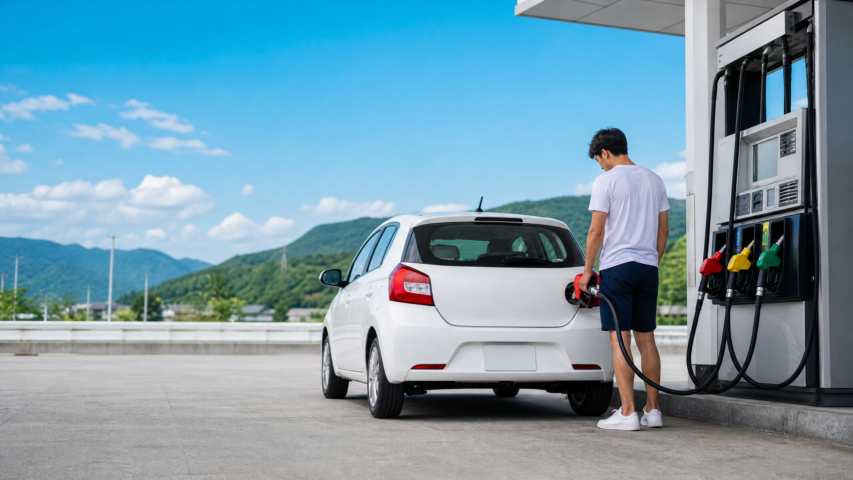
Man refueling a white sedan at a gas station with blue sky and mountains in the background

Why refueling in Japan deserves a little preparation

A rental car makes it easier to reach coastlines, mountain towns, and rural attractions on your own schedule. Refueling is usually straightforward, but the pump controls, Japanese fuel names, payment process, and rental return rules may be unfamiliar. A few checks before leaving the rental counter can prevent delay and, more importantly, help you avoid putting the wrong fuel in the vehicle.

Confirm the fuel before you drive away

Japanese stations normally offer regular unleaded gasoline, high-octane gasoline, and diesel. Never assume that every rental car uses regular gasoline. Check the rental agreement, the vehicle information supplied at pickup, or the label near the filler opening. If anything is unclear, ask the rental staff before departure. Toyota Rent a Car warns that using the wrong fuel can cause a breakdown, so do not rely only on the nozzle position or your experience with a different car.

  • Regular unleaded: Used by many ordinary passenger cars.
  • High-octane: Required by some models; use it only when specified.
  • Diesel: Used by certain vans, SUVs, and passenger vehicles; it is not gasoline.

Choose full-service or self-service

Japan has both attendant-operated and self-service gas stations. At a full-service station, stop where directed, switch off the engine, and tell the attendant the fuel and quantity. “Regular, man-tan” means regular gasoline, full tank. You may also request a number of liters or a yen amount.

At a self-service station, park with the filler opening beside the pump and follow the screen. The exact sequence varies, but the usual flow is to select a payment method, select the fuel, choose a full tank or a fixed amount, and then refuel. Some machines offer an English menu. If you cannot confirm the correct button, use the station intercom or ask an attendant rather than guessing.

Follow the safety sequence

Turn off the engine, close the doors and windows as instructed, and keep cigarettes and all flames away. Before opening the fuel cap, touch the station’s static-electricity discharge pad. Japan’s Fire and Disaster Management Agency requires safety notices at self-service stations and specifically highlights engine shutdown, fire prevention, and static-electricity precautions. Idemitsu’s self-service guidance also tells customers to discharge static electricity before handling the nozzle.

Open the filler cover, remove the cap, insert the correct nozzle fully, and hold the lever. The pump should stop automatically when the selected amount is reached or the tank is full. Do not continue after automatic shutoff, because forcing in more fuel can cause a spill. Return the nozzle, tighten the cap, close the filler cover, and collect the receipt.

Prepare cash and understand change

Credit cards are accepted at many stations, but not every station accepts every card, and some locations may require cash. Carrying enough Japanese yen is a sensible backup, especially outside major city centers. At some prepaid pumps, cash change is returned at a separate machine by scanning the barcode on the receipt. Read the on-screen message and keep the receipt until the transaction is complete.

Plan the final stop before returning the car

Fuel return conditions differ by rental company and contract, so follow the instructions given at pickup. Some companies require a full tank from a station near the return branch and ask to see the final receipt. Nippon Rent-A-Car, for example, publicly instructs customers to refuel near the return location and present the receipt. If you cannot refuel, the company may calculate a charge using its own mileage or fuel-gauge method, which may cost more than filling the tank yourself.

Before a long rural drive, identify practical fuel stops and check current opening information rather than waiting for the warning light. Save the rental company’s contact number, verify the fuel type once more, and allow extra time for the final refueling stop. With these simple habits, refueling becomes a routine part of the journey rather than a stressful surprise.

Official information

For operating details, consult the public refueling guidance from Toyota Rent a Car, the Idemitsu self-service guide, and the safety notice from Japan’s Fire and Disaster Management Agency.

Man refueling a white sedan at a gas station with blue sky and mountains in the background

事故或故障的初步應對

在日本駕駛租車遭遇事故或故障時,首要任務是確保安全。請將車輛停放於安全位置,開啟雙閃燈,並在後方放置三角停止板或發煙筒。絕對不可在現場與對方私下和解。私下和解將導致您無法適用租車公司的保險與補償制度。

報警的法定義務(110)

根據日本法律規定,發生交通事故必須撥打110向警方報案。即使是無人受傷的輕微碰撞也同樣適用。警方開具的「交通事故證明書」是理賠的必備文件。若未報案,不僅違法,租車公司也會要求您全額負擔維修費用。

呼叫救護車(119)

若有人受傷,請在能力範圍內急救並立即撥打119呼叫救護車。除非面臨立即危險,否則請勿隨意移動傷者。呼叫救護車後,仍需撥打110向警方通報。在日本,任何電話(含公共電話)皆可免費撥打緊急號碼。

高速公路特殊處理程序

在高速公路上發生故障或事故時需格外小心。若情況允許,請將車輛移至路肩。開啟雙閃燈並設置三角停止板。所有乘客必須離開車輛,撤離至護欄外側等安全地點。切勿留在車內等待或在車道上行走。您可利用每1公里設置的緊急電話聯繫JAF請求救援。

聯繫租車公司

確保現場安全並聯繫警方後,您必須通知租車公司。多數大型租車公司設有24小時多國語言的救援中心。請遵從客服指示安排拖吊事宜。請注意,根據您的保險方案,可能會產生自負額及營業損失費(NOC)。

緊急情況檢查清單

  • 使用雙閃燈和三角停止板確保現場安全。
  • 撤離至安全地點,高速公路上務必撤至護欄外側。
  • 若有人受傷,請撥打119呼叫救護車。
  • 無論事故大小,務必撥打110向警方報案。
  • 聯繫租車公司的緊急專線,尋求道路救援。
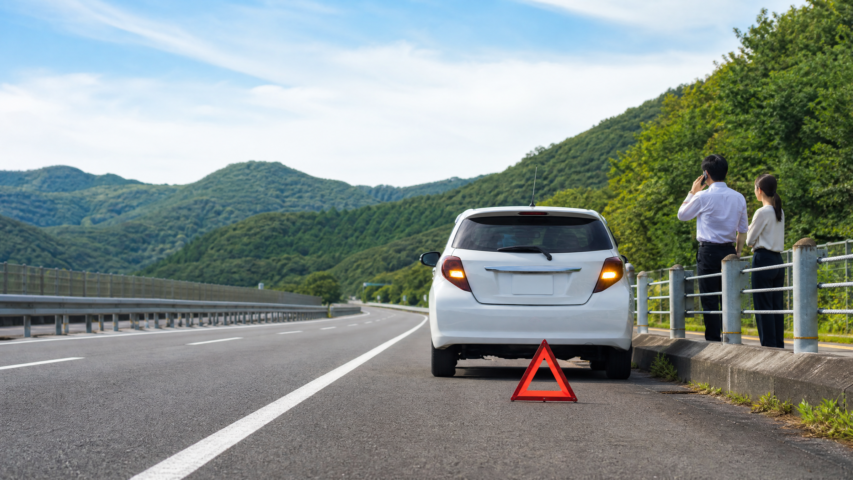
Rental car safely stopped on a Japanese expressway shoulder with warning triangle and travelers behind the guardrail

事故や故障時の初期対応

日本でレンタカー運転中に事故や故障が起きた場合、最優先は安全確保です。車を安全な場所に停め、ハザードを点灯し、停止表示板や発炎筒を設置してください。現場での示談は絶対に行わないでください。私的な示談は保険適用外の原因となります。

警察への通報(110番)

日本の法律により、交通事故は必ず110番に通報する義務があります。負傷者のいない軽微な接触や自損事故でも同様です。警察が発行する交通事故証明書は保険請求に不可欠です。通報を怠ると道路交通法違反となり、修理費用の全額を請求されることになります。

救急車の手配(119番)

負傷者がいる場合は応急処置を行い、直ちに119番で救急車を呼んでください。差し迫った危険がない限り負傷者を動かさないでください。救急車手配後も警察への連絡が必要です。日本の公衆電話から無料で緊急通報が可能です。

高速道路での対応手順

高速道路では二次事故を防ぐため細心の注意が必要です。可能なら路肩に停め、ハザードと停止表示板を設置します。同乗者は全員車から降り、ガードレール外側などの安全な場所に避難してください。車内待機や本線歩行は大変危険です。1kmごとの非常電話でJAF等に救援を依頼してください。

レンタカー会社への連絡

警察等への連絡後、レンタカー会社に報告してください。多くの会社は多言語対応の窓口を24時間運営しています。レッカー移動等については指示に従ってください。保険内容により免責額やNOCが発生する場合があります。

緊急時のチェックリスト

  • ハザードと停止表示板で現場の安全を確保する。
  • 高速道路ではガードレール外側など安全な場所に避難する。
  • 負傷者がいる場合は119番で救急車を呼ぶ。
  • 事故の大小にかかわらず110番で警察に通報する。
  • レンタカー会社に連絡しロードサービスを依頼する。
Rental car safely stopped on a Japanese expressway shoulder with warning triangle and travelers behind the guardrail

What to Do First After an Accident or Breakdown

If you are involved in a traffic accident or your rental car breaks down while driving in Japan, the very first priority is to ensure safety. Stop your vehicle in a safe location immediately, turn on the hazard lights, and place warning triangles or flares behind your car to alert approaching drivers. Under no circumstances should you negotiate a private settlement on the spot, as doing so will render you ineligible for insurance and compensation benefits provided by your rental car company. Many foreign tourists unknowingly void their coverage by skipping official procedures. Taking the correct initial steps protects both your safety and your wallet during your Japanese road trip.

Mandatory Police Notification (Dial 110)

According to the National Police Agency of Japan, you must report all traffic accidents to the police by dialing 110. This rule applies strictly even to minor collisions, scratches, or single-car accidents where no one is visibly injured and no other vehicle is involved. The police will investigate the scene and issue a traffic accident certificate. This certificate is an essential, legally required document for processing any insurance claims with your rental provider. Failing to report the incident to the police is a direct violation of the Road Traffic Act. Without the police report, the rental company will charge you for the full repair costs out of pocket, regardless of the insurance package you purchased.

Medical Emergencies and Ambulance (Dial 119)

If anyone is injured in the accident, you must administer first aid to the extent possible and immediately dial 119 to request an ambulance. Do not move the injured party unnecessarily unless they are in immediate danger from oncoming traffic or a potential vehicle fire. Once the ambulance is called and medical help is on the way, you must still dial 110 to notify the police about the accident. An emergency phone call can be made free of charge from any phone, including public pay phones located across Japan. Emergency operators often have access to multilingual interpretation services to assist foreign drivers.

Special Procedures on Expressways

Experiencing a breakdown or accident on a Japanese expressway requires extreme caution due to the high speed of traffic. Move your vehicle to the shoulder or a sufficiently wide safe space if possible. Turn on the hazard lights and place the warning triangle behind the vehicle. All passengers must evacuate the vehicle and move outside the guardrail or to a safe location immediately. Never stay inside the car or walk on the expressway lanes, as secondary accidents are highly fatal. You can use your mobile phone or the emergency telephones located every 1 kilometer (or every 200 meters inside tunnels) to contact the road management center or the Japan Automobile Federation (JAF).

Contacting Your Rental Car Company

After securing the site and contacting the police (and ambulance if necessary), you must notify your rental car company. Most major rental companies in Japan operate a 24-hour accident and roadside assistance customer center with multilingual support. Follow their specific instructions regarding towing, vehicle replacement, and further procedures. Remember that an excess fee and a Non-Operation Charge (NOC) may apply depending on the insurance coverage you selected at the time of rental. Do not abandon the vehicle or arrange unauthorized towing services.

Summary of the Emergency Checklist

To ensure a smooth resolution to unexpected road emergencies in Japan, keep this checklist in mind:

  • Secure the area and prevent secondary accidents using hazard lights and warning triangles.
  • Evacuate to a safe place, especially on expressways, moving behind guardrails.
  • Dial 119 for an ambulance if there are any injuries.
  • Dial 110 to report the accident to the police, regardless of severity.
  • Contact your rental car company's emergency hotline for roadside assistance.

By strictly following these official guidelines, you can navigate stressful situations safely and ensure your insurance coverage remains valid throughout your journey in Japan.

Rental car safely stopped on a Japanese expressway shoulder with warning triangle and travelers behind the guardrail

在日本自駕是探索風景的絕佳方式,但高速公路收費系統可能令人困惑。電子收費系統(ETC)是支付通行費最高效的方式。本指南涵蓋了ETC卡、收費站程序及突發狀況的安全應對資訊。

認識ETC系統與租賃車輛

ETC系統允許駕駛人無縫通過收費站,無需停車繳費。在日本租車時,車輛幾乎都已安裝ETC車載器,但ETC卡本身必須另外提出租借要求。

  • 租借ETC卡片: 預訂租車時請確認是否提供ETC卡租借服務。請及早提出需求,以免向隅。
  • 確認卡片插入狀態: 展開旅程前,請確認ETC卡已完全插入設備中。正確插入卡片至關重要,否則閘桿無法開啟。

安全通過高速公路收費站

接近收費站時,必須留意上方指示牌標明的支付方式。一般分為三種類型。

  • ETC車道: 專供配備有效ETC卡的車輛使用。接近時必須將車速降至時速二十公里以下。
  • 一般車道: 若無ETC卡,必須行駛標有「一般」的車道。入口處抽取通行券,出口處使用現金或信用卡支付。
  • 共用車道: 同時接受ETC與一般支付方式。非ETC車輛必須停車繳費,請保持高度警戒。

安全處理ETC閘桿異常狀況

若因卡片未插妥導致閘桿無法開啟,採取安全的應對措施極為重要。

  • 絕對不可倒車: 若閘桿關閉,請立即將車輛停下。倒車是非常危險的行為,且受到嚴格禁止。
  • 開啟危險警示燈: 車輛停妥後,請立即開啟雙黃燈,以警告後方車輛。
  • 呼叫尋求協助: 使用對講機聯繫收費站人員。請勿離開車輛,靜候工作人員指示。

認識智能交流道(Smart IC)

導航系統上可能會出現「Smart IC」。這些是特別設置的交流道,通常位於服務區。Smart IC嚴格僅供ETC車輛使用。這裡沒有一般車道,也沒有工作人員收取現金。若無ETC卡,將無法使用Smart IC,必須重新規劃路線。

只要了解如何租借ETC卡並選擇正確車道,您就能充滿自信地馳騁於日本的高速公路。請始終將安全放在首位。

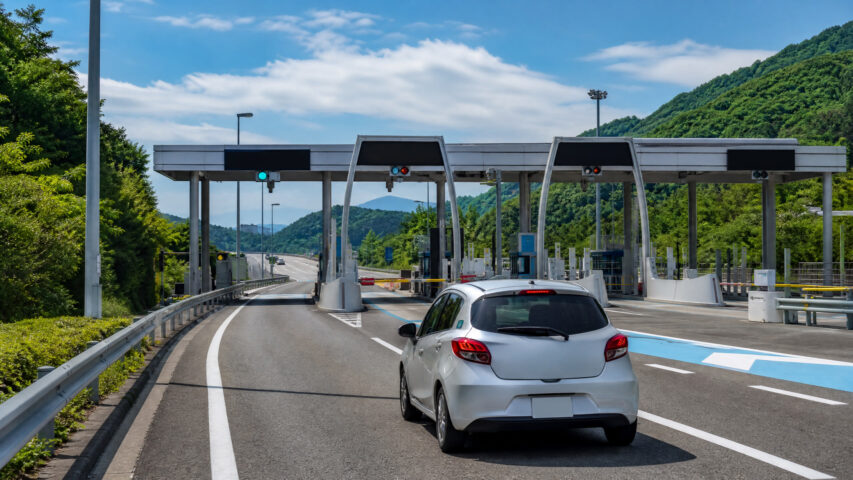
Silver car approaching a toll plaza with multiple lanes and green hills in the background, on a sunny day with a blue sky.

日本でのドライブは素晴らしい体験ですが、高速道路の料金システムは複雑に感じるかもしれません。ETCは、料金を支払う最も効率的な方法です。このガイドでは、ETCの利用や料金所の通過、予期せぬ事態への対処法を解説します。

ETCシステムとレンタカー

ETCを利用すると、料金所で停止せずに通過できます。レンタカーには通常、車載器が設置されていますが、カードは別途リクエストする必要があります。

  • カードのレンタル: 予約時に貸出状況を確認してください。少額の日額料金で利用できます。
  • 挿入の確認: 出発前に、カードが正しい向きで完全に挿入されていることを確認してください。正しくないとゲートは開きません。

料金所の安全な通過方法

料金所に近づく際は、支払い方法を示す頭上の標識に従う必要があります。

  • ETCレーン: ETCカード装備車両専用です。時速20km以下に減速し、ゆっくり進んでください。
  • 一般レーン: ETCカードがない場合はこちらを使用します。入口で通行券を受け取り、出口で支払います。

ETCゲートのエラーへの対処

カードの挿入不良等でゲートが開かない場合は、安全に対処することが重要です。

  • 絶対にバックしない: バーが下がったままの場合は直ちに停止してください。後退は非常に危険であり禁止されています。
  • ハザードランプの点灯: 停止直後にハザードランプを点灯させ、後続車に警告します。
  • 係員を呼ぶ: インターホンでスタッフに連絡し、車内で指示を待ってください。

スマートIC

スマートICは、サービスエリア等に設置される特別なインターチェンジです。ETC車両専用で、一般レーンはなくスタッフもいません。ETCカードがない場合は利用できず、通常のインターチェンジを経由する必要があります。

正しいレーンを選択し、時速20kmの制限速度を守ることで、日本の高速道路を安全にドライブできます。

Silver car approaching a toll plaza with multiple lanes and green hills in the background, on a sunny day with a blue sky.

Driving a rental car across Japan is an incredible way to explore the country. However, navigating the expressways and understanding the toll system can seem overwhelming. The Electronic Toll Collection (ETC) system is the most efficient way to handle highway tolls. This guide covers the essential information you need regarding ETC cards, toll gate procedures, and how to safely manage unexpected situations.

Understanding the ETC System and Your Rental Car

The ETC system allows drivers to pass through highway toll gates without stopping to pay manually. The system uses wireless communication between an in-vehicle device and antennas at the gates. When you rent a car in Japan, the vehicle will almost always have the device installed. However, the ETC card itself must be requested separately.

  • Requesting an ETC Card: Always check the availability of ETC cards when making your reservation. Most rental companies offer them for a small daily fee. Request it early, as supplies can be limited.
  • Checking Card Insertion: Before starting, make sure the ETC card is fully inserted in the correct direction. An indicator will confirm the system is ready. A correctly inserted card is vital; otherwise, the gate will not open.
  • Exploring Expressway Passes: If covering long distances, inquire about regional fixed-rate passes. These are loaded onto your rental ETC card and offer significant savings.

Navigating Highway Toll Gates Safely

Approaching a toll gate requires attention to overhead signs indicating accepted payment methods. There are three types of lanes: ETC dedicated, General, and Shared. Choosing the right lane early is crucial.

  • ETC Lanes (Purple Signs): Exclusively for vehicles with a valid ETC card. Slow down to 20 km/h or less. Maintain a safe distance and proceed slowly. The gate bar opens automatically. Never speed through.
  • General Lanes (Green Signs): If you lack an ETC card, use the "一般" (General) lanes. At the entrance, stop completely to take a paper ticket. At the exit, hand the ticket to the attendant or machine, and pay using Yen cash or credit card.
  • Shared Lanes (Purple and Green): Accept both ETC and general payments. ETC vehicles pass slowly, while non-ETC vehicles must stop. Exercise caution, as the vehicle ahead may stop unexpectedly.

Handling ETC Gate Errors Safely

Occasionally, the gate bar may fail to open due to an improperly inserted card or communication error. Handle this calmly to prevent accidents.

  • Never Reverse Your Vehicle: If the bar stays down, stop immediately. Never attempt to reverse, as this can cause a serious collision. Reversing on a highway is extremely dangerous and strictly prohibited.
  • Turn on Hazard Lights: Warn approaching vehicles by turning on your hazard lights immediately after stopping.
  • Call for Assistance: Use the intercom located near the gate to contact staff. Do not exit your vehicle. Wait for instructions.

Understanding Smart Interchanges (Smart IC)

You may encounter "Smart ICs" on your navigation system. These are special interchanges often located at service areas to improve local access.

Smart ICs are strictly for ETC vehicles. There are no general lanes or staff to collect cash. Without an ETC card, you cannot enter or exit using a Smart IC and must route through standard interchanges.

By understanding how to rent an ETC card, choosing the correct lane, and managing gate issues, you can navigate Japan's expressways confidently. Always adhere to the 20 km/h speed limit at ETC gates.

Silver car approaching a toll plaza with multiple lanes and green hills in the background, on a sunny day with a blue sky.

夏季在日本自駕的必備知識

日本的夏天充滿翠綠風景,是絕佳的自駕季節。然而,這個季節也伴隨著極端高溫與突如其來的暴雨。了解如何應對這些天氣狀況,是確保公路旅行安全與愉快的關鍵。

防範極端高溫與車內中暑風險

日本夏季氣溫經常飆破攝氏35度。日本自動車聯盟(JAF)實測顯示,汽車停放在35度陽光下且關閉冷氣時,車內溫度只需15分鐘就會達到引發熱中暑的危險等級。

即使短暫離開,也絕對不能將兒童或寵物單獨留在車內。停車請盡量尋找陰涼處。雖然遮陽板可降低儀表板溫度,但無法阻止車廂變熱。出發前請確認空調正常,並準備充足飲水。

雨天駕駛與防止打滑事故

夏季午後容易出現雷陣雨。JAF提醒,剛開始下雨時路面灰塵浮起,會變得異常濕滑。此時必須確實減速,特別是在彎道前,並避免急煞車或猛打方向盤。

大雨會影響視線,請務必開啟大燈。由於濕滑路面煞車距離增加,應保持更長的跟車距離。出發前請檢查胎紋,胎紋過淺容易引發危險的水漂現象,導致失去煞車能力。

避開積水道路的致命危機

強降雨可能導致低窪地區積水。日本國土交通省強烈警告,絕對不要將車輛開進積水道路。一旦水位超過車輛底盤,水可能灌入引擎導致車輛熄火。

當積水達到車門下緣時,水壓會讓您很難從車內推開車門;超過車門高度一半時幾乎無法開門。遇到積水請立即掉頭。如果車輛不幸在水中拋錨,請立刻逃出車外。

隨時掌握天氣資訊與緊急準備

上路前請查看最新天氣預報。日本氣象廳會在可能發生大雨或強風時發布警報,這些官方資訊提供多種語言版本,建議每天查看。

請仔細聆聽租車公司解說,熟悉車輛緊急設備。對高溫保持警覺、雨天調整駕駛方式並避開積水區域,就能確保日本夏季公路旅行安全無虞。

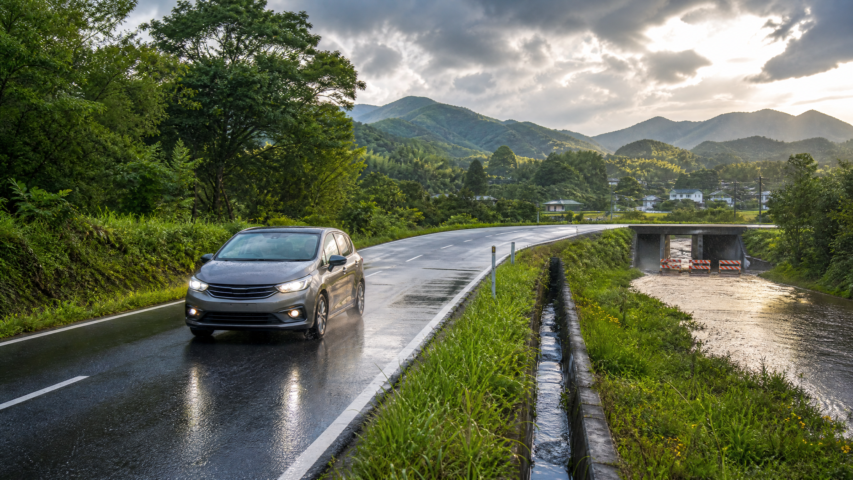
Gray sedan driving on a wet rural road beside a grassy canal, with green hills and a cloudy sky in the distance.

夏のレンタカー旅行で知っておくべきこと

日本の夏は絶好のドライブシーズンですが、厳しい猛暑やゲリラ豪雨といった気象リスクも伴います。天候変化に正しく対応することが、安全な旅の鍵となります。

炎天下の車内温度と熱中症リスク

日本の夏は気温が35度を超えることも珍しくありません。JAFのテストによると、気温35度の炎天下に駐車した車は、エアコン停止からわずか15分で熱中症指数が「危険」レベルに達します。

短時間でも、子どもやペットを車内に残してはいけません。駐車時は日陰を選び、サンシェードを使用しましょう。エアコンの確認と十分な水分補給が必須です。

雨天時の運転とスリップ事故防止

夏は急な大雨が多い季節です。JAFによれば、雨の降り始めは路面の泥が浮き上がり特に滑りやすくなります。カーブ手前では減速し、直線でもスピードを控えましょう。

大雨時は視界が悪化するためヘッドライトを点灯し、車間距離を普段より長くとります。タイヤの溝が減っていると「ハイドロプレーニング現象」が起きやすくなるため出発前の確認が重要です。

冠水した道路の危険性と避難行動

激しい雨で道路が冠水する危険があります。国土交通省は、冠水路への進入を強く警告しています。水深が車の床面を超えるとエンジンに浸水し動けなくなります。

水深がドアの下端に達すると水圧で内側から開けるのが困難になります。冠水路を見つけたら迂回し、万が一動けなくなった場合は直ちに車外へ脱出してください。

事前の情報収集で安心な旅を

ドライブ前には最新の天気予報を確認しましょう。気象庁は災害のおそれがある場合に注意報や警報を発表します。これらは多言語で提供されています。

レンタカー会社の指示に従い、緊急時の連絡先を確認しておくことも大切です。猛暑対策、雨天の慎重な運転、冠水路の回避を徹底し、安全なドライブを楽しみましょう。

Gray sedan driving on a wet rural road beside a grassy canal, with green hills and a cloudy sky in the distance.