

Rental Car Accidents and Breakdowns in Japan: A Practical Emergency Guide
What to Do First After an Accident or Breakdown
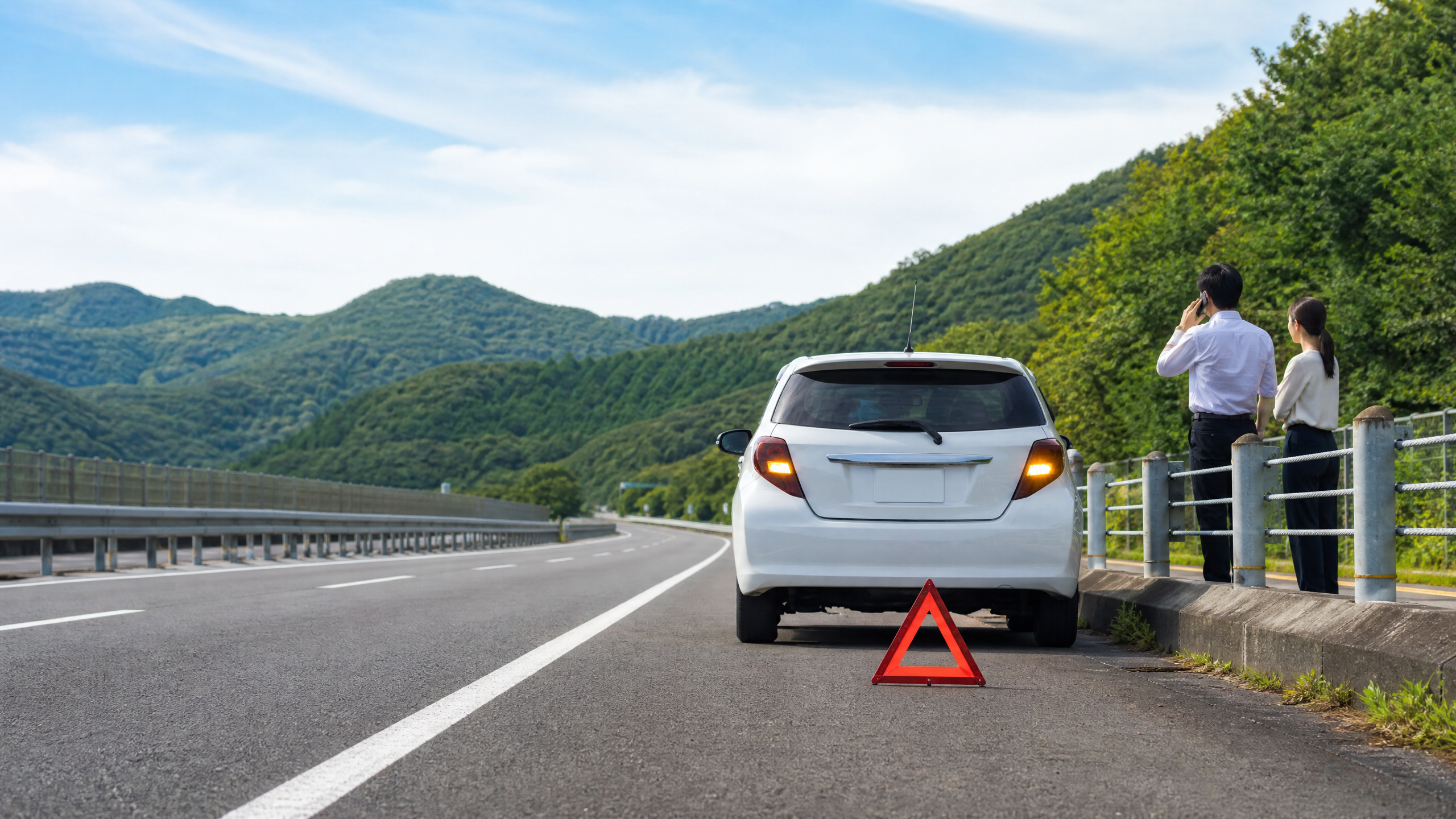
If you are involved in a traffic accident or your rental car breaks down while driving in Japan, the very first priority is to ensure safety. Stop your vehicle in a safe location immediately, turn on the hazard lights, and place warning triangles or flares behind your car to alert approaching drivers. Under no circumstances should you negotiate a private settlement on the spot, as doing so will render you ineligible for insurance and compensation benefits provided by your rental car company. Many foreign tourists unknowingly void their coverage by skipping official procedures. Taking the correct initial steps protects both your safety and your wallet during your Japanese road trip.
Mandatory Police Notification (Dial 110)
According to the National Police Agency of Japan, you must report all traffic accidents to the police by dialing 110. This rule applies strictly even to minor collisions, scratches, or single-car accidents where no one is visibly injured and no other vehicle is involved. The police will investigate the scene and issue a traffic accident certificate. This certificate is an essential, legally required document for processing any insurance claims with your rental provider. Failing to report the incident to the police is a direct violation of the Road Traffic Act. Without the police report, the rental company will charge you for the full repair costs out of pocket, regardless of the insurance package you purchased.
Medical Emergencies and Ambulance (Dial 119)
If anyone is injured in the accident, you must administer first aid to the extent possible and immediately dial 119 to request an ambulance. Do not move the injured party unnecessarily unless they are in immediate danger from oncoming traffic or a potential vehicle fire. Once the ambulance is called and medical help is on the way, you must still dial 110 to notify the police about the accident. An emergency phone call can be made free of charge from any phone, including public pay phones located across Japan. Emergency operators often have access to multilingual interpretation services to assist foreign drivers.
Special Procedures on Expressways
Experiencing a breakdown or accident on a Japanese expressway requires extreme caution due to the high speed of traffic. Move your vehicle to the shoulder or a sufficiently wide safe space if possible. Turn on the hazard lights and place the warning triangle behind the vehicle. All passengers must evacuate the vehicle and move outside the guardrail or to a safe location immediately. Never stay inside the car or walk on the expressway lanes, as secondary accidents are highly fatal. You can use your mobile phone or the emergency telephones located every 1 kilometer (or every 200 meters inside tunnels) to contact the road management center or the Japan Automobile Federation (JAF).
Contacting Your Rental Car Company
After securing the site and contacting the police (and ambulance if necessary), you must notify your rental car company. Most major rental companies in Japan operate a 24-hour accident and roadside assistance customer center with multilingual support. Follow their specific instructions regarding towing, vehicle replacement, and further procedures. Remember that an excess fee and a Non-Operation Charge (NOC) may apply depending on the insurance coverage you selected at the time of rental. Do not abandon the vehicle or arrange unauthorized towing services.
Summary of the Emergency Checklist
To ensure a smooth resolution to unexpected road emergencies in Japan, keep this checklist in mind:
- Secure the area and prevent secondary accidents using hazard lights and warning triangles.
- Evacuate to a safe place, especially on expressways, moving behind guardrails.
- Dial 119 for an ambulance if there are any injuries.
- Dial 110 to report the accident to the police, regardless of severity.
- Contact your rental car company's emergency hotline for roadside assistance.
By strictly following these official guidelines, you can navigate stressful situations safely and ensure your insurance coverage remains valid throughout your journey in Japan.