日元

Blog

颱風季節日本租車自駕安全指南

日本颱風季節從6月延續至10月,8至9月最為活躍。颱風帶來的豪雨強風往往造成道路封閉與積水,租車自駕的旅客務必事先了解正確的應對方式。

出發前的必要確認

颱風接近時,請在出發前確認最新氣象預報與道路交通資訊。日本道路交通情報中心(JARTIC)每5分鐘更新一次全國路況。若已發布颱風警報,請認真考慮暫緩出行,並盡早聯絡租車公司調整還車時間。

三大高風險地形,應盡量迴避

  • 海岸沿線:高浪與暴潮可能越過防波堤淹沒公路。當波浪警報或暴潮警報發布時,請避開所有海岸道路。
  • 河川沿岸:持續降雨使河川水位急漲,沿岸道路可能瞬間積水。請事先透過防災地圖確認危險路段。
  • 山區道路:長時間降雨易引發土石流與落石。請查閱日本氣象廳的土砂災害警戒資訊,避免行駛高警戒等級的山路。

遭遇積水路段時的應對

根據日本汽車聯盟(JAF)實驗,轎車在水深30公分時尚可低速通過,但水深達60公分時引擎極可能熄火。遇到積水路段請勿強行通過,務必掉頭尋找替代路線。若車輛陷入積水,請解開安全帶,趁水位低於車窗時打開車窗脫逃。積水退去後也絕對不可重新啟動引擎。

豪雨強風中的安全駕駛與保險建議

惡劣天氣中請大幅降低車速,車距拉大至平時兩倍以上,並開啟頭燈。橋樑與高架路段側風最強,請雙手緊握方向盤。一般日本汽車保險不涵蓋颱風損害,租車時請確認是否已加購自然災害補償方案。建議在手機安裝氣象廳官方應用程式,並在手套箱備放緊急逃生錘,以備不時之需。

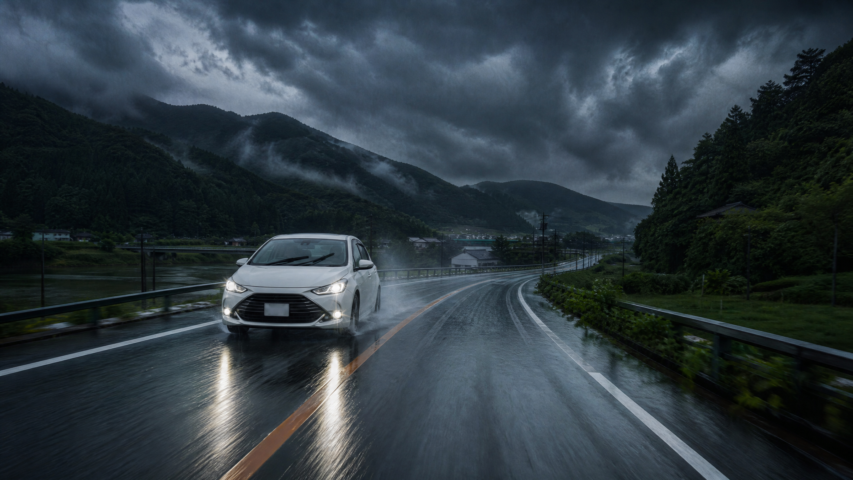
White car driving on a rain-soaked mountain highway under dark storm clouds, with misty green hills in the background.

台風シーズンのレンタカー安全運転ガイド

日本の台風シーズンは6月から10月で、8〜9月が最も活発です。台風や大雨は道路閉鎖や冠水を引き起こすため、レンタカー旅行者は事前に安全対策を把握しておきましょう。

出発前の確認事項

台風接近時は出発前に気象情報と道路交通情報を確認してください。JARTIC(日本道路交通情報センター)は全国の道路状況を5分ごとに更新しています。台風警報が出ている場合は外出を控え、返却時間の変更が必要なら早めにレンタカー会社へ連絡しましょう。

特に危険な3つの場所

  • 海沿い:高波・高潮が道路に押し寄せる危険があります。波浪警報が出ているときは海岸道路を避けましょう。
  • 川沿い:大雨で河川が急増水し、道路が冠水することがあります。ハザードマップで危険箇所を確認してください。
  • 山沿い:土砂崩れや落石が発生しやすくなります。気象庁の土砂災害警戒情報を確認し、危険な山道は避けてください。

冠水路への対処

JAFの実験では、水深30cmまで低速走行できますが、60cmではエンジンが停止します。冠水路には進入せず、必ず迂回してください。車が水に浸かった場合は、シートベルトを外し窓が開くうちに脱出してください。冠水後はエンジンを再始動しないでください。

悪天候時の安全運転

台風や大雨の中では速度を落とし、車間距離を通常の2倍以上に広げましょう。急ブレーキや急ハンドルは避け、昼間でもヘッドライトを点灯してください。橋や高架では横風が強くなるため、ハンドルをしっかり握ってください。

保険と実践的なアドバイス

一般的な自動車保険は台風・洪水による損害を補償しません。レンタカーを借りる際は自然災害補償オプションを確認してください。「Yahoo!天気」などの気象アプリをインストールし、緊急脱出用ハンマーをグローブボックスに常備しておくと安心です。台風の激しい時間帯の運転は避け、嵐が通過するのを待ちましょう。

White car driving on a rain-soaked mountain highway under dark storm clouds, with misty green hills in the background.

Driving a Rental Car in Japan During Typhoon Season

Japan's typhoon season runs from June through October, with the most active period typically falling between August and September. During this time, powerful storms can bring heavy rainfall, strong winds, and widespread road closures. For visitors renting a car, understanding how to respond to typhoon conditions is essential for staying safe on Japanese roads.

Check Weather and Road Conditions Before You Drive

Before heading out during typhoon season, always check the latest weather forecast and road traffic information. The Japan Road Traffic Information Center, known as JARTIC, provides real-time road updates every five minutes at jartic.or.jp. For expressway information, the Drive Traffic portal at en-www.drivetraffic.jp offers English-language road closure maps covering major highways nationwide.

If a typhoon warning or heavy rain advisory has been issued for your area, seriously consider postponing your drive. Japanese expressway operators routinely close sections of highway when wind speeds exceed safe thresholds or when flooding is detected. Rental car companies generally allow schedule adjustments during natural disasters, so contact your provider early if you need to change your return time.

Three High-Risk Environments to Avoid

Not all roads carry the same risk during a typhoon. Three types of terrain are especially dangerous:

  • Coastal roads: High waves and storm surges can sweep over seawall barriers and onto coastal highways. Lateral gusts along open shorelines can push a vehicle sideways. If storm surge or wave warnings are in effect, avoid all coastal routes.
  • Riverside roads: Rivers rise quickly during heavy rainfall. Roads alongside riverbanks can become submerged with little warning. Check flood hazard maps through local municipal websites before planning your route.
  • Mountain roads: Steep slopes become vulnerable to landslides and debris flows during prolonged rain. Monitor the Japan Meteorological Agency's landslide danger alerts before driving through mountainous regions.

What to Do If You Encounter Flooded Roads

Flooded roads are one of the most serious hazards during a typhoon. Research by the Japan Automobile Federation (JAF) found that a sedan can typically pass through water up to 30 centimetres deep at low speed, but at 60 centimetres the engine is likely to stall. Crucially, murky floodwater makes it impossible to judge depth accurately from inside the car.

If you encounter a flooded section of road, do not attempt to drive through it. Turn around and find an alternative route. If your vehicle stalls in rising water, remain calm, unfasten your seatbelt, and open the window while the water level is still below the window frame. If the window cannot be opened, use an emergency escape hammer to break the glass. Never restart a flooded engine, as doing so can cause irreparable damage or fire.

Driving Safely in Heavy Rain and Strong Winds

If you must drive during severe weather, reduce your speed significantly below the posted limit and increase your following distance to at least double the normal interval. Wet roads extend braking distances considerably, so avoid sudden steering inputs or hard braking. Turn on your headlights even during daylight hours to improve visibility for other drivers.

Strong crosswinds are particularly hazardous on elevated sections of road, bridges, and open expressways. Hold the steering wheel firmly with both hands and be prepared for sudden gusts. If conditions feel unsafe, pull into the nearest service area and wait for the weather to improve.

Rental Car Insurance and Typhoon Damage

Standard Japanese automobile insurance does not cover damage caused by natural disasters such as typhoons or floods under the liability coverage provisions. Many rental car companies offer optional supplemental coverage that includes natural disaster protection. Before your trip, review your rental agreement carefully and ask the counter staff about typhoon-related coverage. Credit card rental insurance often excludes natural disasters, so verify the terms in advance.

Practical Tips for Typhoon-Season Travel

  • Download a Japanese weather app such as Yahoo! Weather or the Japan Meteorological Agency's official app for real-time alerts.
  • Keep the rental company's emergency contact number saved in your phone.
  • Park the vehicle in a covered car park or away from trees and power lines if a typhoon is forecast overnight.
  • Carry an emergency escape hammer in the glove compartment in case the vehicle becomes submerged.
  • Avoid driving during the most intense phase of a typhoon; most storms pass within 12 to 24 hours, and waiting is always safer than risking a flooded road.

Typhoons are a natural part of the Japanese climate. With proper preparation and awareness, it is entirely possible to travel safely during the season. The key is to stay informed, respect road closures, and never underestimate the power of floodwater or strong winds.

White car driving on a rain-soaked mountain highway under dark storm clouds, with misty green hills in the background.

日本租車自駕導航完全指南

在日本租車自駕時,許多旅客最感困惑的是導航系統的操作方式。日本道路結構複雜,隧道與山路眾多,僅靠手機應用程式有時難以應付。熟悉車內內建導航的使用方法,是享受安全舒適自駕旅程的重要基礎。

使用MAPCODE設定目的地

日本租車導航最實用的輸入方式是MAPCODE(地圖碼)。幾乎所有景點、飯店、道路休息站都有專屬數字代碼,無需輸入日文地址即可精確定位。MAPCODE可在各設施官網或「Mapion」事先查詢,建議出發前記錄主要目的地的代碼。設定方式為「選單→目的地→MAPCODE」,輸入後確認即可。若目的地有公開電話號碼,也可直接輸入電話號碼搜尋。

切換導航語言

許多新款租車的內建導航支援英語、繁體中文及韓語等多國語言。切換方式通常為「選單→設定→顯示語言」。若不確定操作步驟,可在取車時請服務人員協助設定。

搭配手機應用程式使用

以內建導航為主、手機應用程式為輔是最推薦的方式。Yahoo!車載導航(Yahoo!カーナビ)提供即時路況與測速照相提醒,評價極高。Google 地圖建議事先下載離線地圖,在訊號不穩定的山區仍可瀏覽地圖資訊。

高速公路設定與取車後準備

若行程包含高速公路,請確認路線設定中的收費道路選項。已租借ETC卡者建議選擇含高速公路的路線以節省時間。取車後請先確認導航語言與音量,並輸入飯店及還車地點的MAPCODE預先規劃路線。手機透過車內USB插孔充電,可確保全程皆有備用導航可用。

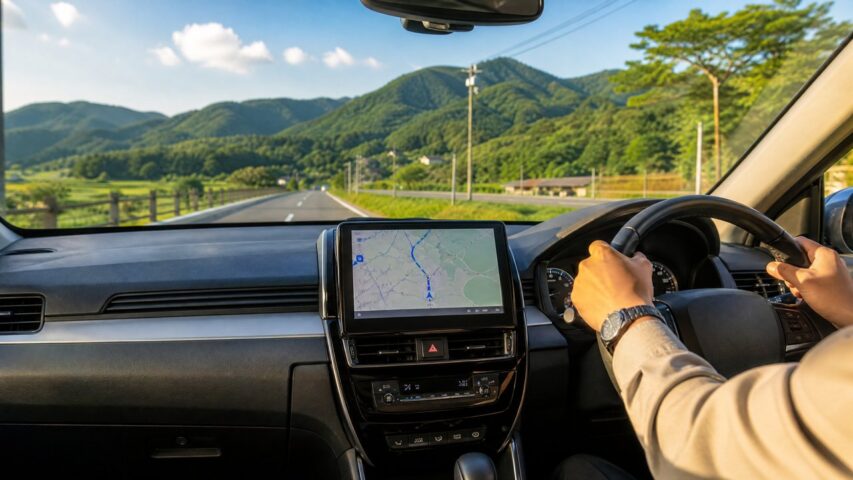
Driver’s hands on the steering wheel with a GPS map on the center screen, road ahead through green hills and mountains on a sunny day.

レンタカーのカーナビ活用ガイド

日本でレンタカーを利用する際、最初に戸惑うのがカーナビの操作です。日本の道路は複雑な交差点や長いトンネルが多く、スマートフォンだけでは対応しきれない場面があります。内蔵カーナビを正しく使うことが、安全なドライブの第一歩です。

MAPCODEで目的地を設定する

日本のカーナビで最も便利な入力方法がMAPCODEです。観光スポットやホテルに固有の数字コードが割り当てられており、日本語住所を入力する手間が省けます。MAPCODEは各施設の公式サイトや「マピオン」で事前に調べられます。設定は「メニュー→目的地→マップコード」の順で操作します。電話番号が公開されている施設なら電話番号入力でも設定できます。

言語を英語・中国語に変更する

最近のレンタカーのカーナビは英語・中国語・韓国語などに対応しています。「メニュー→設定→表示言語」で変更できます。車種により手順が異なるため、不明な場合は貸出カウンターで出発前に設定してもらいましょう。

スマートフォンアプリとの併用

内蔵カーナビをメインに、スマートフォンをサブとして使うのが効果的です。Yahoo!カーナビは無料で使えて精度が高く、渋滞情報や速度取締りの通知も充実しています。Google マップはオフラインマップを事前にダウンロードしておけば、山間部でも地図を閲覧できます。

高速道路の設定と出発前の準備

高速道路を利用する場合は、ルート設定で有料道路の使用可否を確認しましょう。ETCカードをレンタルしている場合は高速ルートを選ぶと便利です。出発前にホテルや観光地のMAPCODEを入力して経路を確認し、スマートフォンはUSBポートで充電しながら使うとバッテリー切れを防げます。

Driver’s hands on the steering wheel with a GPS map on the center screen, road ahead through green hills and mountains on a sunny day.

Using Car Navigation Systems When Renting a Car in Japan

One of the most common challenges for overseas visitors driving in Japan is navigation. Unlike many countries where a smartphone app alone is sufficient, Japan's complex road networks, frequent tunnels, and mountainous terrain make the built-in car navigation system an essential tool for a safe and stress-free journey. Understanding how to use both the in-car GPS and your smartphone effectively will make a significant difference in your rental car experience.

Understanding the Built-In Car Navigation System

Almost all rental cars in Japan come equipped with a built-in car navigation system as standard. These systems are designed specifically for Japan's road network and offer several advantages over smartphone apps. The most important feature to understand is the MAPCODE system. Rather than entering a full Japanese address, you simply input a short numeric code — typically 6 to 10 digits — that pinpoints virtually any destination in Japan. Every major tourist attraction, hotel, restaurant, and scenic viewpoint has its own MAPCODE, which you can look up in advance on websites such as mapion.co.jp or through the destination's official website.

To set a destination using MAPCODE, press the MENU button on the navigation screen, select Destination, then choose MAPCODE from the input options. Enter the code and confirm. The system will immediately calculate the optimal route. Alternatively, most built-in systems also accept a destination's phone number as an input method — a practical option for hotels, restaurants, and shops that have listed contact numbers.

Switching the Navigation Language to English

Many modern rental car navigation systems in Japan support multiple languages, including English, Simplified Chinese, and Korean. To switch to English, access the system settings through the MENU button and look for a language or display settings option. The exact steps vary slightly by model, but most Toyota, Nissan, and Honda rental vehicles follow a similar procedure. If you are unsure, the rental counter staff can assist you with the initial setup before you drive away.

Using Google Maps and Smartphone Apps as a Supplement

While the built-in navigation system is your primary tool, Google Maps remains a valuable supplement for planning and research. Before your trip, download an offline map of the region you will be visiting through the Google Maps app. This allows you to browse maps and search for locations even without a mobile data connection. However, be aware that turn-by-turn navigation and real-time traffic updates require an active internet connection.

For drivers who prefer a smartphone-based solution, Yahoo! Car Navigation (Yahoo!カーナビ) is widely regarded as one of the best free navigation apps for driving in Japan. It provides accurate real-time routing, speed camera alerts, and detailed expressway guidance. The app is primarily in Japanese, but its interface is intuitive enough for non-Japanese speakers to use with basic familiarity.

Tips for Setting Expressway Routes

When planning a longer drive that includes expressways, make sure to configure your navigation system to include or exclude toll roads according to your preference. Built-in systems typically offer route options such as fastest route, no toll roads, or shortest distance. If you have rented an ETC card from the rental company, selecting the expressway route is recommended for both speed and convenience, as ETC lanes allow you to pass through toll gates without stopping.

Practical Advice Before You Drive

There are a few practical steps worth taking before you leave the rental lot. First, confirm that the navigation system's language is set to your preference. Second, look up the MAPCODEs for your key destinations — your hotel, major attractions, and the rental car return location — and note them down or save them on your phone. Third, if you plan to use Google Maps, download the offline map for your region while you still have Wi-Fi access at the airport or hotel. Finally, keep your smartphone charged using the car's USB port or a car charger, so it remains available as a backup navigation tool throughout your journey.

With a little preparation, navigating Japan's roads by rental car becomes a smooth and enjoyable experience. The combination of a reliable built-in GPS and a smartphone app gives you the flexibility to explore both well-known destinations and hidden local gems with confidence.

Driver’s hands on the steering wheel with a GPS map on the center screen, road ahead through green hills and mountains on a sunny day.

認識日本的加油站種類

在日本租車自駕,了解加油站的使用方式很重要。日本的加油站主要分為:「人工加油站」與「自助加油站」。人工加油站很方便,工作人員會為您處理加油流程。另一方面,自助加油站目前在日本越來越普及。在自助加油站,您需要自行操作觸控螢幕並動手加油。雖然機台介面大多為日文,但全日本採用統一的顏色分類系統,只要掌握基本規則,操作起來其實非常簡單。

如何正確選擇油種

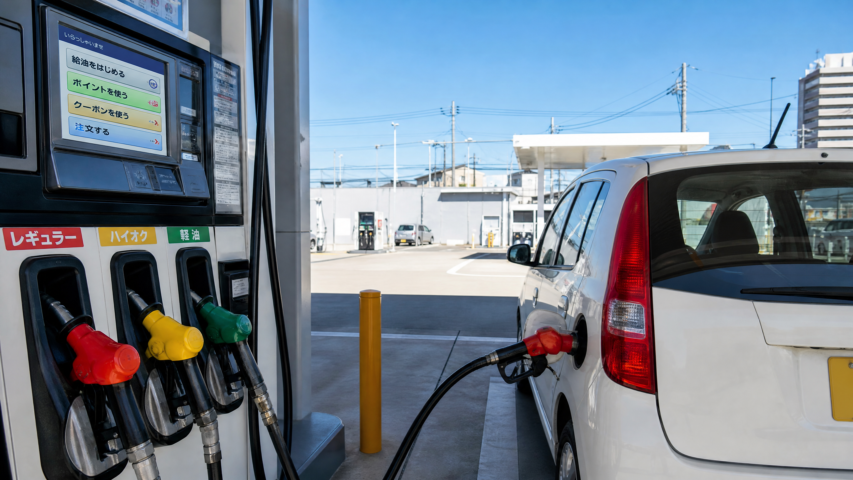
選擇正確的油種至關重要。日本加油站主要提供三種燃料,透過油槍顏色區分。絕大多數的一般租賃轎車使用「一般汽油(Regular)」,對應的油槍顏色永遠是「紅色」。如果您租借的是高級車款,可能會被要求添加「高級汽油(High-Octane)」,對應「黃色」。大型廂型車使用的是「柴油(Diesel)」,對應「綠色」。離開租車公司前,請務必確認所需油種。若將柴油誤加入一般汽油引擎中,會導致拋錨並產生高額維修費。

自助加油站的操作步驟

在自助加油站加油的流程相當直覺。首先,將車輛停靠在加油機旁並熄火。走到觸控螢幕前,按下「開始」按鈕。接著選擇付款方式,並選擇油種(一般汽油請選紅色)與加油量。如果您是準備去還車,請務必選擇「加滿(満タン)」選項。確認設定後,打開車輛的加油孔蓋,取下指定顏色的油槍,插入加油孔內並扣下板機開始加油。當油箱加滿時,油槍會自動停止出油。將油槍放回原位後,請記得拿取收據,若使用現金付款也別忘了拿找零。

租車還車時的滿油歸還規定

日本多數租車公司的標準規定是「滿油歸還」。這意味著您在歸還車輛時,油箱必須是全滿的狀態。建議您在距離還車地點最近的加油站進行最後一次加油。當您還車時,工作人員會檢查油量表。在許多情況下,他們還會要求您出示最後一次加油的「收據」,以證明您確實是在店鋪附近剛剛加滿油。因此,加油後請務必妥善保管收據。如果您未能以滿油狀態還車,租車公司會向您收取燃料費,這筆費用通常會比一般加油站的油價昂貴許多。

Gas pump with red, yellow, and green nozzles beside a white car at a bright gas station under a blue sky.

ガソリンスタンドの種類

利用方法を知っておくことは重要です。日本のスタンドは「フルサービス」と「セルフサービス」の2種類です。フルサービスは便利です。一方、増えているのがセルフサービスです。ここでは、タッチパネルを操作して自分で給油を行います。画面は日本語ですが、全国共通の色分けシステムが採用されており、基本を覚えれば簡単です。

正しい油種の選び方

正しい油種を選ぶことは重要です。日本のスタンドでは主に3種類の燃料が提供され、ノズルの色で見分けられます。一般的なレンタカーで使用される「レギュラー」は「赤色」です。高級車などは「ハイオク(黄色)」が指定されることがあります。大型バンなどでは「軽油(緑色)」が使用されます。出発前に必ず指定の油種を確認してください。油種を間違えると車が故障し、高額な修理費用を請求されます。

セルフスタンドの利用手順

セルフスタンドでの給油手順はシンプルです。車の給油口が給油機側に来るように停め、エンジンを切ります。タッチパネルの「開始」を押し、支払い方法を選択します。次に油種(赤色など)と給油量を選択します。返却前の給油であれば「満タン」を選んでください。選択完了後、給油キャップを開け、指定色のノズルを差し込み、レバーを引いて給油を開始します。自動的に給油が停止したら、ノズルを戻し、レシートを受け取ってください。

レンタカーの満タン返しルール

日本のレンタカー会社の標準ルールとして「満タン返し」があります。車を返却する際、ガソリンを満タンにする規定です。給油は返却店舗の近くで行うことが推奨されます。車を返却する際、スタッフがメーターを確認します。店舗近くで給油したことを証明するため、最後の給油時の「レシート提示」が求められることが多いです。給油後のレシートは必ず保管してください。満タンで返却できない場合、割高な燃料代を請求されます。

Gas pump with red, yellow, and green nozzles beside a white car at a bright gas station under a blue sky.

Understanding Gas Stations in Japan

When renting a car in Japan, knowing how to navigate local gas stations is essential for a smooth road trip. Gas stations in Japan are divided into two main categories: full-service (manned) and self-service stations. Full-service stations are highly convenient for foreign visitors who may not be familiar with the local language or equipment. As you pull in, staff members will direct you to the correct pump, ask for your preferred fuel type and amount, and handle the entire refueling process. On the other hand, self-service gas stations are becoming increasingly common across the country. These stations require you to operate the touch screen terminal, select your fuel, and pump the gas yourself. While the terminals are usually in Japanese, they follow a standard color-coded system that makes them easy to use once you know the basics.

Identifying the Correct Fuel Type

Using the correct fuel is critical to avoid damaging your rental car's engine. In Japan, there are three main types of fuel available at all gas stations, and they are universally color-coded for easy identification. The most common fuel type for standard rental cars is "Regular" unleaded gasoline, which is always indicated by a red nozzle. If you are renting a luxury or sports vehicle, it might require "High-Octane" gasoline, marked with a yellow nozzle. Finally, diesel fuel, typically used for larger vans or specific SUV models, is indicated by a green nozzle. Before leaving the rental office, always confirm the required fuel type with the staff. Additionally, you can usually find a sticker indicating the correct fuel type on the inside of the car's fuel door.

How to Use a Self-Service Gas Station

Refueling at a self-service station is a straightforward process. First, pull up to the pump ensuring that your car's fuel door is on the correct side, and turn off the engine. Approach the touch screen terminal and press the start button. You will be prompted to select your payment method; you can choose between cash or a credit card. If you choose cash, insert your bills into the machine before proceeding. Next, select the fuel type (Red for Regular) and the amount you want to pump. If you are preparing to return your rental car, look for the "Full Tank" (満タン) button. After confirming your selection, open your car's fuel cap, remove the color-coded nozzle, and insert it into the fuel port. Squeeze the handle to start pumping; it will automatically stop when the tank is full or the specified amount is reached. Return the nozzle to the pump, and don't forget to collect your receipt and any change.

Important Rules for Returning Your Rental Car

The standard policy for most rental car companies in Japan is the "full tank return" rule. This means you must return the vehicle with a completely full tank of gas. It is highly recommended to refuel at a gas station located as close to the rental return location as possible, ideally within a few kilometers. When you return the car, the rental staff will check the fuel gauge. In many cases, they will also ask to see the receipt from your final refueling to verify that the gas was purchased recently and near the shop. Therefore, it is crucial to keep the receipt after you fill up. If you fail to return the car with a full tank, the rental company will calculate the missing fuel based on the distance driven and charge you a premium rate that is often higher than standard gas station prices.

Tips for a Hassle-Free Refueling Experience

To ensure a hassle-free experience, plan your refueling stops in advance, especially if you are driving in rural areas or mountainous regions like Hokkaido or the Japanese Alps, where gas stations can be sparse and may close early in the evening. In urban areas, you will find 24-hour self-service stations easily. If you encounter any issues at a self-service station, look for an intercom button on the pump to call for assistance; there is usually a staff member inside the office even at self-service locations. By understanding the fuel types, knowing how to operate the self-service terminals, and remembering the full tank return policy, you can enjoy your Japanese road trip with complete peace of mind.

Gas pump with red, yellow, and green nozzles beside a white car at a bright gas station under a blue sky.

在日本租車走高速公路前必須了解的事

日本高速公路路況良好,是自駕旅遊的絕佳選擇。然而,ETC電子收費、速度限制及緊急停車規定等日本獨特規則,事先了解能讓旅程更順暢安心。

ETC卡的使用方式

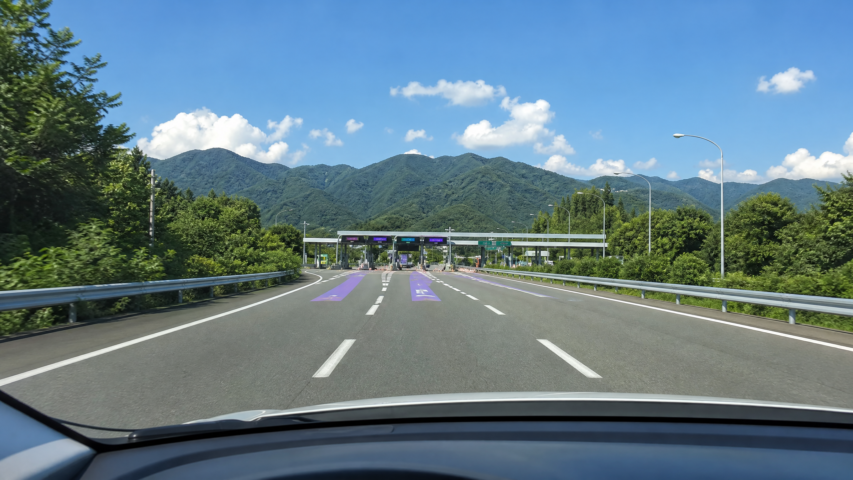
租借的車輛幾乎都已安裝ETC車載器,但ETC卡需要另外租用,建議預訂車輛時一併申請。將卡插入讀卡機,啟動引擎後會聽到語音確認提示。通過收費站時請選擇紫色的ETC專用車道,車速須降至時速20公里以下,閘門會自動開啟,費用於還車時統一結算。深夜零時至凌晨四時進出可享約三成折扣,週末及假日亦有優惠。

速度限制與行車規則

日本高速自動車國道的普通乘用車最高速限為時速100公里,最低速限為時速50公里。首都高速等都市高速道路屬於「汽車專用道路」,無標誌時速限為時速60公里,切勿誤以為是100公里。行駛時應保持在左側車道,右側車道僅供超車,超車後須立即回到左側。路肩除緊急情況外嚴禁行駛。

服務區與停車區

高速公路沿線設有服務區(SA)與停車區(PA)。服務區通常設有餐廳、便利商店、加油站及全天候廁所。

  • 沿途綠色指示標誌可引導您找到下一個休息站。
  • 若前方路段無加油設施,請提早加油,在高速公路上耗盡燃料屬於違規行為。

車輛故障時的緊急處理

若發生故障,請將車輛移至路肩或緊急停車帶,立即開啟危險警示燈。在車輛後方至少50公尺處放置警示三角標誌,這是法律規定的義務。切勿留在車內,請從左側車門下車,越過護欄在安全位置等候。可使用每隔一公里設置的緊急電話,或以手機撥打「#9910」求援。

重要行車規定

  • 高速公路上嚴禁迴轉或倒車,若錯過出口請至下一交流道向收費站人員說明。
  • 全車乘客均須繫好安全帶。
  • 行駛中使用手機屬違法行為。

了解ETC使用方式與速度規定,日本高速公路將為您帶來安全舒適的自駕體驗,祝旅途愉快。

Driver’s-eye view on a multi-lane highway heading toward toll booths, with purple lane markings and green forested mountains under a blue sky in the distance