

Japan Winter Rental Cars: Tires, Chains and a Safer Plan
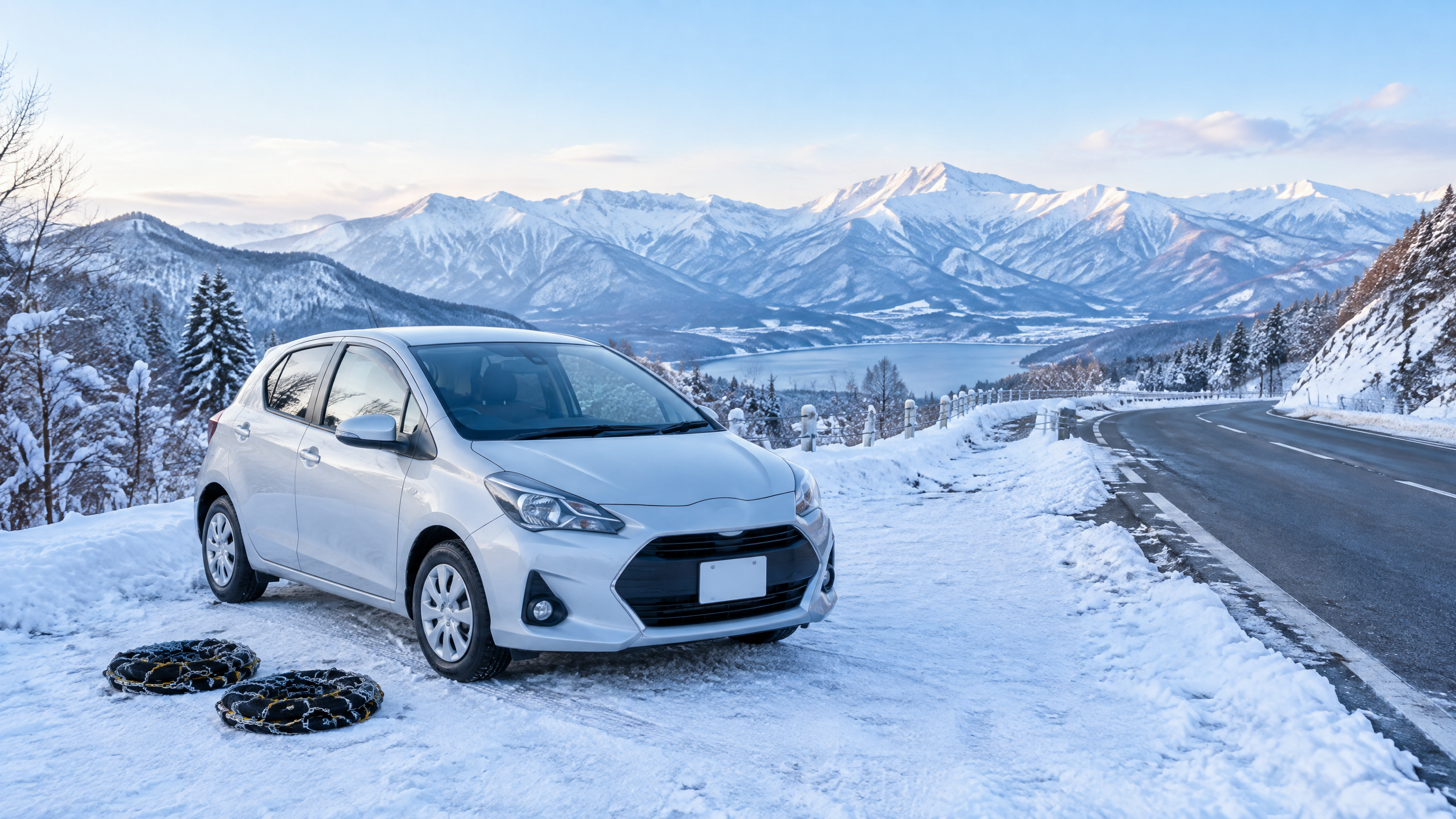
Plan for winter conditions before you collect the car
A winter road trip in Japan can be rewarding, but snow changes the decision-making long before the first snowflake reaches the windscreen. The practical question is not simply whether a vehicle is four-wheel drive. It is whether the vehicle, its equipment and your route are suitable for the conditions expected that day. Before reserving, tell the rental company the places and dates you expect to drive, then ask what winter equipment is supplied, whether it is available at that location, and what the company requires if conditions deteriorate. Keep the answer with your booking information rather than assuming every branch offers the same option.
Build a route with time to change plans. Mountain passes, expressways and local roads may be regulated, slowed or closed as weather develops. Check official road and weather information before departure and again during a stop. If a route becomes unsuitable, turning back, delaying departure or choosing a lower-risk alternative is a sound travel decision—not a failed itinerary.
Know the difference between winter-tire and chain restrictions
Japan does not have one identical winter requirement for every road. Road authorities and prefectures can apply restrictions according to conditions. NEXCO Central explains that a winter-tire regulation requires non-slip equipment, such as winter tires or tire chains, and that the detailed equipment requirements can differ by prefecture. This is why a general internet checklist cannot replace the notices for the road you actually plan to use.
A chain restriction is more demanding. The Ministry of Land, Infrastructure, Transport and Tourism explains that it can be used during exceptional heavy snow on designated sections, often where steep gradients have caused vehicles to become stranded. Under that restriction, studless winter tires alone are not enough. A four-wheel-drive vehicle without chains is not exempt either. The authority may check chain installation before the restricted section, so keep the required equipment accessible rather than under a fully packed boot.
- Winter-tire regulation: confirm what non-slip equipment is accepted for the route and conditions.
- Chain restriction: winter tires alone do not satisfy the restriction; chains must be fitted.
- Closure or severe warning: do not treat a rented vehicle as a reason to continue; follow the operator’s direction and revise the plan.
Make the rental counter conversation specific
At collection, ask the staff to identify the tire type fitted to your car and to explain any equipment supplied with it. If chains are provided, ask where they are stored, whether they match the tire size, and what the company’s fitting and use instructions are. Do not buy or fit substitute equipment on the assumption it will suit the rental car. For a chain restriction, chains are basically fitted to the drive wheels, but the vehicle manual and the rental company’s instructions remain important for the exact vehicle in front of you.
Also ask about roadside-assistance contact details and what to do if a warning appears while you are travelling. Photograph the condition of the tires and the storage location of any supplied equipment only if this is permitted and does not delay the handover. The goal is to avoid searching through luggage in falling snow or trying to interpret equipment after daylight has gone.
Use information stops, not the roadside, to reassess
Conditions can change while you are already on the expressway. NEXCO Central advises drivers who need to fit chains to use the nearest service area or parking area rather than the roadside. It also notes that speed restrictions and closures can accompany winter weather. Read signs early, leave a generous following distance and reduce speed smoothly; no itinerary is worth abrupt braking on a surface whose grip has changed.
Use a service area or other safe stop to check official notices, weather and the next section of your route. Do not operate a phone while driving. If the required equipment is not fitted, not carried, or not approved for the restriction shown, leave at the appropriate interchange or change the plan in accordance with the operator’s guidance.
A calm departure checklist
- Confirm the forecast and official road status for the full route, including the return journey.
- Confirm the fitted tire type and the rental company’s equipment and usage instructions.
- Keep chains and the rental company’s emergency contact information easy to reach.
- Allow daylight and extra time; do not schedule a tight mountain or expressway connection.
- At every safe stop, reassess the route and accept a delay, detour or cancellation when conditions call for it.
Winter preparation is not about promising that every drive will go ahead. It is about knowing which restriction applies, carrying the right equipment, and giving yourself permission to make the safer choice. That approach makes a Japan rental-car trip more flexible and far less stressful when the forecast changes.