

Japan Railway Crossings: Rental-Car Safety Steps
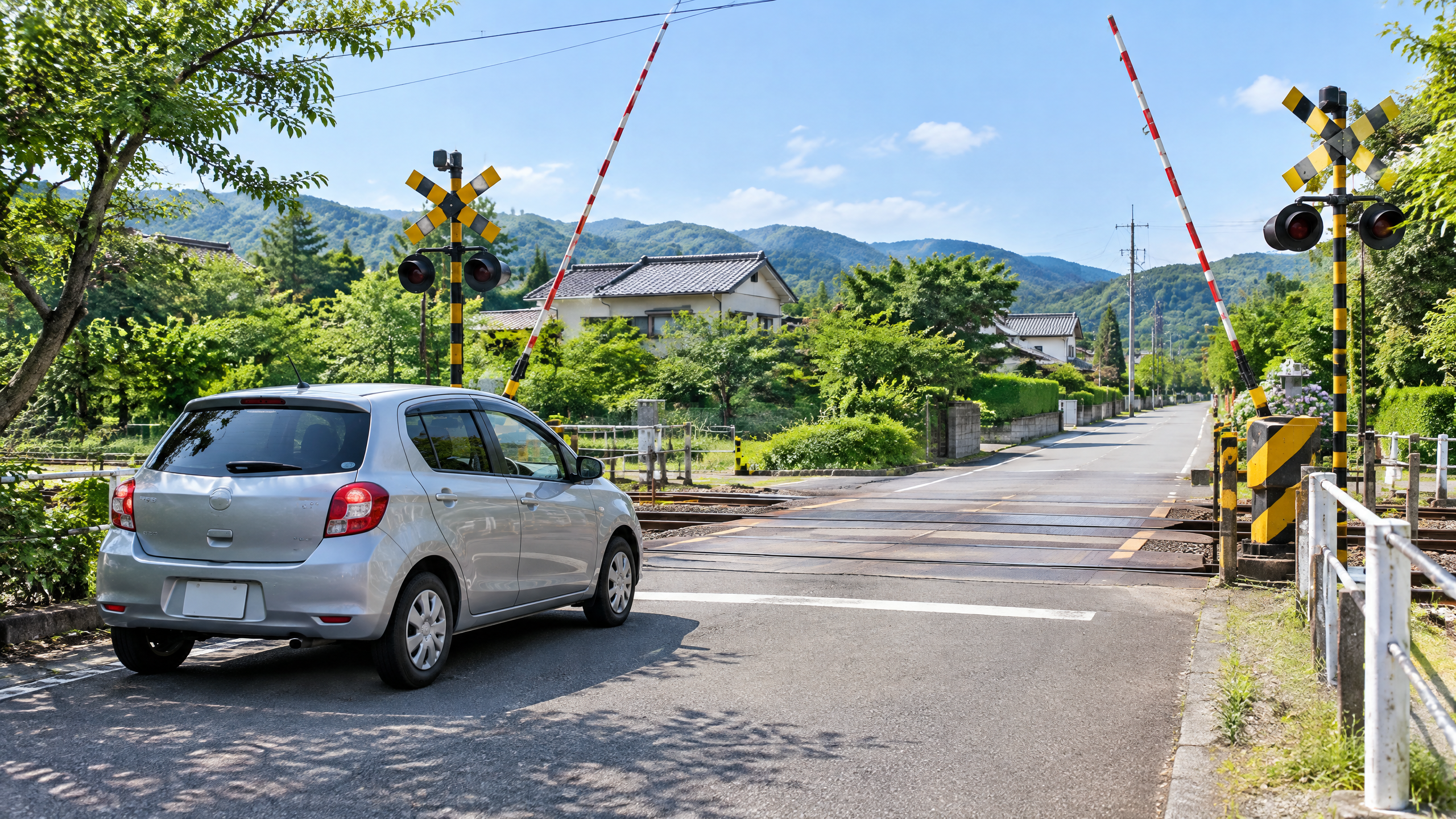
Why railway crossings deserve your full attention
Japan’s railway crossings can appear on city streets, residential roads, and country routes. They may feel familiar, but a rental-car driver should treat every crossing as a deliberate driving task rather than a quick gap in the journey. The Japan National Tourism Organization advises drivers to pause at the stop line before crossing railroad tracks and check both ways for approaching trains. That rule applies even when the road looks quiet and even if the crossing is part of a route your navigation has selected.
Build this short pause into your travel day. It keeps the decision simple: stop where required, look carefully, listen, and move only when the crossing is clear. Before leaving the rental branch, take a moment to understand the brake pedal, the parking position, and the navigation controls while the car is stationary. A small preparation step means you are less likely to be distracted near a crossing later.
Approach slowly and read the crossing environment
Start reducing speed early enough to observe the road markings, signs, signals, barriers, pedestrians, cyclists, and vehicles ahead. Do not let a following car rush your decision. The stop line is the point to stop; from there, look to both sides for an approaching train and check that there is space to continue across. If visibility is limited by buildings, vegetation, weather, or the angle of the road, give yourself more time rather than trying to judge the situation while rolling.
Japan drives on the left, so visiting drivers may be managing unfamiliar lane position and turning patterns at the same time. Keep your hands on the wheel, leave the phone alone, and avoid adjusting the navigation system while moving. JAF states that drivers must not use a cell phone or be distracted by the car navigation system. If the route instruction is unclear, continue to a safe place to stop or pull over legally before checking it.
A simple crossing routine for rental-car drivers
- Slow down early. Notice the approach signs and the stop line instead of reacting at the last moment.
- Stop completely where required. Check both directions for trains and confirm that signals, barriers, and the road ahead allow you to proceed.
- Cross only when clear. Move through calmly without stopping on the tracks, then return your attention to pedestrians, cyclists, and the road beyond.
- Keep the cabin quiet. Ask passengers to pause route discussions until the car has cleared the crossing.
Plan before the crossing, not at the crossing
Many visitor driving errors begin with a late navigation decision: a missed turn, an unexpected street name, or uncertainty about the next destination. Deal with those choices before you approach the crossing. Set the next destination while parked, review the map at a rest area, and give passengers a specific task only when it does not distract the driver. If you need to turn around, use a lawful and safe location after the crossing rather than stopping at the tracks or making a hurried maneuver nearby.
Allow extra time in a day plan, especially if you are new to driving in Japan. A schedule with a little margin makes it easier to wait, observe, and follow the signs without pressure. It also helps when a crossing is busy or when you choose to take a short break before continuing. Safety is not about racing an itinerary; it is about making each movement predictable and controlled.
Keep the official basics in mind
Railway crossings are one part of a wider set of Japanese road rules. Wear seatbelts, follow posted speed limits, never drive after drinking alcohol, and do not use a mobile device while driving. When you encounter a railway crossing, return to the core sequence: stop at the line, check both ways, and proceed only when it is safe and clear. That practical habit supports a calmer rental-car trip for everyone in the vehicle and around the road.