

Tokushima Airport to Iya Valley: A Careful Rental-Car Plan
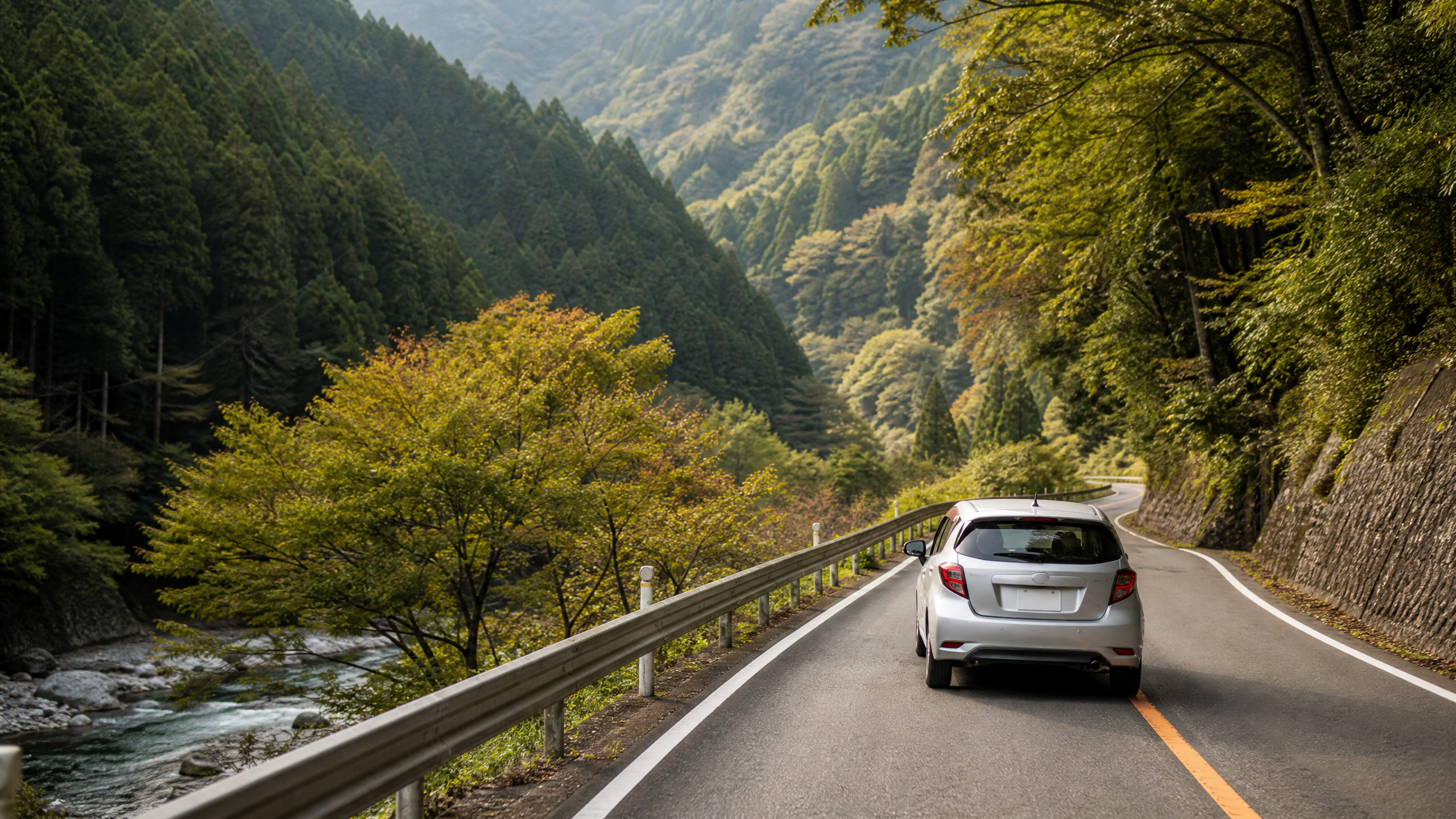
Iya Valley in western Tokushima rewards patient travelers with deep gorges, vine bridges and mountain scenery, but it is not a destination for rushing between pins on a map. A rental car gives you useful flexibility in Shikoku, yet the most important decision is to set a conservative plan before leaving Tokushima Awaodori Airport. Treat the journey as two different drives: first reach the Miyoshi/Awa-Ikeda area, then continue toward Oboke and the particular Iya sight you have chosen. This approach leaves time for navigation, fuel, weather checks and the slower rhythm of mountain roads.
Plan the journey in two stages
Miyoshi City’s official tourism guide lists the drive from Tokushima Airport to Awa-Ikeda at approximately one hour and 20 minutes, and the drive from Awa-Ikeda to Oboke at approximately 35 minutes. Those figures are useful planning references, not a promise for every destination in Iya Valley. Your final time changes with the exact accommodation or attraction, traffic, weather and road conditions. Enter the precise destination in the car navigation system before departure, keep a charged phone and ask the rental company how its navigation handles route changes.
Do not turn the published times into a tightly scheduled arrival. JNTO describes Iya as a remote mountain valley where narrow roads make travel slow. Build a daylight buffer, especially if this is your first experience of left-side driving or rural Japanese roads. If you have a lodging check-in, tell the property your realistic arrival window rather than planning a last-minute mountain ascent.
- Set the first navigation stop to Awa-Ikeda or Oboke, then confirm the second leg.
- Download or save the route while you have reliable signal at the airport.
- Check the day’s road and weather information before committing to side roads.
Choose the right destination for your confidence
Not every part of Iya is the same drive. The local IyaTime guide notes that the main route from Oboke to the Kazurabashi Vine Bridge is two lanes, comparatively wide and paved, although curvy and sometimes steep. Beyond that area, routes into Oku-Iya and hillside villages can include frequent one-lane sections. That distinction matters when choosing a car and an itinerary. A compact vehicle may feel easier to place on narrow roads, but the rental company should advise on vehicle availability and equipment rather than an online article making a promise.
For a first visit, pick one principal destination, allow time to park safely, and avoid adding remote side roads merely because they appear close on a map. At blind curves, use the roadside mirrors where provided, reduce speed and be prepared to wait. If another vehicle appears on a one-lane section, do not try to squeeze past beside a drop or rough edge; use a wider point to pass or reverse only when it is safe. Keep looking for people and cyclists because there may be no sidewalk or shoulder.
Apply Japan’s road rules throughout the drive
Mountain scenery does not change the basic rules. JAF states that drivers keep left, must yield to pedestrians, and must not use a phone or be distracted by navigation while driving. Everyone in the car must wear a seat belt, and a child younger than six must be secured in a child seat. Alcohol and driving do not mix: do not drive under the influence. Observe the posted limit rather than treating another vehicle’s speed as a guide. On any expressway section, JAF advises using the passing lane only to overtake and returning to the driving lane.
- Park only where stopping is permitted and the vehicle is fully clear of traffic.
- Pull over safely before changing a navigation destination or taking photographs.
- Keep fuel above a comfortable margin; do not assume a station will be nearby on mountain roads.
Weather and the return drive deserve equal attention
Check conditions again before leaving your final stop. IyaTime cautions that severe storms or typhoons can close roads and leave limited or no detours. In colder conditions, higher or remote routes can require different preparation; ask the rental company about suitable equipment and do not learn to drive on snow or ice on a steep unfamiliar road. If visibility, fatigue or weather makes the plan feel wrong, simplify it. Returning early is better than arriving after dark on a road you have not driven before.
A careful Iya Valley drive is still a rewarding one. Start with a valid driving document, a realistic two-stage plan, a vehicle you can handle confidently and enough time to respond to conditions. For the latest routing, closures and weather, consult local official information on the day rather than relying on any static itinerary.
Sources
- Miyoshi City official tourism access guide
- Japan National Tourism Organization: Iya Valley
- Japan Automobile Federation: traffic rules