

Japan Rental Car Roundabouts: Enter, Yield and Exit Safely
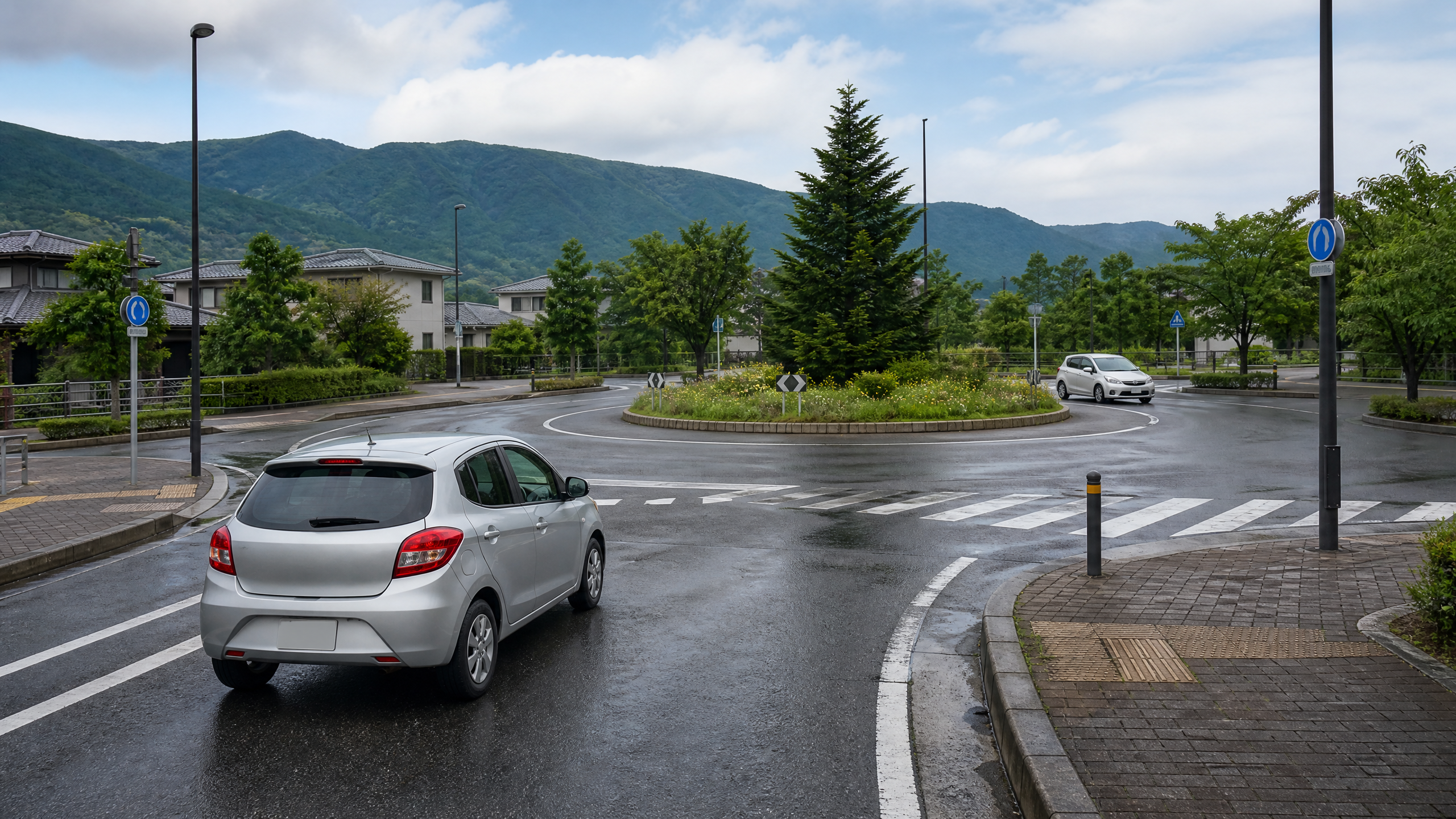
Roundabouts can feel unfamiliar when you are driving a rental car in Japan for the first time. A Japanese roundabout is a signed circular intersection in which vehicles travel clockwise. Before you reach the entry, set your route, identify the exit you need, and give yourself time to read the signs. The aim is not to hurry through. Follow the road markings, look well beyond the bonnet, and make every movement predictable for the people sharing the road.
Recognize the traffic pattern before you enter
Japan drives on the left, and this matters at a roundabout. The official guidance explains that a driver should move as close as practical to the left edge before entering and proceed at a reduced speed. As you approach, look for the roundabout sign, the circulating roadway, approaching pedestrians, and the vehicles already travelling around the circle. Reduce speed early rather than braking abruptly at the entrance. This gives you time to decide whether the space is clear and to respond calmly if someone is crossing nearby.
Do not assume that an open-looking entrance gives you priority. Traffic already circulating in the roundabout has priority, so wait when entering would obstruct it. This is especially important in a rental car, when the driving position, mirrors, or navigation instructions may still feel new. Keep a comfortable gap, enter only when you can do so smoothly, and avoid forcing another driver to brake or change course.
Use a simple entry routine
- Move toward the left side of the approach and slow down before the entry.
- Check the circular roadway for traffic that is already moving through it.
- Check the crossing area and the immediate roadside for pedestrians.
- Enter only when your path is clear, then continue clockwise at a safe, controlled speed.
This routine is deliberately short. It helps a visitor avoid trying to read a map, choose an exit, and judge a gap at the same moment. If your navigation instruction is unclear, let the road situation come first. Continue around only while it is safe to do so, and take the exit when you can make the manoeuvre without sudden steering or braking.
Signal left when your exit is next
The exit signal is a key detail. When you pass the exit immediately before the one you plan to take, operate the left turn signal and keep it on until you leave the roundabout. If you will take the first exit immediately after entering, use the left signal as you enter and continue it until you have exited. This clear signal helps the driver waiting to enter understand your intention. Keep your speed low through the exit and stay alert for people crossing at or close to the roundabout.
Make space for pedestrians and local conditions
Official police guidance specifically calls on drivers to watch for pedestrians crossing at the roundabout or in its immediate vicinity, both when entering and while circulating. Treat this as an active observation, not a quick glance. In rain, darkness, or an unfamiliar neighbourhood, reduce speed further and allow extra time for visibility and decision-making. Never let a spoken navigation instruction override a sign, a pedestrian, or the actual traffic situation.
Roundabout layouts, signs, and lane markings can vary, so the on-site signs and conditions always control your next action. The reliable habits remain the same: approach from the left, slow down, yield to traffic already in the circle, signal left before your exit, and scan carefully for pedestrians. Review these steps before collecting your rental car, and a signed roundabout can become a calm, predictable part of your Japan drive.
For the official Japanese explanation, see Kochi Prefectural Police guidance on roundabouts.