

Hokkaido Autumn Rental Car Guide: Plan for Wildlife and Early Evenings
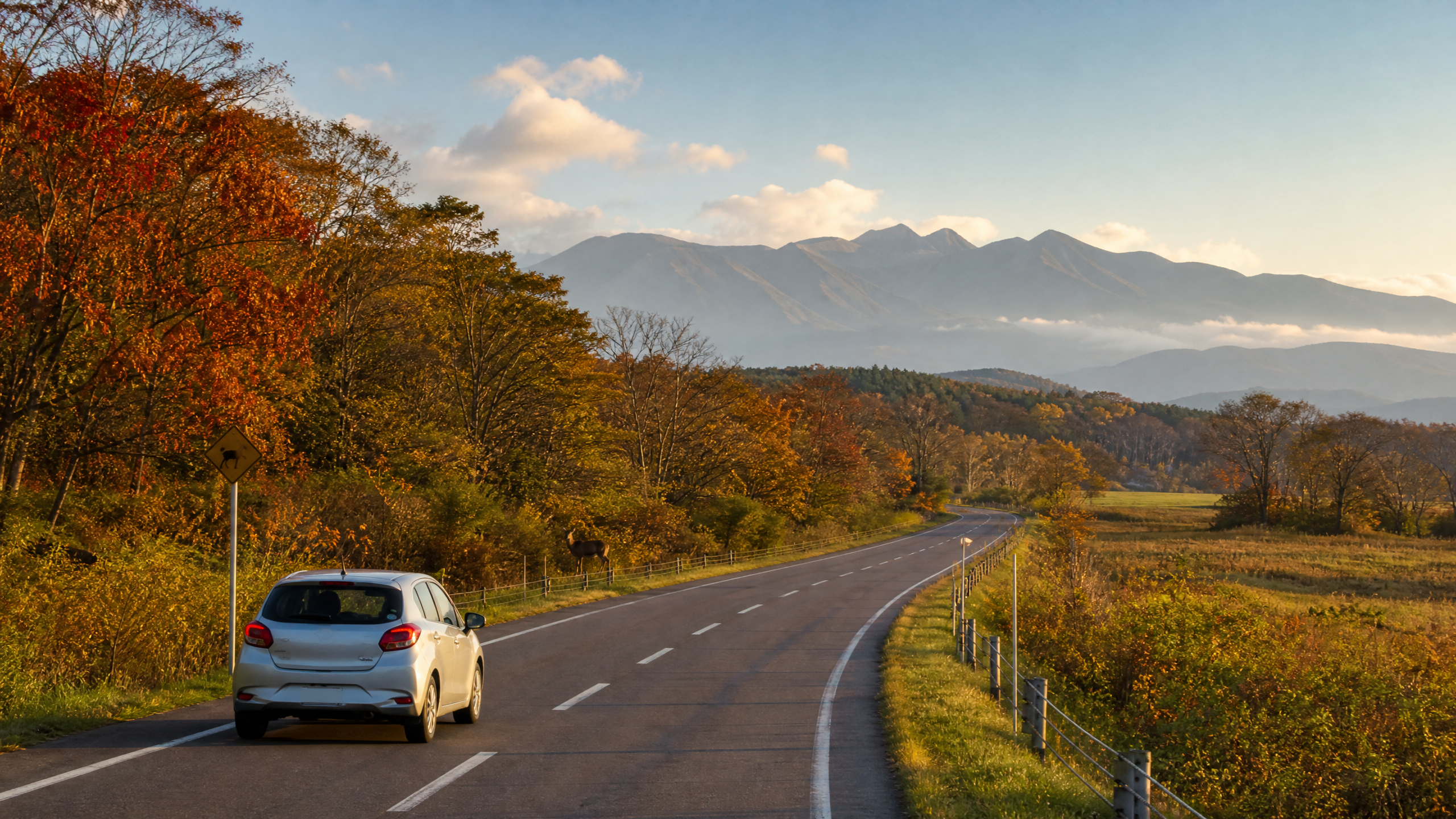
Autumn is a rewarding time to explore Hokkaido by rental car: colorful leaves begin to appear from September, seasonal food is everywhere, and a car makes it easier to link rural towns, viewpoints, and accommodation. It is also a season that rewards a calmer plan. The Hokkaido Tourism Organization notes that this is a large region, cities are far apart, and a journey that looks short on a map can take much longer than expected. Rather than collecting as many stops as possible, build each day around a comfortable arrival, a fuel plan, and enough attention for the road.
Why an autumn drive needs its own plan
Hokkaido’s autumn changes quickly. Early September can still feel comfortable during the day, while mornings and evenings become cooler from around mid-September. Later in the season, the first snow can begin from late October into early November. The Japan National Tourism Organization also describes the autumn season as short, with foliage and snow occasionally appearing at the same time. That does not mean every autumn drive is a winter drive; it means a late-season itinerary should remain flexible and should start with a current weather and road-condition check.
Pack a light outer layer where it is easy to reach, not buried in the luggage. This is useful after sunset, at higher elevations, and whenever rain changes the temperature. It also makes short walks at viewpoints more pleasant, so there is less pressure to rush back to the car.
Build a day around a daylight arrival
Set your final destination first, then work backward. Enter the accommodation or parking location in the navigation system before departure, confirm its check-in expectations, and choose only a small number of essential stops. Leave space for scenic pull-offs, a meal, a slow vehicle ahead, or a navigation error. If a detour would make the arrival feel rushed, save it for another day.
- Check the route, estimated driving time, and the next practical fuel stop before leaving.
- Keep a simple backup: a nearby town, service area, or earlier accommodation arrival instead of an extra attraction.
- Use the speed shown on road signs, even on long straight sections that feel easy to drive.
- Tell everyone in the car that the driving schedule matters more than squeezing in one last photo stop.
This approach is especially useful outside major cities. The official Hokkaido guidance advises travelers not to make routes or itineraries overly ambitious and to use expressways where appropriate. A relaxed schedule gives the driver more time to notice signs, junctions, changing light, and other road users.
Treat animal signs as a real driving cue
Hokkaido’s open landscape is part of its appeal, but animals can enter the road. The regional tourism office specifically warns that deer may appear and that a collision can seriously damage a vehicle. When an animal-warning sign appears, reduce speed early, scan the road edges, and keep a larger margin for the unexpected. Do the same on forested or lightly developed stretches, particularly when light is fading. If you see an animal near the road, slow down while you still have distance and stay prepared for its movement rather than trying to rush past it.
Do not stop in an unsafe location to photograph wildlife, and do not approach or feed animals. Watching from a distance protects both travelers and the animals. Should a collision or road incident occur, put personal safety first, follow the rental company’s emergency instructions, and contact the appropriate local services.
Fuel and finish the day calmly
Mountainous areas may have fewer fuel stations and very few 24-hour shops, according to Hokkaido’s official travel guidance. Treat the half-tank point as a planning cue rather than waiting for a near-empty warning. Refuel while choices are easy, especially before leaving a larger town or driving toward lodging in a rural area. Keep your rental agreement, insurance contact details, and accommodation address accessible without handling a phone while moving.
Before each departure, check the weather, the road route, fuel level, and your intended arrival time. These small habits do not make the trip less spontaneous; they make it easier to enjoy Hokkaido’s autumn landscapes without turning a beautiful drive into a hurried one.
Planning reference: Hokkaido Tourism Organization travel information and Japan National Tourism Organization—Hokkaido.