

Narrow Roads in Japan: Rental-Car Safety Tips
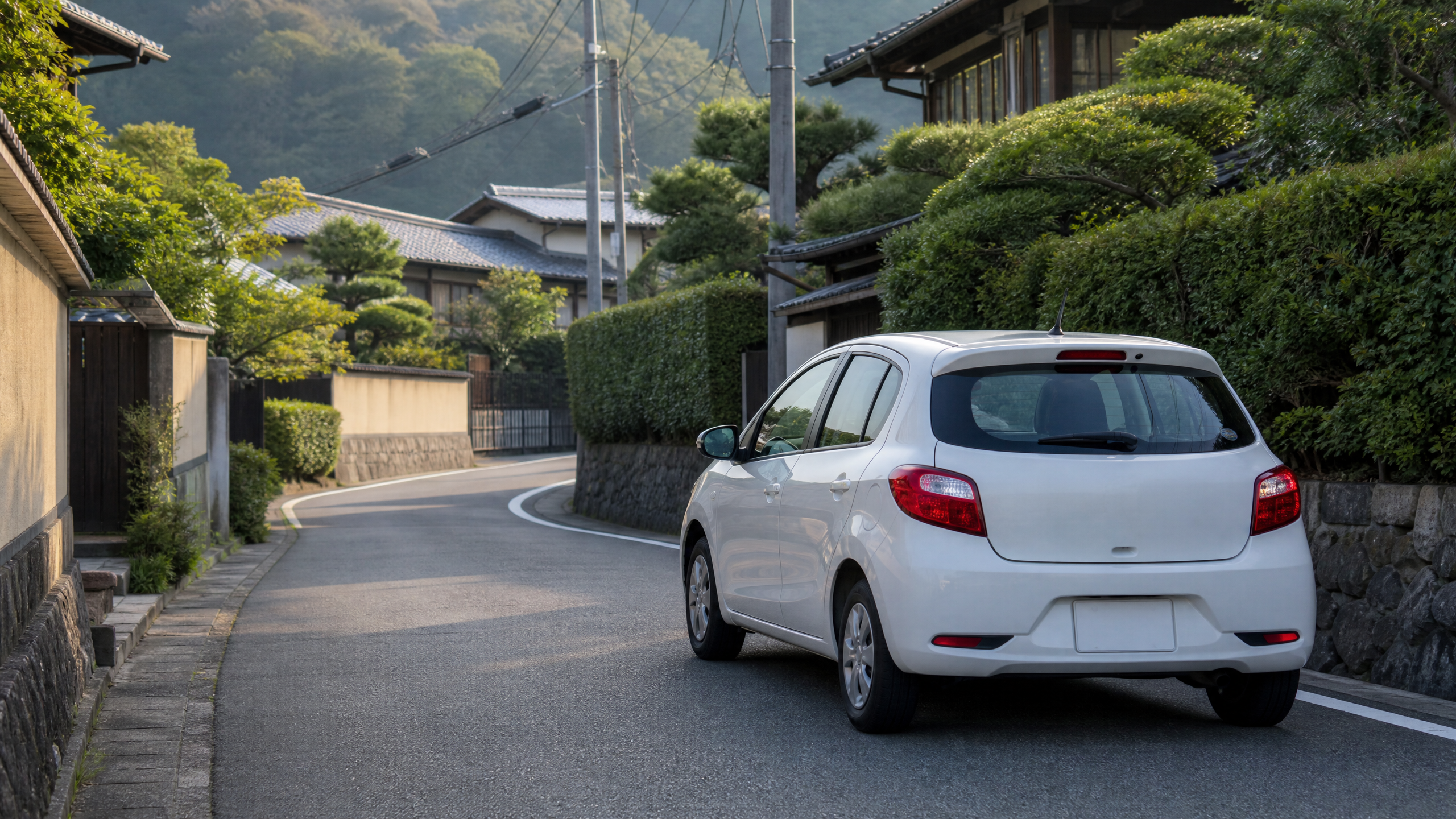
Why narrow roads need a different mindset
Japan can be rewarding to explore by rental car, yet a navigation route may leave a broad main road for a residential lane, a historic district, or a rural side street. These are not places to make up time. Drive at a speed that lets you stop within what you can see, and expect people, bicycles, delivery vehicles, or an oncoming car to appear around the next corner. The aim is not to prove that the car will fit; it is to leave enough space and attention for everyone using the road.
Japan drives on the left. This matters most when you turn from a familiar wide road into a street without a centre line. Reset your position, look ahead, and do not let the map alone decide whether a lane is suitable. Road signs, barriers, local restrictions, and the conditions in front of you always take priority.
Prepare before leaving the main road
Make decisions before the space becomes tight. Set the destination and the next useful waypoint while stopped legally, then put the phone away before moving. If you are visiting an older neighbourhood, check a public car park or your accommodation's parking arrangement in advance. A narrow lane is never a substitute for a parking space.
- Look at the route overview, not only the next turn.
- Adjust mirrors and confirm that every passenger has a seatbelt fastened.
- Secure loose bags and drinks before a slow manoeuvre.
- Allow time to wait for pedestrians, cyclists, and local traffic.
Slow down at blind corners and junctions
Walls, hedges, parked vehicles, and building corners can hide a person or vehicle until the last moment. Ease off the accelerator before the sight line disappears, look deliberately into the corner, and be ready to stop. At a junction, follow every sign and road marking. Where a stop line or railway crossing requires a stop, stop first and check carefully before continuing. A vehicle behind you is never a reason to skip a safety check.
Keep your attention on the road rather than on a navigation screen. Using a mobile device while driving is illegal in Japan, so arrange directions before departure or let a passenger handle the device. If you miss a turn, continue to a safe and legal place to reroute instead of making a sudden turn or reversing near a junction.
Meeting an oncoming vehicle
Meeting an oncoming vehicle is normal on a narrow road. Reduce speed early and look for a wider section, a driveway entrance, or a marked passing place that can be used safely and lawfully. If the other driver is already closer to a suitable space, waiting and letting them clear the tight section is often the calmest choice. Keep a generous gap and watch both mirrors. Never force the issue by squeezing past parked cars, mounting a kerb, or blocking a pedestrian route.
If reversing is necessary, pause and assess the area before moving. A passenger can help look outside when it is safe, but the driver remains responsible. Reverse slowly in the clearest available space and stop again when the view is uncertain. An extra minute is better than a scrape or a frightened pedestrian.
Give people and local life more room
On a narrow street, pedestrians may step out from behind a gate and cyclists may travel close to the edge. Treat every blind spot as occupied until you can see that it is clear. Pedestrians have priority at crossings, and a patient pace helps you respond to children, older people, and residents carrying shopping. Do not use the horn to hurry people; reserve it for serious warnings.
Park legally, then explore on foot
Historic and residential areas are often best explored after you park in a designated area. Check the posted conditions and leave narrow streets clear for local access. Before returning to the car, look around for bicycles, pedestrians, and delivery vehicles. Slow down, respect the signs, and give others room; with that approach, an unfamiliar lane becomes a manageable part of the journey.