

Japan Rental Cars with Children: Child Seat Checklist
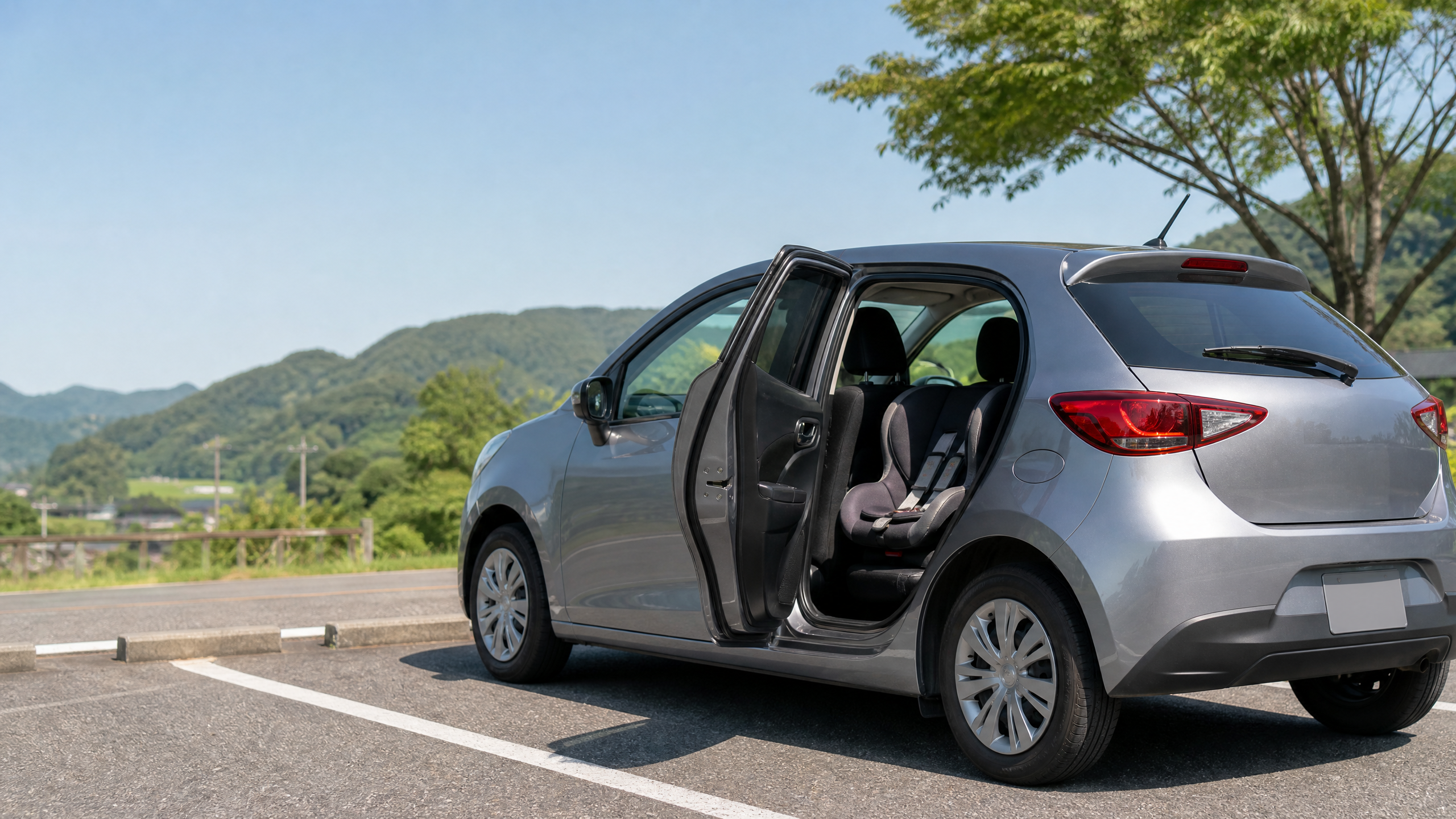
Make the child-seat plan before you collect the car
A family road trip in Japan can be wonderfully flexible, but the safety plan needs to be settled before the key is handed over. If you are travelling with a child, add the child seat to the same checklist as your licence, passport and route. Tell the rental company the child’s age, height and approximate weight when you book, then ask what type of restraint is available and whether you are expected to fit it yourself. Bring any special positioning needs to the counter early rather than trying to solve them beside a busy car park.
This is a safety check, not simply an optional extra. Japan’s Road Traffic Act requires a driver not to carry a child under six unless the child is using an appropriate child restraint, subject to limited legal exceptions. The Japan Automobile Federation (JAF) also reminds drivers that every vehicle occupant must use a seat belt, while children younger than six must be secured in a child seat. Read JAF’s English traffic-rule guidance.
Separate the legal minimum from a good fit
Age is only the first checkpoint. A child who has reached six may still be too small for an adult seat belt to sit correctly. JAF recommends continuing to use a child or junior seat as needed until the child is about 150 cm tall, while stressing that the belt’s position matters more than a birthday. The shoulder belt should lie across the shoulder rather than the neck, and the lap portion should rest over the hips rather than the soft abdomen. If that fit is not possible, use a suitable restraint instead of improvising with the adult belt alone.
Choose the seat according to the child and the equipment label, not according to a familiar name from home. A baby seat, child seat and junior/booster seat serve different stages. Ask the staff to show you the seat’s instruction label and the vehicle points it is designed to use. If the vehicle has ISOFIX anchors, do not assume every supplied seat uses them; follow the seat and vehicle instructions that apply to the actual combination in front of you.
Use a five-minute handover check
Before leaving the rental location, park somewhere calm and check the seat with the child seated in it. Japan’s National Police Agency reports that, in its 2025 survey with JAF, correct installation and correct seating were not universal. That is a useful reminder to check the details instead of relying on a quick glance. See the National Police Agency’s child-seat guidance.
- Confirm the restraint type. Check that its label and instructions suit the child’s current size and that the model is approved for the vehicle position you are using.
- Read the belt route. If the seat is secured with the vehicle belt, make sure the belt follows the marked path and is not twisted. If it uses ISOFIX, confirm each connector is properly engaged as instructed.
- Check the seat’s stability. Apply firm pressure near the belt path and follow the manual’s test; if anything feels loose or unclear, ask for help before departure.
- Position the child. Fasten the harness or belt flat against the body, with no bulky clothing or loose objects under it. Use only the adjustments permitted by the seat instructions.
- Check the adult belt too. Every adult passenger should buckle up before the car moves, including those seated in the rear.
Keep the routine on the road
Repeat a brief check after a long break, after moving the seat, or whenever another adult has helped the child in or out. Do not alter the belt path to make a child seem more comfortable, and do not place luggage where it can press against the seat or harness. Build extra time into short stops so that no one is tempted to rush the fastening process.
Finally, make the plan portable. Keep the seat manual, the rental paperwork and the child’s essentials together, and ask the rental company how the seat should be returned. A calm handover, an age-aware choice and a careful final check let your family focus on the drive rather than an avoidable safety question.
Official references
For the legal requirement and current safety information, consult the National Police Agency and JAF’s child-seat guide. These sources should take priority over general travel advice when selecting and fitting a restraint.