

Izu Peninsula Road Trip: A Complete Rental Car Guide to Onsen and Scenic Drives
Why Drive to the Izu Peninsula?
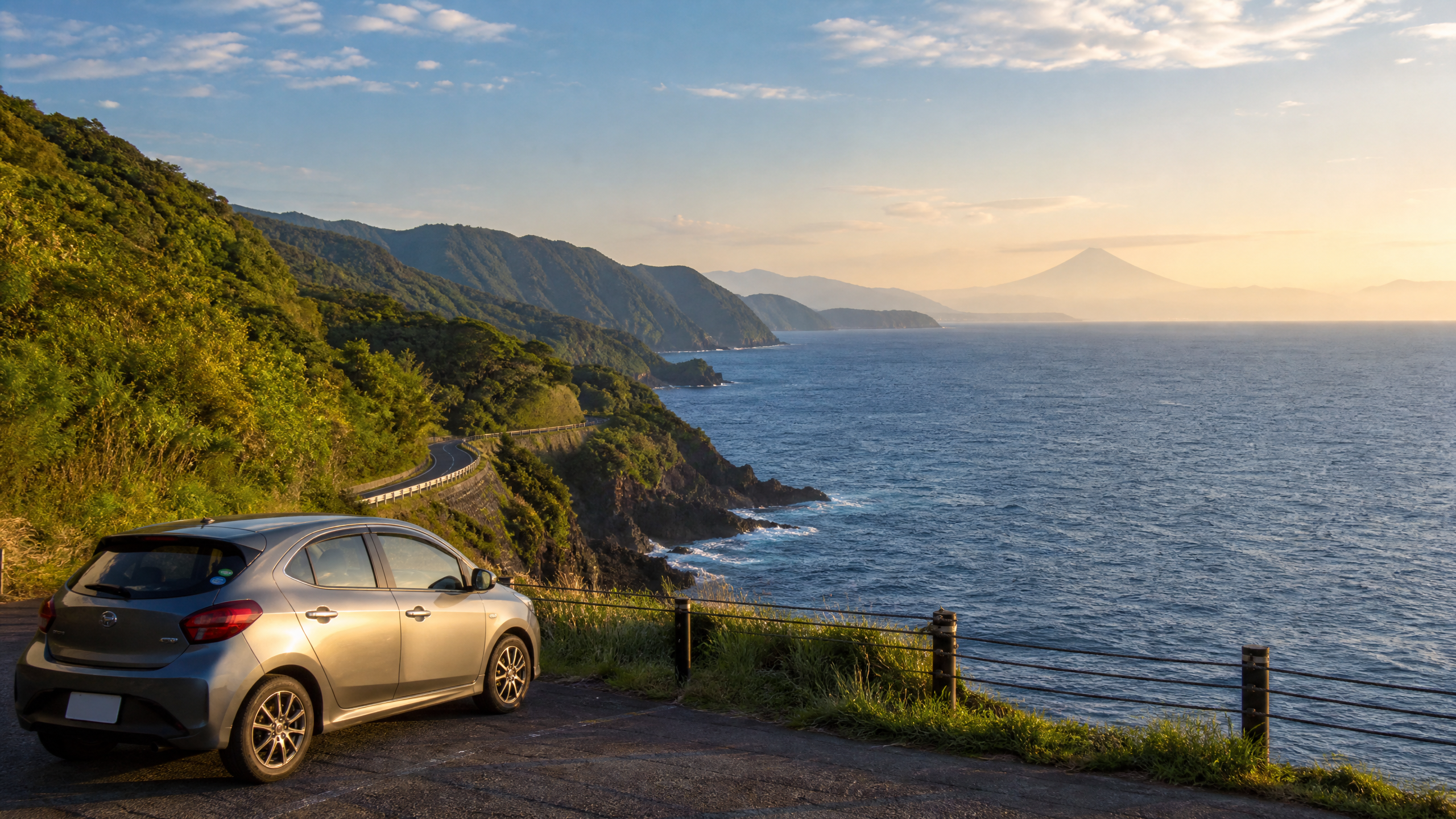
The Izu Peninsula, stretching about 60 kilometres into the Pacific Ocean roughly 100 kilometres southwest of Tokyo, is one of Japan's most rewarding road-trip destinations. A rental car gives you the freedom to hop between multiple onsen towns in a single day, detour to secluded coastal viewpoints, and reach ryokan that sit far from any train station. Whether you have one day or a long weekend, a self-drive journey through Izu offers a perfect blend of hot springs, rugged lava coastlines, mountain ridge roads, and fresh seafood.
Getting There: Routes from Tokyo
The most straightforward route from central Tokyo to northern Izu takes the Tomei Expressway (E1) toward Atsugi, then transfers to the Odawara-Atsugi Road (E85) and the Seisho Bypass along the coast. This brings you to Atami in roughly two to three hours depending on traffic. For a more scenic approach, enthusiasts can branch off near Gotemba and take the Izu Skyline, a toll scenic road that runs along the peninsula's central ridge with sweeping views of Mount Fuji on clear days. One-way expressway tolls with an ETC card typically range from ¥3,000 to ¥5,500 depending on your destination.
To avoid congestion, aim to depart Tokyo before 7:00 AM or after 10:00 AM on weekends and public holidays. The Seisho Bypass can become heavily congested during holiday mornings and after typhoons, so check live traffic reports before you set off.
A Recommended Two-Day Itinerary
The following route covers the peninsula's eastern highlights and gives you time to soak in multiple hot springs without feeling rushed.
- Day 1 – Atami and Ito: Start at Atami, the closest onsen city to Tokyo, and enjoy a morning stroll along the seafront promenade. Continue south along National Route 135 to Ito, where you can visit the Jogasaki Coast—a dramatic stretch of lava cliffs formed by ancient eruptions of Mount Omuro. The suspension bridge at Kadowaki offers a memorable view of the Pacific. Spend the night at a ryokan in Izu-Kogen.
- Day 2 – Kawazu and Shuzenji: Head south to Kawazu to walk the Nanadaru trail, a forested path past seven waterfalls. Then cross the peninsula's interior to Shuzenji, one of Izu's oldest hot-spring towns, famous for its bamboo-lined riverside path and the historic Shuzenji Temple. Return to Tokyo via the Shin-Tomei Expressway through Numazu.
Key Driving Tips for Izu
Overseas visitors must carry a valid International Driving Permit (IDP) based on the 1949 Geneva Convention alongside their home licence. Note that Taiwan residents need an official Japanese translation of their licence rather than an IDP—this can be obtained at any Motor Vehicles Office in Taiwan before departure. An ETC card is strongly recommended for smooth toll payment and discounted expressway rates; most rental companies offer ETC card rental at the counter.
Navigation is straightforward with the in-car GPS system. Entering a destination by phone number or MAPCODE is the most reliable method. Google Maps works well on main roads but occasionally routes drivers onto very narrow local lanes, so prefer major roads when in doubt. On the Izu Skyline and other scenic toll roads, stopping on the shoulder is prohibited—use designated rest areas and viewpoints.
Onsen Towns Worth Visiting
Atami is the most accessible onsen town from Tokyo and offers a wide range of day-use baths and seaside ryokan. Ito and Izu-Kogen are known for their coastal cliffs, art museums, and dog-friendly accommodation. Shuzenji, set inland along the Katsura River, has a quieter, more traditional atmosphere. Kawazu is famous for its early-blooming Kawazu cherry blossoms in late January and February, which draw large crowds and require early departure from Tokyo. Shimoda, at the southern tip of the eastern coast, features white-sand beaches and ocean-view open-air baths.
Practical Information
Petrol stations are plentiful along Route 135 and in major towns; fill up before heading onto mountain scenic roads where stations become sparse. Parking at most ryokan is free for guests, but coastal towns charge for lots near beaches and promenades—carry coins or a QR-code payment app. The best seasons for Izu driving are spring (March to May) for mild weather and clear skies, and autumn (September to November) for post-typhoon blue skies and comfortable onsen temperatures. Summer is busy with beach visitors, so parking fills early and coastal roads can be slow on weekends.