

Japan Rental Car Guide: How to Cross Railway Level Crossings Safely
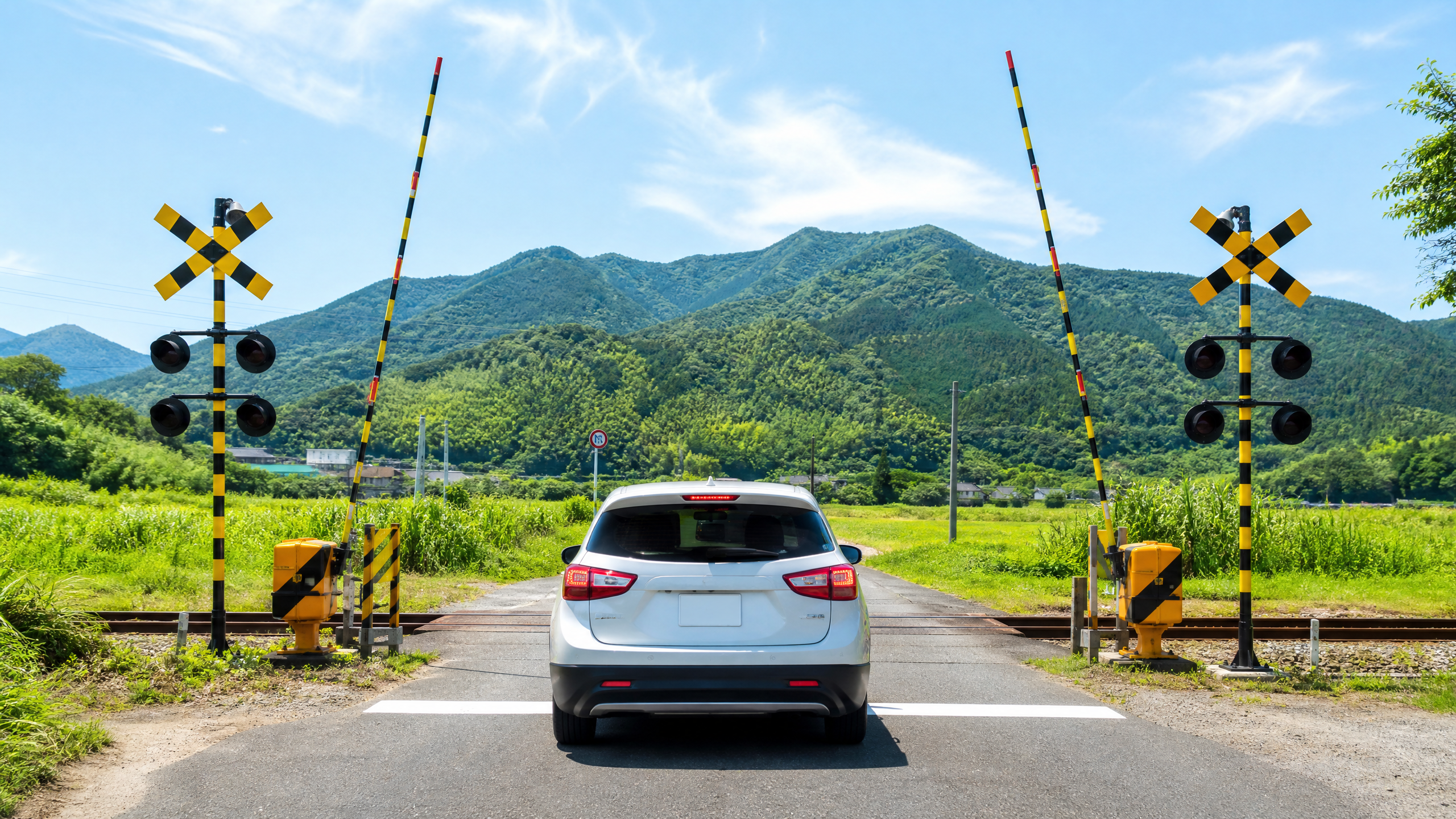
Why Railway Level Crossings Need Extra Care
A rental car gives you the freedom to explore Japan beyond train stations and city centres. It also means learning road rules that may feel unfamiliar. Railway level crossings are one of the most important examples. They appear on both urban streets and quiet rural roads, and a driver must approach each one with care.
Japan's Road Traffic Act requires a vehicle to stop immediately before a railway crossing, or before its marked stop line, and to check that it is safe before going over the tracks. This rule applies even when the barrier is open and no train is visible. Treat a crossing as a separate safety check, not simply as another part of the road ahead.
The Stop, Look, and Check Routine
Use the same deliberate routine every time you reach a crossing. Slow down early, stop fully, and give yourself a few seconds to assess the situation. If you are driving with passengers, it can help to reduce conversation and music before the crossing so that everyone can concentrate.
- Stop at the right point: Bring the car to a complete stop immediately before the crossing or the painted stop line. A rolling stop is not enough.
- Check both directions: Look carefully to the left and right for an approaching train. Listening matters too, especially on a narrow road where your view is partly blocked.
- Confirm your exit: Before you move, make sure the road beyond the tracks has enough clear space for your whole vehicle. Do not enter if queuing traffic could leave you stopped on the rails.
- Cross in one movement: Once the way is clear, drive smoothly across. Do not pause, park, or turn around inside the crossing.
There is a limited legal exception. When a normal road traffic signal at the crossing directs vehicles to proceed, you may follow that signal without making the usual stop. Even then, remain alert for obstacles and never assume that a green signal removes the need for careful driving.
When Alarms or Barriers Begin to Operate
Japanese crossings use audible alarms, warning lights, and barriers to protect rail traffic. Never enter the crossing when the alarm is sounding, when lights are warning of a train, or when the barrier is closing or already closed. This is not a situation where it is safe to hurry through before the barrier reaches the road.
If the alarm begins while your car is already inside the crossing, continue forward and leave the crossing as quickly and safely as conditions allow. Do not stop on the tracks. The official guidance from JR-West gives the same practical instruction: move out of the crossing promptly if you hear the bell while you are inside it.
If Your Vehicle Cannot Move
A stalled vehicle on a crossing is an emergency. Most crossings have an emergency notification button close to the warning equipment. If your vehicle cannot move from the tracks, press that button immediately. The button sends a danger signal to approaching trains; then use the contact number displayed beside it to report what has happened.
- Warn the railway first: Use the emergency button or another available emergency method without delay.
- Prioritise people: Move yourself and your passengers away from the crossing to a safe place.
- Report the incident: Follow the contact instructions at the crossing and, if needed, call the police on 110.
These steps are simple, but they are essential. By stopping, checking, and never entering a crossing without a clear exit, you can make your Japan rental-car journey safer and more relaxed for everyone sharing the road and railway network.