

Tottori Sand Dunes by Rental Car: A Calm Parking and Wind Plan
Start with the setting, not the accelerator
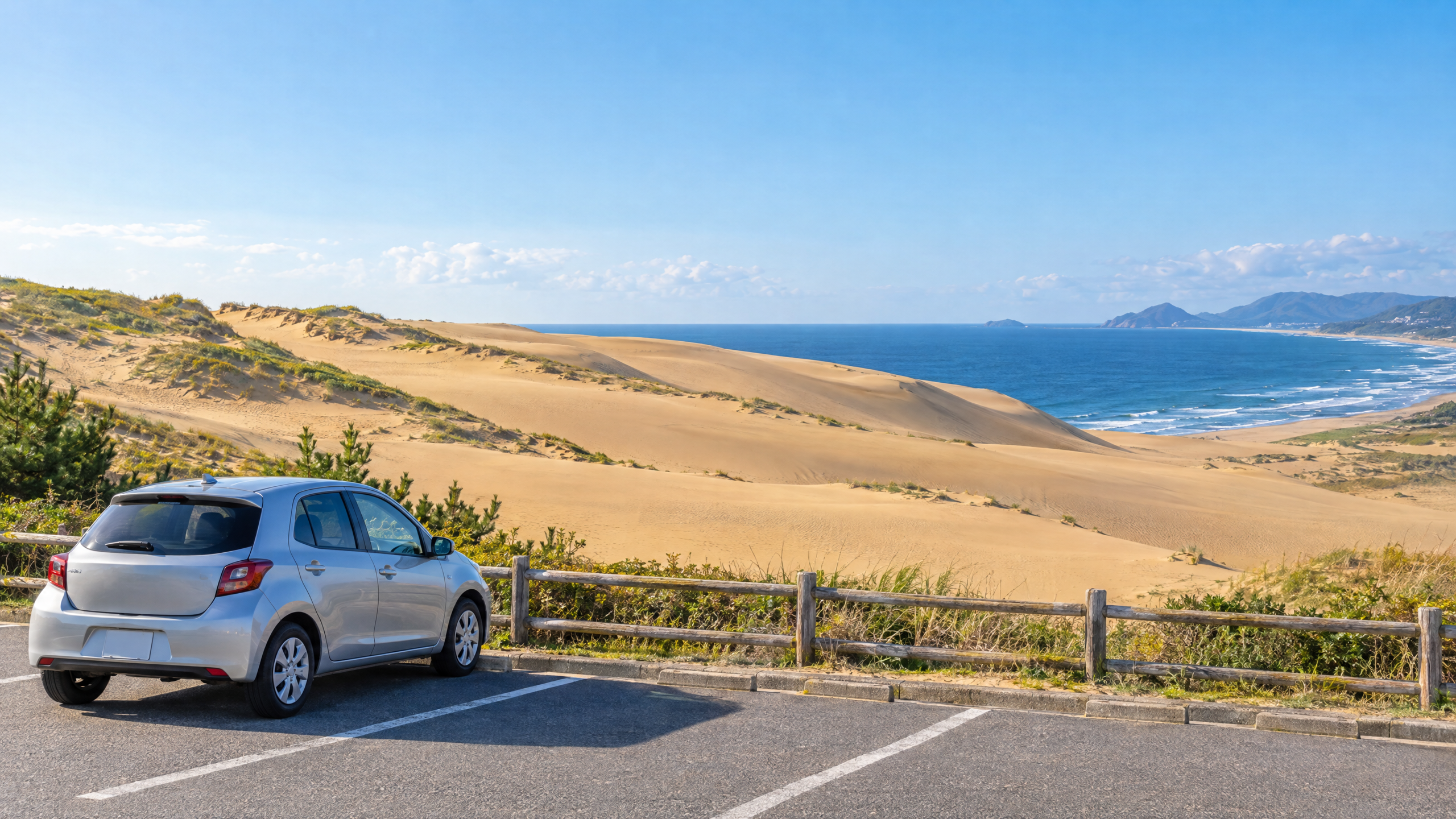
Tottori Sand Dunes are a striking coastal landscape, but the best rental-car visit begins with a simple idea: the car gets you to the access point; it is not part of the dune experience. Plan the drive, park in the designated area, and then enjoy the landscape on foot. This keeps the arrival calm and prevents the common mistake of trying to adjust a route or find a viewpoint while already moving through an unfamiliar area.
Before leaving your accommodation or rental counter, enter the destination and the return location in the navigation system. Save the visitor center or parking location as a separate point, not only the broad attraction name. The official visitor guidance directs drivers to the Tottori Sand Dunes Parking Lot in front of the Visitor Center. Check the day’s weather, wind and any visitor information before departure, then let a passenger handle map changes once the journey starts.
Make the pickup a short safety reset
A first drive in a rental car is the right moment to slow down. Adjust the seat and mirrors, locate the hazard-light switch, and confirm how the parking brake, fuel door and navigation controls work before entering traffic. Japan drives on the left, and JAF reminds drivers that all occupants must use seatbelts. Those habits matter especially when the driver is concentrating on an unfamiliar vehicle and a new road environment.
Put bags, cameras and loose footwear where they cannot slide into the driver’s footwell. If you travel with sand-friendly shoes, keep a separate bag or mat ready for them after the visit. The goal is not to make the car spotless; it is to keep the pedals, driver’s view and cabin clear for the drive back.
Use the parking area as the transition point
On arrival, follow local signs and use the designated parking area rather than stopping at the roadside to decide what to do next. Park fully within the marked space, secure the car and take a minute to check the return route before walking away. This is also a good time to note where you parked; large outdoor areas can look different after a long walk, changing light or a busy period.
- Keep valuables out of sight and take only what you need.
- Bring water and clothing that suits the weather and wind.
- Use a secure bag for phones and cameras rather than carrying them loosely.
- Make a meeting point before your group spreads out across the walking area.
The Visitor Center is useful for current seasonal information and nearby-facility guidance. Treat it as the place to confirm practical details before the walk, not as a reason to keep checking a screen while driving.
Plan for wind, sand and attention
At a dune landscape, wind can make an easy walk feel very different from what you expected. Check conditions on the day, protect eyes and electronics as needed, and keep your group together when visibility or comfort changes. Do not turn a changing forecast into a reason to rush. If the weather feels unsuitable, take a break, use the facilities and decide whether to shorten the visit.
When returning to the car, shake or brush sand from footwear and bags away from the vehicle where possible. Then sit down, fasten seatbelts and take one unhurried minute before moving. Set the next destination while parked. JAF specifically cautions drivers not to be distracted by car-navigation systems, so a safe stop is always better than a last-second screen adjustment.
Leave with the same patience you used to arrive
The drive away deserves as much attention as the approach. Expect people to be walking near the parking area, look carefully before reversing, and rejoin the road at a measured pace. There is no benefit in making up time after a scenic stop. If the day includes another destination, build in a rest and fuel check rather than assuming every facility will be available exactly when needed.
A relaxed visit to Tottori Sand Dunes is built from small choices: prepare the car before moving, park where visitors are directed, respect the weather, and keep navigation changes for safe stops. That routine lets the landscape remain the focus while the rental car does its quieter job—getting everyone there and back safely.