

Japan Autumn Drives: Plan a Safe Scenic Stop in Your Rental Car
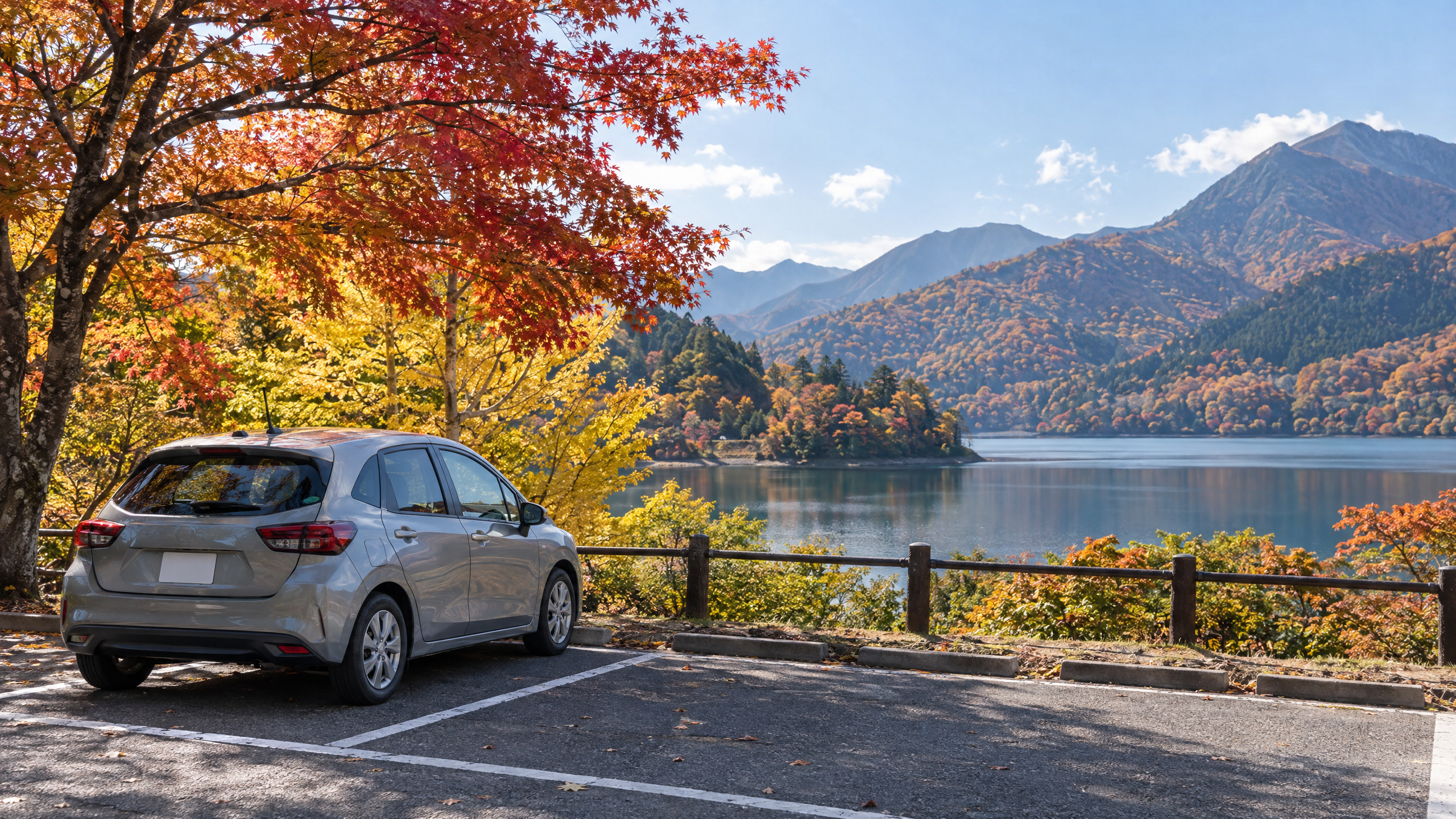
Autumn views deserve a planned stop
Japan's autumn colors can make every bend in the road feel like a photo opportunity. For a rental-car driver, the safest response is not to brake at the first beautiful view. It is to build proper stops into the day before leaving. A short photo break should never create a surprise for traffic behind you, put passengers into the roadway, or turn a narrow shoulder into an improvised parking space.
Start with a simple rule: a view is not automatically a stopping place. Japan's road rules prohibit stopping or parking where signs or markings say so, and at locations such as intersections, crossings, tunnel sections, steep slopes, and the top of a hill. Those restrictions matter even when the road looks quiet. In autumn, changing light, wet surfaces, walkers, cyclists, and other sightseers can make a casual stop less predictable than it appears.
Choose the stop before you reach the view
When planning a route, mark official parking areas, observation facilities, public car parks, roadside stations, parks, or attractions with visitor parking. Use the map only while safely parked or let a passenger handle it. If a destination has several viewpoints, choose one with a clear parking option rather than assuming that a roadside space will be available.
- Save the parking destination, not only the scenic point, in the navigation system.
- Allow extra time for a full car park, a short walk, or a missed turn.
- Keep a second approved stop in mind, so you can continue calmly if the first one is busy.
- Check local signs and any temporary restrictions on arrival.
This approach is especially useful on rural roads. A viewpoint may be visible from the carriageway, but the safe place to enjoy it may be a few minutes farther on. Continuing to a legal parking area is a good decision, not a missed opportunity.
Arrive without making the road your parking lot
As you approach the chosen stop, reduce speed early and signal in good time. Look for pedestrians walking between parked cars, cyclists, opening doors, and vehicles reversing out. Enter a marked bay fully; do not leave any part of the car protruding into a lane, path, entrance, or emergency access area. Read the payment, time-limit, and site signs before walking away.
If there is no available legal space, do not wait on the road for another car to leave. Continue to the backup stop or return later. Do not stop on a curve, near the crest of a hill, by a crossing, or on a narrow roadside simply to take a photograph. Hazard lights do not make an unsafe or prohibited stop acceptable.
Make the photo break easy on everyone
Once parked, secure the car, take valuables with you or keep them out of sight, and make sure children leave on the safer side where possible. Keep clear of moving vehicles and use marked paths, viewing decks, or sidewalks instead of standing at the road edge. A passenger can take a quick road-side photo only after the car is already in a lawful space; the driver should never try to frame a scene while moving.
Autumn days can feel relaxed, but daylight fades earlier than in summer and weather can change during a drive. Set a realistic final destination and avoid stretching the last part of the trip just to chase one more viewpoint. If rain, glare, fog, or fallen leaves reduce confidence, skip the optional stop and continue at a pace that matches the conditions.
Leave as carefully as you arrived
Before pulling out, walk around the vehicle if visibility is limited, check mirrors and blind spots, and reverse slowly. Let pedestrians pass before moving. Then rejoin the road smoothly and return your attention to driving. In Japan, keeping left, yielding to pedestrians, using seatbelts, and avoiding phone or navigation distractions remain essential on every scenic route.
A good autumn drive is not a race to collect photos. It is a route with room to pause legally, walk safely, and continue without pressure. Plan the parking first, respect every sign, and the scenery will be easier to enjoy.