

Japan Autumn Rental-Car Driving: Wet Leaves, Safer Choices
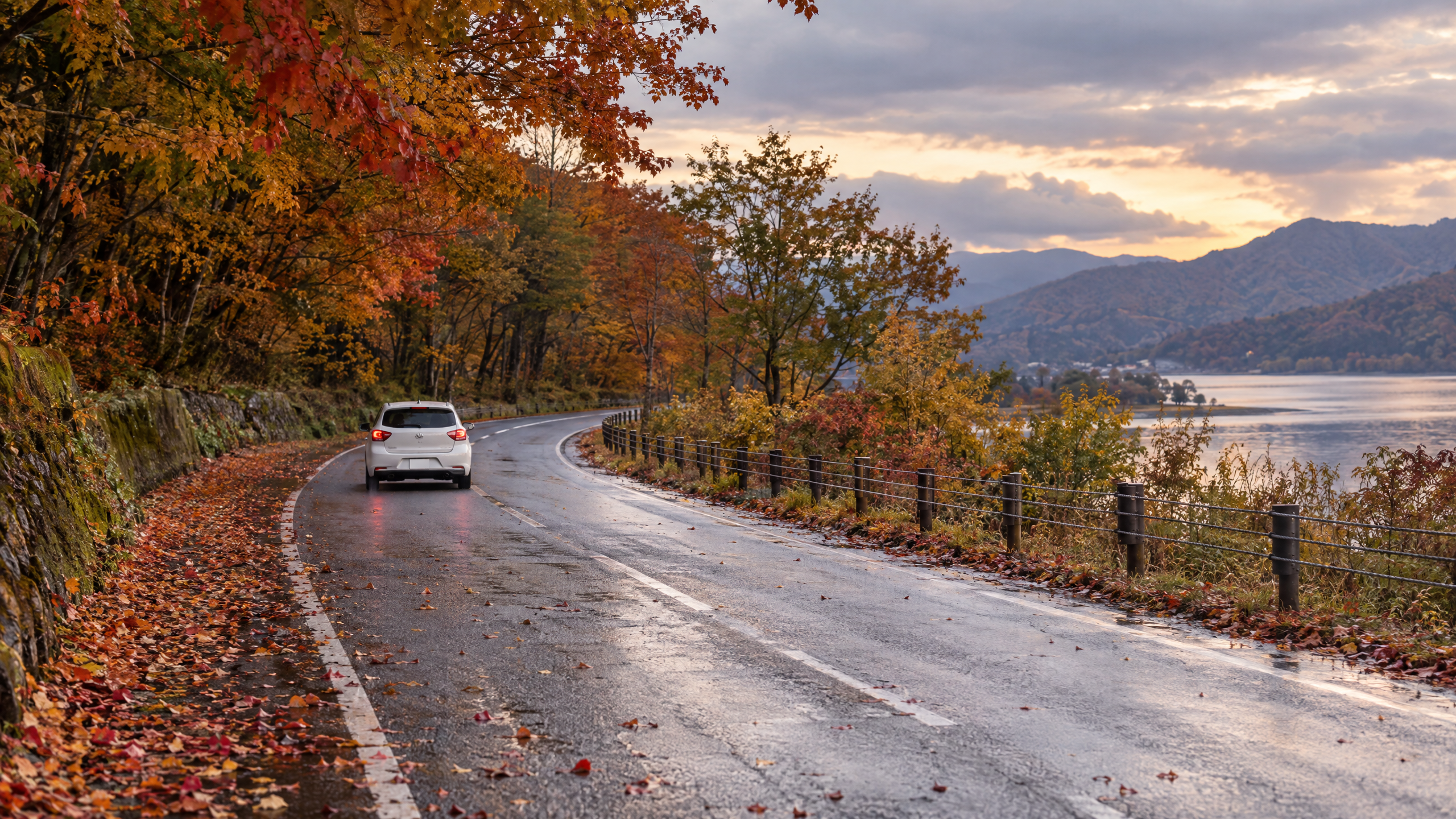
Autumn is a rewarding time to explore Japan by rental car, yet a tree-lined road can change after rain or morning dew. Leaves gathered at a bend, narrow lane or quiet access road may hide the surface below. Treat a wet, leaf-covered patch as a place where grip and visibility may be reduced, not as a photo stop. Prepare early, use gentle inputs and leave more time.
Why leaves change a familiar road
Fallen leaves can cover paint markings, small changes in the surface, drains or the edge of a lane. When wet, hard braking or a sudden turn on them can make the car feel uncertain. This matters on rural approaches to autumn-viewing areas, where trees overhang a narrow road and local traffic may be slower than expected. In Japan, drive on the left and give pedestrians priority. Look beyond the leaves so that a walker, bicycle, parked vehicle or oncoming car is not a last-second surprise.
Autumn also brings earlier dusk. Mie Prefecture’s 2026 autumn road-safety notice asks drivers to allow plenty of time, stay calm and turn on headlights early. Choose a realistic final stop, do not stretch a scenic detour, and retain a margin for a slower road or a short weather delay.
Set up the rental car before the scenery begins
Before leaving the rental location, learn the vehicle while parked. Check the headlights, wipers, demister, hazard lights and navigation controls; adjust mirrors and seat position; and clear the windscreen. JAF advises drivers not to use a phone or be distracted by navigation while driving. Set the route before departure, and ask a passenger to make changes where possible.
- Check rain, fog and temperature along the full route.
- Confirm the fuel type and roadside-assistance contact with the rental staff.
- Plan lawful breaks instead of assuming every viewpoint has parking.
- Keep footwear dry and loose objects away from the pedals.
Use smooth driving on wet leaves
Slow down before a leaf-covered section, curve, downhill approach or junction. A lower entry speed gives the tyres more time to work and gives you more room to see what the leaves conceal. Leave a larger following gap than on a clear, dry road. If the car ahead brakes or a pedestrian appears, that space is more useful than a late, sharp brake.
Keep steering, acceleration and braking gradual. Avoid a sudden lane change, a burst of throttle or heavy braking while crossing a wet layer of leaves. Look through the bend toward the safe road you want to follow and keep both hands ready on the wheel. If you feel a loss of grip, stay calm: ease off the accelerator, make small steering movements and avoid an abrupt reaction. Continue only when you have regained control and can see a safe path ahead.
Share the road patiently at dusk
Leaf-viewing districts can mix visitors, walkers, cyclists, buses and local residents. Follow posted limits and temporary signs even when the road looks empty. At a crossing, slow early and be ready to yield. Turn on headlights before it becomes difficult to see, and use high beams only when they will not disturb traffic. Never use a phone to photograph foliage while driving; park legally first.
- Keep left and stay within the marked lane on narrow roads.
- On expressways, use the passing lane only to overtake.
- Do not stop in a travel lane to inspect leaves, take photos or check a map.
If visibility becomes poor or the surface feels unpredictable, skip the next stop and head for a well-lit, lawful parking location. In a breakdown, move out of traffic if possible, use hazard lights and follow the rental company’s instructions. For an accident, protect people first: call 119 for injuries and 110 for police. A relaxed autumn drive means arriving safely with time to enjoy tomorrow’s route.