

Autumn Rental-Car Driving in Japan: Plan for an Earlier Finish
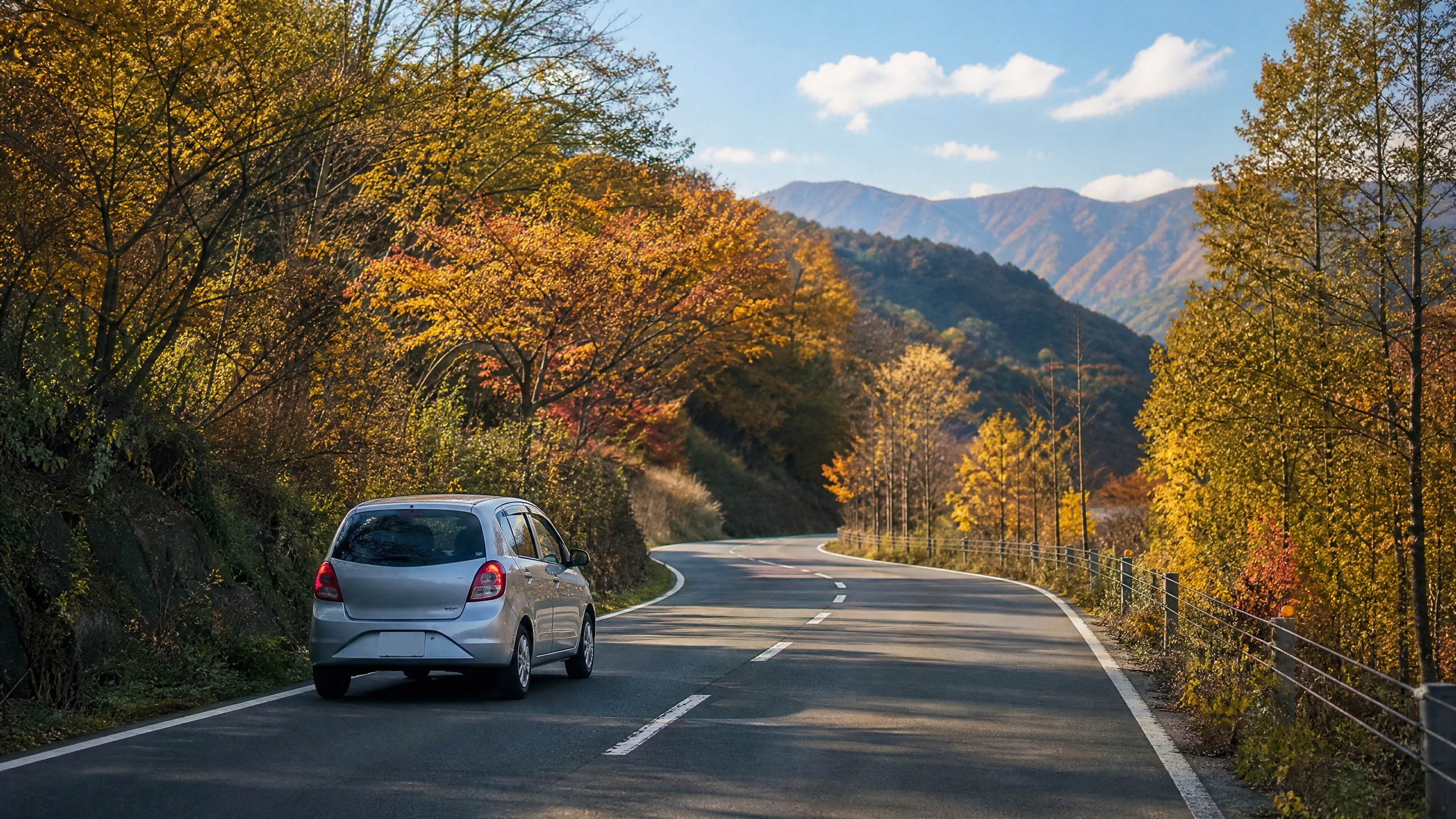
An autumn road trip in Japan can feel wonderfully unhurried: cooler air, clear views and a reason to pause at a local roadside stop. Yet a comfortable drive begins with one practical decision: set an arrival time that leaves room before dark. Instead of trying to fit every scenic point into one day, make a simple plan that protects your final hour behind the wheel.
Choose the finish first, then shape the route
Start with the place where you will park for the night, not with the longest list of attractions. Put that destination into your navigation, check its parking instructions, and decide on a conservative arrival time. In autumn, daylight changes quickly through the season and weather can reduce visibility earlier than expected. A route that looks short on a map can take longer once you add unfamiliar junctions, a fuel stop, traffic, photo stops and walking time.
Build one main destination and one optional stop rather than a chain of must-see places. If the day runs late, skipping the optional stop should make the plan easier, not disappointing. Keep the final section of the route especially simple: avoid saving a difficult mountain road, a busy city-centre car park or a first-time fuel stop for the last minutes of the day.
Make the handover a daylight task
Before leaving the rental location, look over the vehicle with the staff and record existing marks. JNTO also advises checking scratches or dents before departure. Take a few calm minutes to find the light controls, hazard switch, wipers, fuel-door release, parking brake and navigation language. Ask which fuel the car takes and how the rental company handles tolls, an ETC card, emergency help and return-time fuel requirements.
- Save the rental return point and your accommodation before you leave the car park.
- Keep a charged phone, the rental paperwork and a weather layer within easy reach.
- Choose a fuel stop well before the return journey, not when the gauge is already low.
Drive for Japan’s rules and road rhythm
Japan drives on the left, which can make the first turns and car-park exits feel unfamiliar. Slow down before a turn, look deliberately for pedestrians and bicycles, and give yourself extra time to read lane arrows. JAF states that drivers must yield to pedestrians, all occupants must wear seatbelts, and alcohol or mobile-phone use while driving is not permitted. A child under six must use a child seat, so families should request the correct seat in advance and confirm its fit before setting off.
Let signs and road markings set your speed. JAF notes that, where no limit is signed, regular cars are limited to 60 km/h on ordinary roads and 100 km/h on expressways; a lower posted limit always takes priority. On an expressway, use the passing lane only to overtake and return to the driving lane. Leave a generous gap instead of trying to match another driver’s pace.
Use breaks to keep the final hour easy
Plan a proper pause before you feel tired or rushed. JNTO notes that expressways have service areas, while Michi-no-Eki roadside stations can provide rest and local information. Treat either as a reset: use the restroom, review the next junction, check the weather, and decide whether the optional stop still makes sense. Do not use a shoulder as a rest area.
Finally, if visibility worsens, your passengers are tired, or navigation begins suggesting unfamiliar shortcuts, choose the calmer option: head directly to your planned parking place. The best autumn drive is not the one with the most pins on a map; it is the one that ends with everyone arriving safely, with time to enjoy the evening.