

Japan School-Area Driving: A Rental-Car Safety Plan
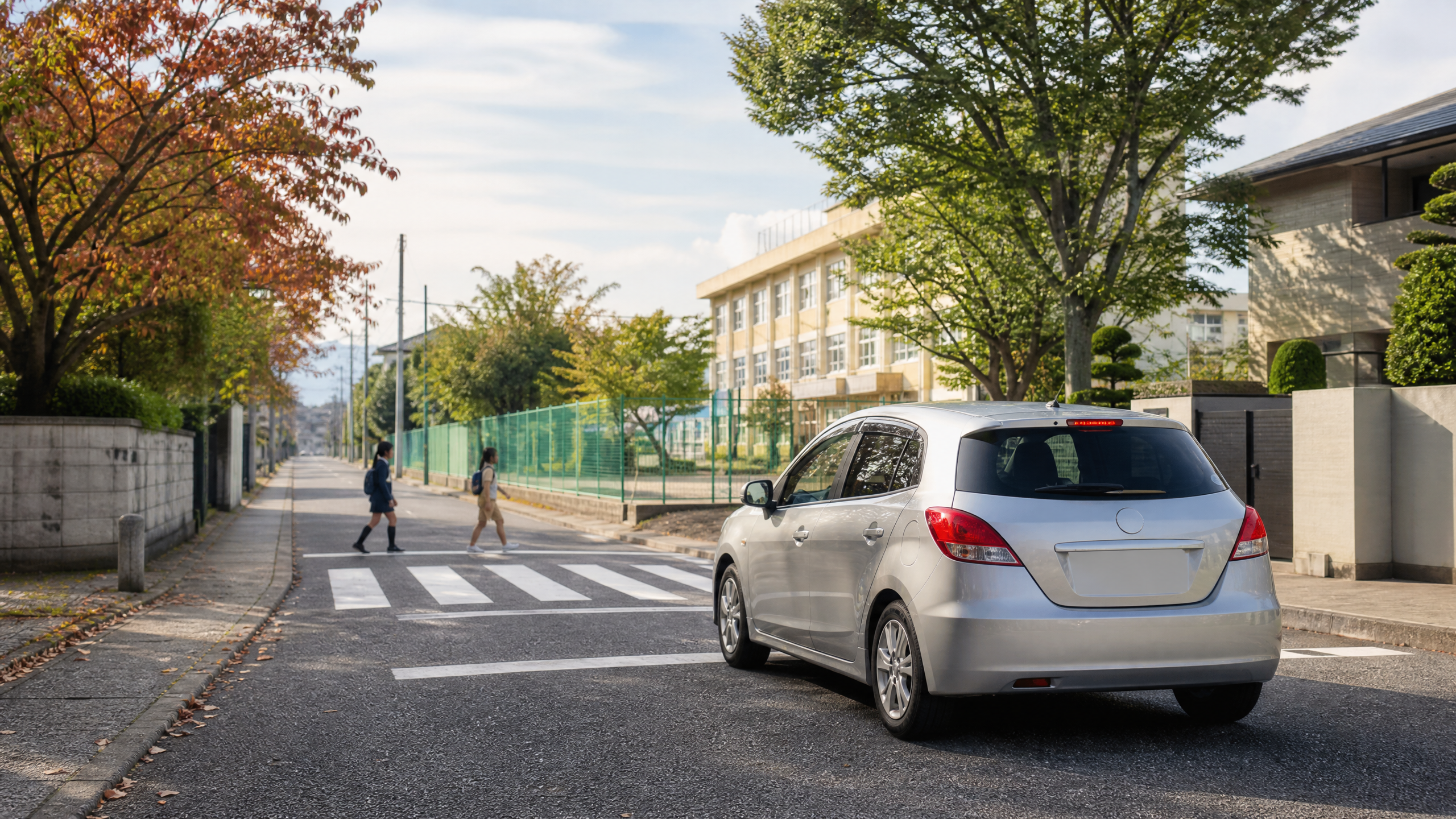
Driving near a school in Japan deserves a different mindset from an ordinary sightseeing road. The street may be narrow, children may appear from behind parked vehicles, and the busiest minutes can be concentrated around a gate or crossing. A calm plan helps a rental-car driver protect people on foot while avoiding rushed turns, sudden stops and navigation distractions.
Start with the rules that do not change
Japan Automobile Federation guidance says that drivers keep to the left, must yield to pedestrians, and must follow speed limits shown on signs and road markings. It also says not to use a phone or be distracted by the car-navigation system while driving. Those basics are especially important where schoolchildren, families, cyclists and local residents share a small street.
Do not assume that every road beside a school has the same limit or restriction. Read the signs, pavement markings and any temporary directions at the location. A route shown by navigation is not permission to ignore a no-entry sign, a pedestrian zone or a parking restriction. If the legal route looks unsuitable for a large or unfamiliar rental car, continue calmly and choose another lawful approach.
Build time into the route
The most useful safety tool is often extra time. Before departure, set the destination and identify an approved parking facility or meeting point away from the school gate. Avoid using the road directly in front of an entrance as a place to wait, turn around or load luggage. Arriving a few minutes early gives the driver room to make a missed turn without reversing suddenly or stopping where other people expect traffic to keep moving.
- Save the destination before moving, then put the phone away.
- Check the final approach on the map and note one alternative road.
- Agree on the meeting point with passengers before entering the area.
- Use only a permitted parking space; do not create an informal kerbside drop-off.
Approach crossings and side streets with patience
Near schools, look farther ahead than usual and reduce speed early enough to stop smoothly. At a pedestrian crossing, be ready to yield; do not use another vehicle’s movement as a substitute for your own view. Before turning left or right, scan the crossing, the near-side pavement and the space beside the car for people on foot or bicycles. The left-hand traffic pattern can make this a new habit for visitors used to driving on the right.
Keep a generous gap from the vehicle in front. It gives you time if it stops for a person crossing, a delivery vehicle or a local instruction. Avoid overtaking, squeezing through a narrowing lane or trying to pass a vehicle that is waiting at a crossing. A short delay is preferable to making an impatient manoeuvre where visibility is limited.
Keep the car quiet and the driver focused
Ask a passenger to manage messages, route changes and photographs. If you are alone and need to change the destination, pull into a legal and safe parking place first. Keep bags, toys and loose items secured so they do not distract the driver or obstruct pedals. Everyone in the car should wear a seatbelt; the driver remains responsible for a calm, ready-to-stop vehicle even on a very short local trip.
A simple exit plan
When leaving, do not pull out just because the road appears clear for a moment. Check mirrors, blind areas and the pavement edge again, then signal and move away smoothly. If you miss a turn, continue to a place where you can legally and safely reroute rather than reversing into an unfamiliar street. By treating school areas as people-first spaces, rental-car visitors can enjoy Japan’s roads with more confidence and far less pressure.