

Japan Roadworks: A Rental-Car Safety Guide
Why roadworks deserve a plan
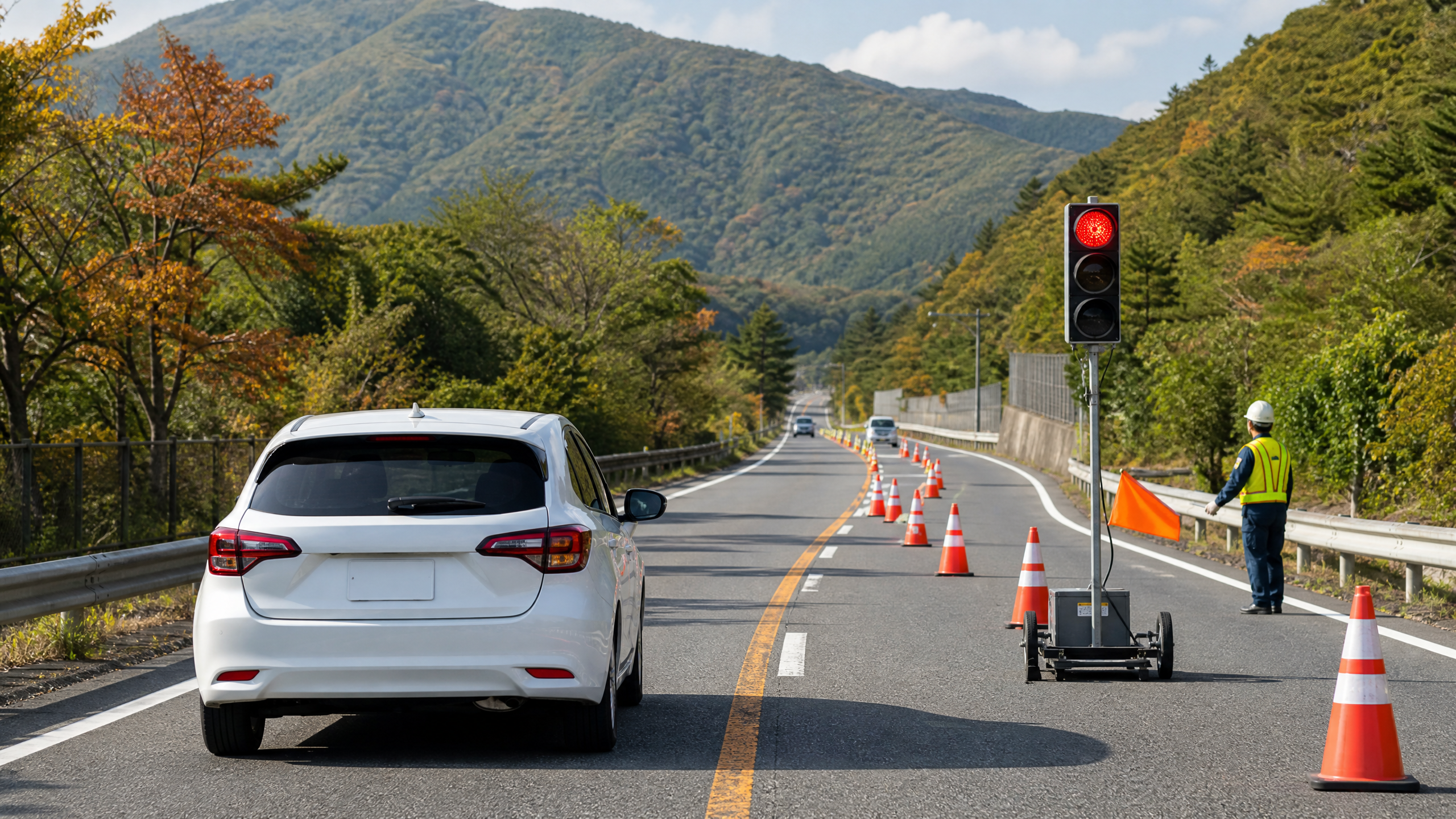
Roadworks are a normal part of a self-drive holiday in Japan. A familiar road can narrow to one lane, change its route around cones, or be controlled by a temporary signal or a traffic controller. None of that means your navigation has failed. It means the next few minutes need more attention than the schedule.
Japan’s Road Traffic Act requires drivers to obey traffic lights and an officer’s alternative signals. JAF also reminds drivers not to use a phone or be distracted by the car-navigation system while the vehicle is moving. Together, those rules give rental-car visitors a useful approach: prepare before the restriction, then let the signs and the person controlling traffic set the pace.
Roadworks are not a place to recover lost time. A calm plan protects people working beside the road, pedestrians near the temporary route, and everyone in the car. It also makes an unfamiliar right-hand-drive vehicle easier to place accurately.
Set up before the cones appear
The safest decisions are made while the car is parked, not while a lane is closing ahead. Before leaving your hotel, airport branch, or roadside stop, enter the next destination and check the broad route. If the map later proposes a detour, do not try to study it while rolling through a work zone. Continue with the displayed traffic direction, then update the route at a legal, safe place to stop.
- Build a time buffer. Treat a short delay as normal rather than a reason to rush a yellow light or squeeze through a narrowing lane.
- Put the phone away. A passenger can handle directions; if you are alone, wait until you are safely parked before changing the route.
- Secure loose items. A bag, drink, or camera should not compete with your steering and mirrors at a lane shift.
- Watch the whole approach. Look beyond the first cone for temporary lights, arrows, people on foot, and the point where traffic returns to its normal lane.
How to move through a restricted section
Reduce speed early and use the temporary signs, road markings, and signals in front of you—not the speed of the car behind—as your guide. If a traffic controller is directing the flow, follow that direction. If a temporary light controls a single-lane section, wait for the signal that permits you to proceed. Do not enter a narrowed section simply because the vehicle ahead has started moving; leave enough space to see the route and to stop smoothly if conditions change.
Keep your attention on people as well as vehicles. JAF’s basic guidance says drivers must yield to pedestrians, and that principle matters when workers, cyclists, or pedestrians are near a temporary path. Keep both hands available for steering, avoid sudden lane changes, and do not stop beside the works to check a map or take a photograph. If an instruction is unclear, continue only as the signs or controller allow, then use the next suitable parking area to reassess.
After the lane opens again
Do not assume the work zone ends at the final cone. Scan for the next lane arrow, a changed speed sign, a crosswalk, or traffic merging back together. When the road is stable, confirm that your navigation still matches the direction of travel. If it does not, choose a safe turnaround or parking location later rather than making a sudden manoeuvre.
For a reliable refresher before a Japan road trip, read the Road Traffic Act’s signal rule and JAF’s Traffic Rules in Japan. With time in hand and attention on the temporary control, roadworks become a routine pause in the journey—not a stressful interruption.