

Japan Traffic Lights and Turns: Rental-Car Safety Basics
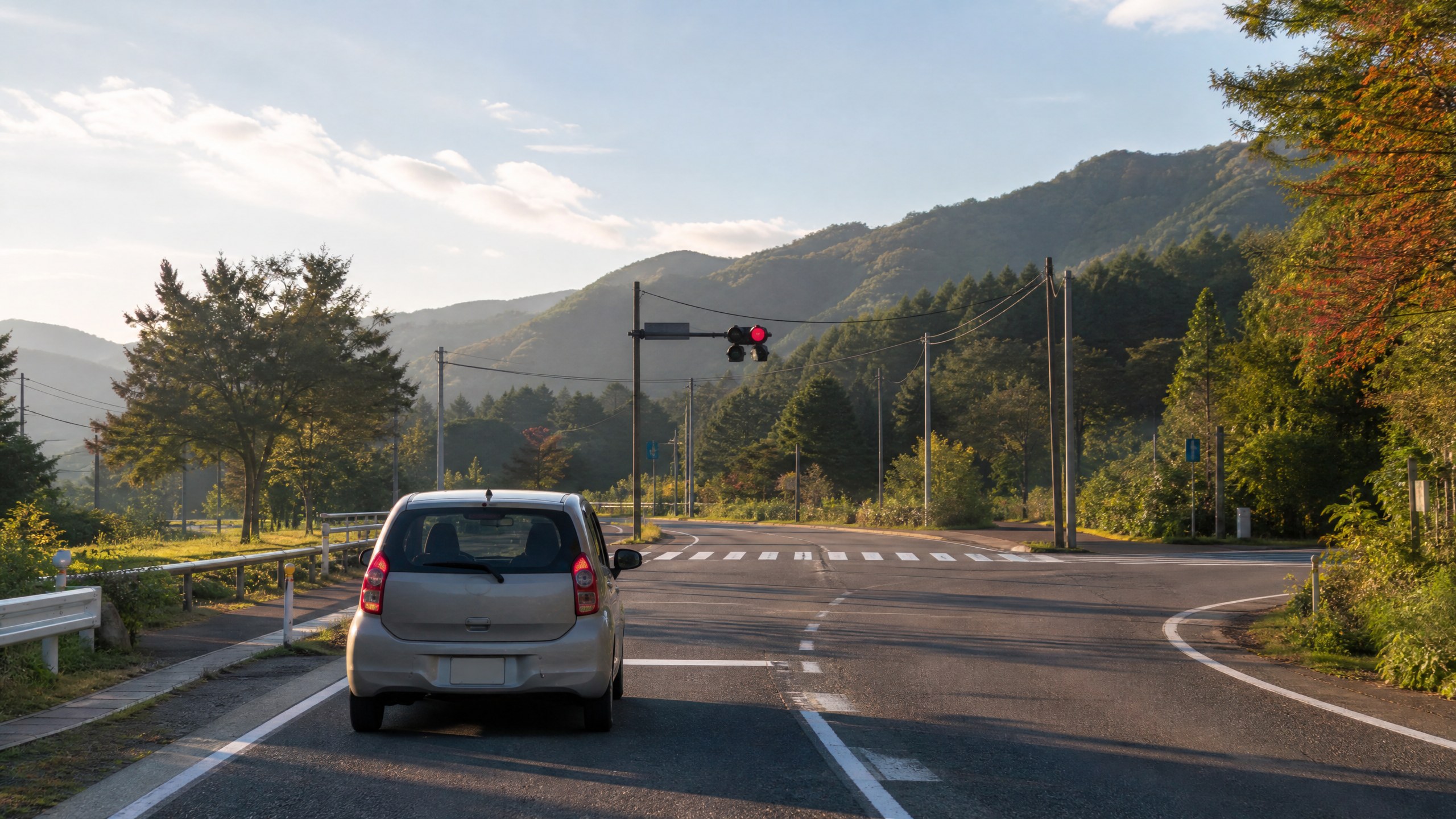
Start calmly at an unfamiliar Japanese intersection
Driving a rental car is one of the most flexible ways to explore Japan, but an unfamiliar intersection can demand attention long before the light changes. Lanes may narrow, signs may be in Japanese, pedestrians may be waiting at a crossing, and a navigation voice may speak at exactly the wrong moment. The best response is not to rush. Slow down early, scan the whole junction, and leave enough space to make a legal choice rather than a last-second correction.
This guide focuses on a repeatable routine for ordinary roads. It is not a substitute for road signs or instructions from police, but it can help a visitor turn reliable rules into safer habits. Before departure, take a moment in the rental car to identify the indicator, wiper, hazard-light and navigation controls. Those small checks reduce distraction when you need to watch the road.
Read the signal before planning the turn
Japan drives on the left. At a green signal, ordinary motor vehicles may go straight, turn left or turn right, but a turn is never a reason to ignore people or traffic already using the intersection. A red signal means stop before the stop line. When a signal turns yellow, do not accelerate to beat it; stop if you can do so safely. A green arrow permits movement in the direction it shows even when the main signal is red or yellow.
Signal position can feel unfamiliar, so look well ahead instead of following the car in front automatically. At a flashing red signal, vehicles must stop before proceeding. At a flashing yellow signal, proceed carefully while watching for other road users. If a signal, sign, temporary control or police officer gives a direction, follow the direction that applies to your vehicle.
Use a simple approach routine
A calm approach gives you time to see lane arrows, crossing lines and people at the curb. Begin reducing speed before the junction rather than braking sharply at the line. Keep your eyes moving between the signal, mirrors, side road and pedestrian areas. In rain, dusk or glare, add more time and following distance because markings and movement are harder to read.
- Stay in the left lane unless arrows, signs or your route require another lane.
- Check the lane arrow early; do not cut across solid markings or force a late merge.
- Signal in good time, then check mirrors and the area beside the car before changing direction.
- Stop where the line requires, leaving the crossing clear for pedestrians.
- Keep a phone put away and let a passenger handle navigation when possible.
Make right turns with patience
A right turn crosses traffic coming from the opposite direction, so it deserves extra patience. On a green light, position the car as the road markings allow, look for oncoming vehicles, and wait until there is a safe gap. Also check the crossing you will enter: people walking or cycling may be hard to notice when your attention is fixed on an approaching car. Do not assume that another driver’s indicator, speed or position guarantees what they will do. Complete the turn only when the path is clearly safe and remain on the left side of the road you enter.
For a left turn, reduce speed and check the inside area carefully for pedestrians and bicycles. Do not swing wide into another lane. In both directions, smooth steering and a low speed give you time to respond if someone enters the crossing.
Let missed turns become safe detours
Visitors sometimes make a mistake because the map suggests a turn too late. Missing a turn is inconvenient; an abrupt maneuver is dangerous. Continue ahead, let the navigation recalculate, and choose a legal, calm place to turn around. Never reverse into an intersection, stop in a live lane to study the map, or use an unsafe shortcut just to recover a few minutes.
Finish every drive with the same safety priorities
Before moving off, confirm that every occupant has a seatbelt and that the driver is rested and fully sober. Keep within the posted limit, yield to pedestrians, and put attention ahead of the itinerary. With a little preparation and a willingness to wait, Japanese intersections become less stressful and leave more of the day for the places you came to see.