

Left-side driving, right turns, speed limits and the 2026 rule changes.
New in 2026: since 1 September 2026 the speed limit on roads without a centre line is 30 km/h unless a sign says otherwise. Since 1 April 2026 you must leave enough space (about 1 m or more) when passing a bicycle, or slow down.
The 10 rules that matter most
- Drive on the left. Overtake on the right. After every turn, check you are on the left side again.
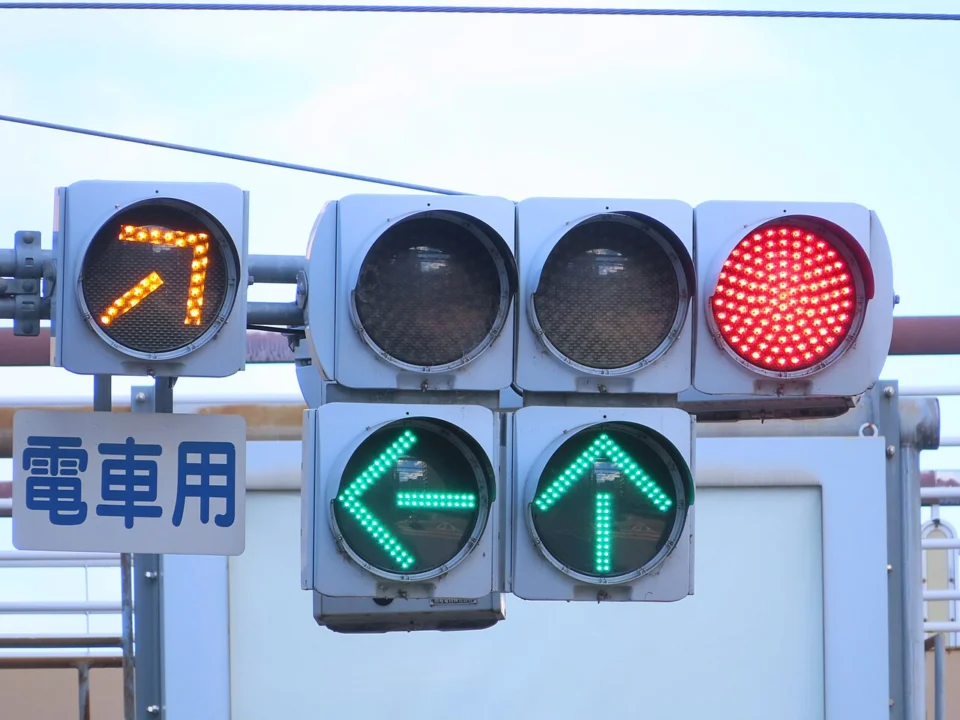
- Red means stop — for everyone. There is no turning on red. You may only go on red when a green arrow shows your direction.
- Turning right is where visitors crash most: foreign rental drivers have about 2.7 times the share of right-turn accidents that Japanese drivers have. Move to the centre of the junction, wait, and let oncoming cars, pedestrians and cyclists go first.
- Turning left: check your left mirror and shoulder for bicycles and pedestrians before you turn.
- 止まれ (Stop): come to a full stop at the line every time, even if the road looks empty.
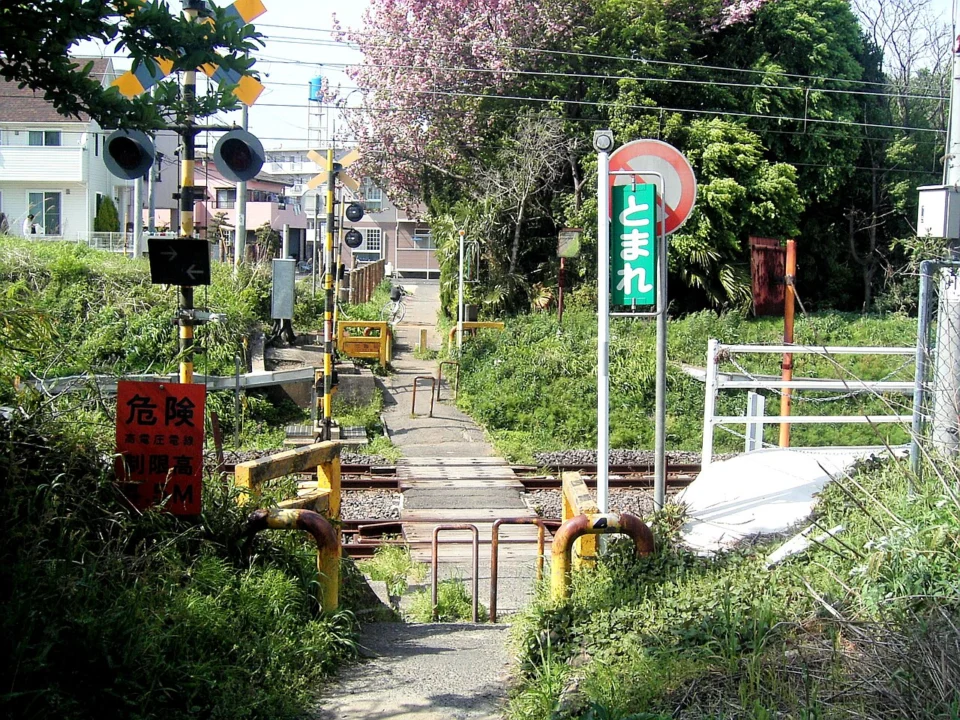
- Railway crossings: stop before the crossing, look both ways, open the window and listen, then cross. Never stop on the tracks.
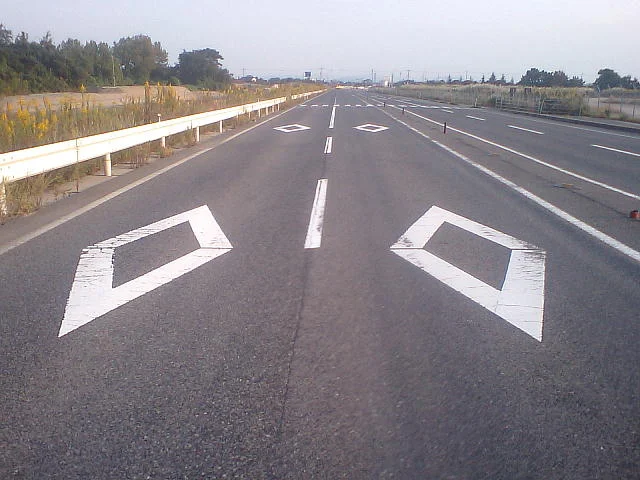
- Pedestrian crossings: if someone is crossing or waiting to cross, you must stop. A diamond (◇) painted on the road means a crossing is ahead.
- Speed: see the table below. Speed is checked by police and automatic cameras.
- Seat belts in every seat, front and back. Children under 6 must use a child seat — add one to your booking.
- Bicycles: give them at least about 1 m when passing. If you can’t, slow down and stay behind.


Speed limits
| Road | Limit (unless a sign says otherwise) |
|---|---|
| Roads without a centre line (most residential streets) | 30 km/h (since 1 Sep 2026) |
| Ordinary roads with a centre line or lanes | 60 km/h |
| Expressways | 100 km/h (some sections 80 or 120 km/h); minimum 50 km/h |
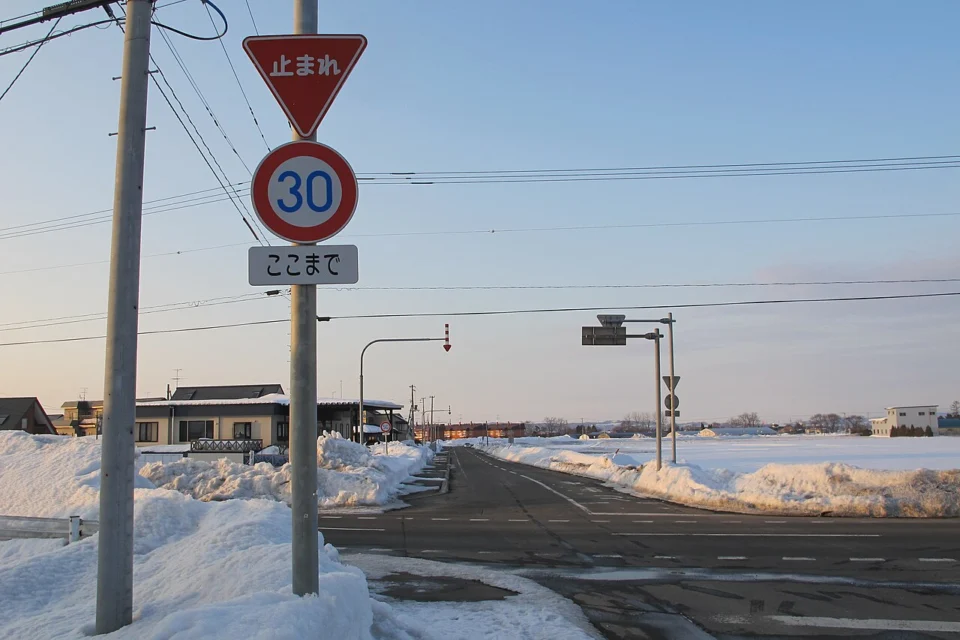
Going 30 km/h or more over the limit (for example 60 km/h on a 30 km/h street) is treated as a serious offence and can lead to a driving ban in Japan.
Phones and navigation
Do not hold your phone or look at its screen while driving — not even at red lights in traffic. Set the navigation before you leave. Hands-free calls are allowed. Details and penalties are in Alcohol, phones & penalties.
Winter driving
From December to March, roads in Hokkaido, Tohoku, the Japan Alps and around Mt Fuji can be icy. Book snow tyres, drive slowly, brake gently, and follow any チェーン規制 (chains required) signs.

Updated November 2026. Laws change — the official sources below are the final word.