日元

Australia

For years, the Japan Rail (JR) Pass was considered the default travel option for tourists visiting Japan. However, with the recent significant price increases for the JR Pass, many Australian families are discovering that renting a car is not only more convenient but often much more cost-effective.

Cost Comparison for Families

If you are travelling as a family of four, purchasing four JR Passes can easily cost thousands of dollars. In contrast, renting a comfortable minivan or SUV from Relax-RentACar involves a single daily rate, which can be split among all passengers. Even when factoring in fuel, toll roads (using an ETC card), and parking, a rental car is frequently cheaper for groups and families.

Unmatched Convenience with Luggage

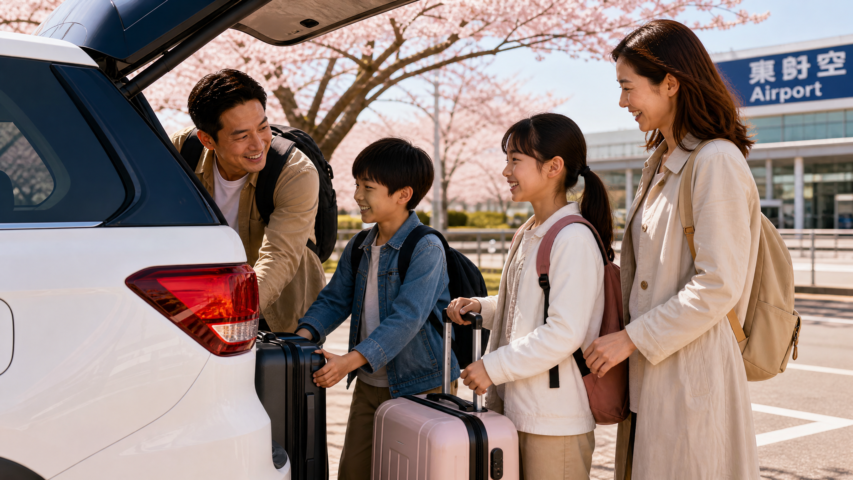
Navigating crowded Japanese train stations with heavy suitcases, strollers, and exhausted children can be a stressful experience. With a rental car, you simply load your luggage into the trunk and drive directly from your hotel to your next destination. There is no need to worry about train schedules, transferring lines, or hauling bags up flights of stairs.

Explore Off the Beaten Path

While Japan's rail network is fantastic for connecting major cities like Tokyo and Osaka, it doesn't reach many of the country's most beautiful rural areas. A rental car gives you the freedom to explore hidden temples, quiet coastal towns, and scenic mountain routes at your own pace. You can stop whenever you want to take photos, grab a snack at a local convenience store, or simply admire the view.

The Comfort of Privacy

Travelling with kids means dealing with unpredictable schedules, naps, and snacks. A rental car provides a private space where your family can relax, chat, and listen to music without worrying about disturbing other passengers on a quiet Japanese train.

Make your next family trip to Japan unforgettable and stress-free. Book your vehicle with Relax-RentACar today!
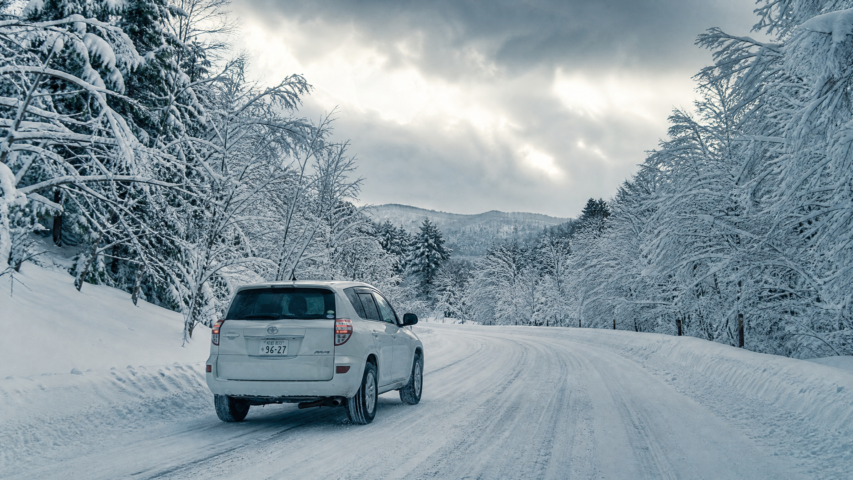
Hokkaido is renowned globally for its incredible powder snow, making it a top destination for Australian skiers and snowboarders. Renting a car gives you the ultimate freedom to chase the best snow conditions across resorts like Niseko, Furano, and Rusutsu. However, winter driving in Hokkaido requires preparation, especially if you are not used to driving in heavy snow.

Choose the Right Vehicle

When booking your rental car with Relax-RentACar for a Hokkaido winter trip, always opt for a 4-Wheel Drive (4WD) or All-Wheel Drive (AWD) vehicle. These vehicles provide significantly better traction on icy roads. Additionally, ensure that your rental car comes equipped with winter tires (snow tires). At Relax-RentACar, winter tires are standard for Hokkaido rentals during the snowy season.

Adjust Your Driving Style

The golden rule of winter driving is to do everything slowly and gently. Accelerate slowly, brake early and gently, and take corners at a reduced speed. Keep a much larger following distance between you and the car in front—at least three times the normal distance. Sudden braking or sharp steering can easily cause the vehicle to skid on black ice.

Watch Out for Whiteouts

Hokkaido frequently experiences heavy snowstorms that can cause "whiteout" conditions, where visibility drops to near zero. If you find yourself in a whiteout, turn on your hazard lights, slow down to a crawl, and look for the red and white arrows suspended above the road. These arrows point to the edge of the road, helping you stay in your lane when the road markings are covered by snow.

Parking in the Snow

When parking overnight, lift your windshield wipers so they don't freeze to the glass. Do not engage the parking brake (handbrake), as the cable can freeze and lock the wheels. Instead, leave the car in 'Park' (for automatics) or in gear (for manuals).

White SUV driving on a snow-covered road flanked by snow-laden trees on a cloudy winter day.

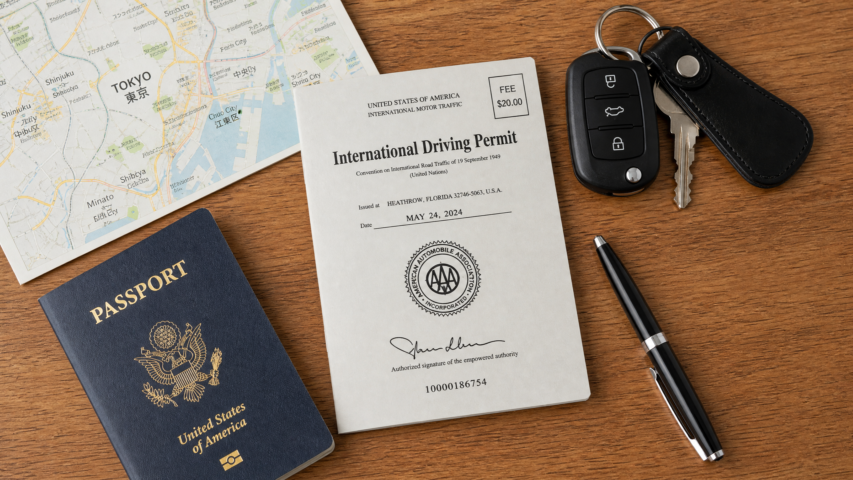
If you are an Australian planning to rent a car in Japan, the most important document you need to pack—besides your passport—is an International Driving Permit (IDP). Without it, car rental companies in Japan, including Relax-RentACar, cannot legally hand over the keys. Here is everything you need to know about getting your IDP in Australia.

What is an IDP?

An International Driving Permit is a United Nations-sanctioned document that translates your domestic driver's licence into multiple languages. For Japan, the IDP must be issued under the 1949 Geneva Convention. Australia is a signatory to this convention, which makes the process straightforward.

Where to Apply in Australia

In Australia, IDPs are exclusively issued by state and territory motoring clubs. You can apply through:

  • NRMA (New South Wales and ACT)
  • RACV (Victoria)
  • RACQ (Queensland)
  • RAA (South Australia)
  • RAC (Western Australia)
  • RACT (Tasmania)
  • AANT (Northern Territory)

How to Apply

You can apply online or in-person at a motoring club branch. You will need:

  • A valid Australian driver's licence (Learner's permits are not accepted)
  • A recent passport-sized photograph
  • The application fee (currently around $53 AUD)

If you apply online, allow at least 5 to 7 business days for standard delivery. If you are leaving soon, we highly recommend visiting a branch in person to have your IDP issued on the spot.

Important Reminders for Japan

Your IDP is valid for exactly 12 months from the date of issue. When picking up your rental car in Japan, you must present your passport, your Australian driver's licence, and your physical IDP booklet. Digital copies are not accepted.

Travel scene with a map showing Tokyo, a stamped International Driving Permit, a U.S. passport, car keys, and a black pen on a wooden surface

While Japan's bullet trains are world-famous, some of the country's most breathtaking landscapes can only be reached by car. For Australian tourists seeking an authentic Japanese experience away from the crowded cities, a self-drive holiday is the perfect choice. Here are the top 5 road trip destinations in Japan.

1. Hokkaido: The Ultimate Nature Drive

Hokkaido is a paradise for road-trippers. With its wide-open roads, stunning flower fields in Furano, and world-class powder snow in Niseko, it feels vastly different from the rest of Japan. Renting an SUV or a 4WD from Relax-RentACar is highly recommended for navigating Hokkaido's diverse terrain, especially during the winter months.

2. The Japanese Alps (Gifu and Nagano)

Drive through the heart of Honshu to discover the traditional thatched-roof houses of Shirakawa-go and the historic streets of Takayama. The mountainous winding roads offer spectacular views, particularly during the vibrant autumn foliage season.

3. Mount Fuji and the Five Lakes

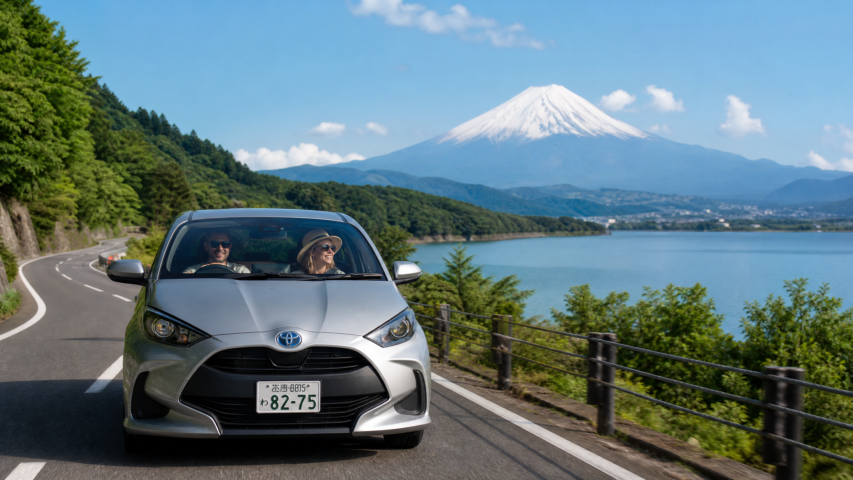
No trip to Japan is complete without seeing Mount Fuji. A rental car allows you to explore all Five Lakes at your own pace, find the perfect viewing spots, and visit the peaceful Hakone region for a relaxing soak in an onsen (hot spring).

4. Shikoku Island

For the adventurous Australian traveller, Shikoku offers rugged coastlines, the stunning Iya Valley, and the famous 88 Temple Pilgrimage route. It is one of Japan's least visited main islands, making it ideal for a quiet and immersive road trip.

5. Okinawa: A Tropical Escape

If you're looking for white sandy beaches and crystal-clear waters, Okinawa is the place to be. A rental car is absolutely essential here, as public transport is limited. Drive across the iconic Kouri Bridge and explore the island's unique Ryukyu culture.

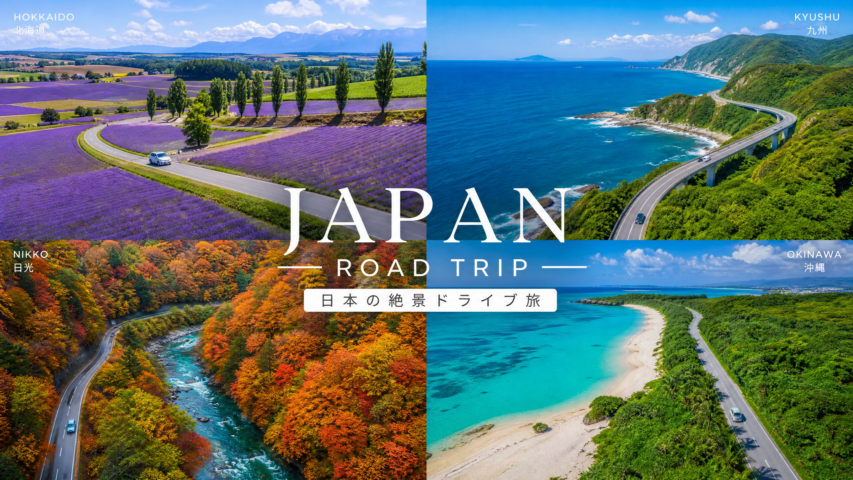
Collage promoting a Japan road trip, showing four regions—Hokkaido, Kyushu, Nikko, and Okinawa—with scenic roads and landscapes and a central JAPAN ROAD TRIP title.

Planning a self-drive holiday in Japan from Australia? Renting a car in Japan is one of the best ways to explore hidden gems, from the snowy roads of Hokkaido to the sunny beaches of Okinawa. However, there are a few essential things Australian tourists need to know before hitting the Japanese roads.

1. The International Driving Permit (IDP) is Mandatory

As an Australian citizen, your domestic driver's licence alone is not enough to rent a car in Japan. You must obtain an International Driving Permit (IDP) before leaving Australia. The IDP must be issued under the 1949 Geneva Convention. You can easily apply for one through your state's motoring club (like NRMA, RACV, or RACQ) for around $53 AUD. Remember to bring both your Australian licence and your IDP when picking up your rental car at Relax-RentACar.

2. Driving on the Left Side of the Road

Great news for Australians! Just like back home, vehicles in Japan drive on the left side of the road, and the steering wheel is on the right. This makes the transition incredibly smooth for Aussie drivers. The road signs are generally clear, and most major signs include English translations.

3. ETC Cards for Toll Roads

Japan has an extensive and well-maintained network of expressways, but they are mostly toll roads. To save time and avoid fumbling with cash, we highly recommend renting an ETC (Electronic Toll Collection) card along with your vehicle. The ETC card allows you to pass through toll gates without stopping, and you simply settle the toll fees when returning the car.

4. Strict Speed Limits and Zero Tolerance for Alcohol

Speed limits in Japan are generally lower than in Australia. The limit is typically 40 km/h in urban areas, 50-60 km/h on open roads, and 80-100 km/h on expressways. Furthermore, Japan has a strict zero-tolerance policy for drink driving. Even a single beer can put you over the legal limit, resulting in severe penalties.

Ready for your Japanese road trip? Book your vehicle with Relax-RentACar today and enjoy a seamless driving experience across Japan!